

The ongoing 2025 Formula 1 season is currently in the midst of its annual summer break. This enforced recess gives F1 employees an opportunity to reset after the intensity of the first half of the year, and fans a chance to reflect on the season so far.
[adrotate banner=”10″]
Get 10% off all official F1 Merch at TheRaceWorks.com using code ‘EF1‘ at checkout.
In years past however, F1 racing action continued on through summer unabated. With the current season on pause for the time being, it seems an ideal time to look back at some of these historic races and recall the action and drama they provided.
One particularly climactic race was the 1982 Austrian Grand Prix, held on the 15th of August at the fearsome Österreichring. On that day 43 years ago, fans were treated to a duel which went right down to the wire. The fact the race also featured a major strategic innovation and a long-awaited winner was icing on the proverbial cake.
[adrotate banner=”10″]
Get 10% off all official F1 Merch at TheRaceWorks.com using code ‘EF1‘ at checkout.
Crunch Time
By the time the 1982 Austrian Grand Prix arrived, that year’s hugely unpredictable title fight was entering its closing stages. With a myriad of drivers still in contention, points were becoming critical.
One race earlier in Germany, championship leader Didier Pironi had suffered a terrible accident at a rainy Hockenheim. A near-zero visibility collision with the Renault of Alain Prost during qualifying had badly injured the Ferrari driver’s legs. With Pironi unable to defend his championship lead for the rest of the season, a strong result for any of his rivals could catapult them into title contention.
Every driver had major challenges ahead of them though, not least from the circuit itself. The old Österreichring was a fearsome track, consisting almost entirely of high-speed corners. This promised to make the race immensely taxing on both cars and drivers, and also strongly favoured powerful engines. As a result, most pundits expected teams with turbocharged engines such as Renault and Ferrari to dominate.
Of all the turbocharged teams though, the talk of the paddock was the BMW-engined Brabham team. The previous three races had seen the team make waves by attempting to make a pit stop at half distance in order to top up with fuel and change tyres. In 1982 this was revolutionary, as planned pitstops had not been a thing since the 1950s. Each time however reliability and incidents had conspired to foil the Brabham plan, leaving people wondering if Austria could be the race that finally saw the scheme pay off.
Tantalising Prospects
When it came to setting the grid, Brabham’s pit stop plans still looked very much intact. Indeed, the two blue and white BMW-powered cars were the only machines to break the 1:28 barrier in qualifying. On pole was team leader Nelson Piquet, while second driver Riccardo Patrese started alongside. The pair would have an unobstructed run into the first corner on race day, and with their half-full fuel tanks it looked likely that they would simply drive off into the sunset.
The grid behind them was excitingly laid out, nevertheless. Championship contender Prost occupied third spot in his Renault, while the lone Ferrari of Pironi’s teammate Patrick Tambay was fourth. Both hoped to have the pace to throw a spanner in Brabham’s pit stop plans.
Teams without turbocharged engines were relegated to 6th position and lower, but some drivers in this bracket nevertheless delivered eye-catching performances. Keke Rosberg’s title contending Williams took the honour of fastest non-turbo with 6th place, albeit some 3 seconds off pole. Just behind him was the charismatic Italian Elio de Angelis, who had his midfield Lotus unusually far up the grid. Both would be in a strong position should any of the turbocharged cars exhibit their trademark unreliability.
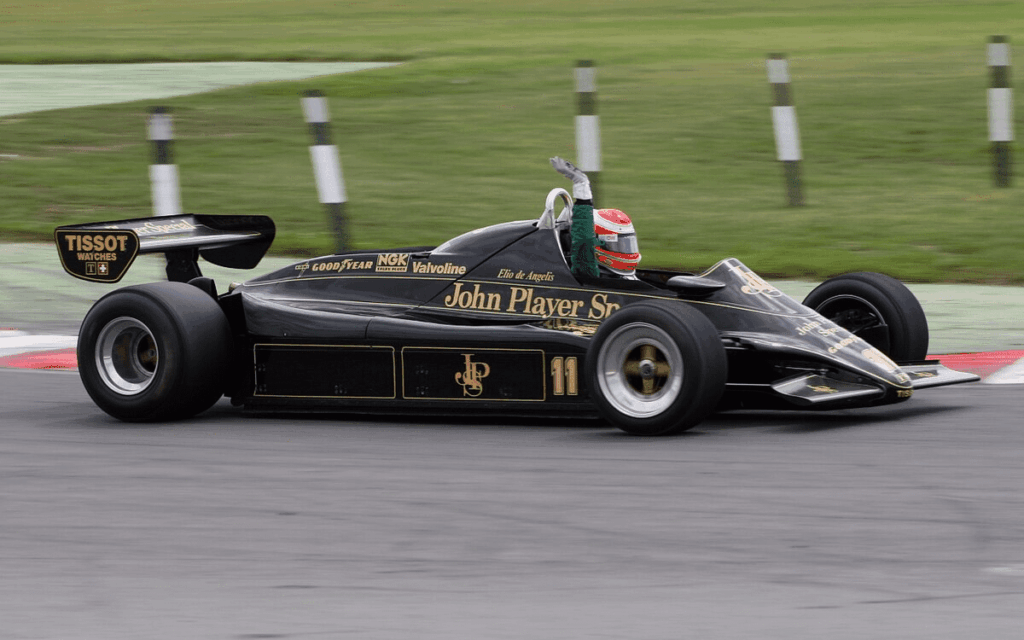
Image Credit: BobaliciousLondon – Own Work, CC BY 2.0, Link.
Start Line Scramble
The race itself proved a spectacle right from the off. The Österreichring often provided chaotic starts due to its narrow pit straight, and the 1982 race was no different. In this instance the main catalysts were the two Alfa Romeo cars of Bruno Giacomelli and Andrea de Cesaris. For reasons unknown, de Cesaris weaved suddenly from one side of the track to the other soon after lights out, careering straight into his teammate’s car. From 11th and 13th on the grid, both Alfas were out within 100 metres. The resultant melee also claimed the Williams of Rosberg’s teammate Derek Daly.
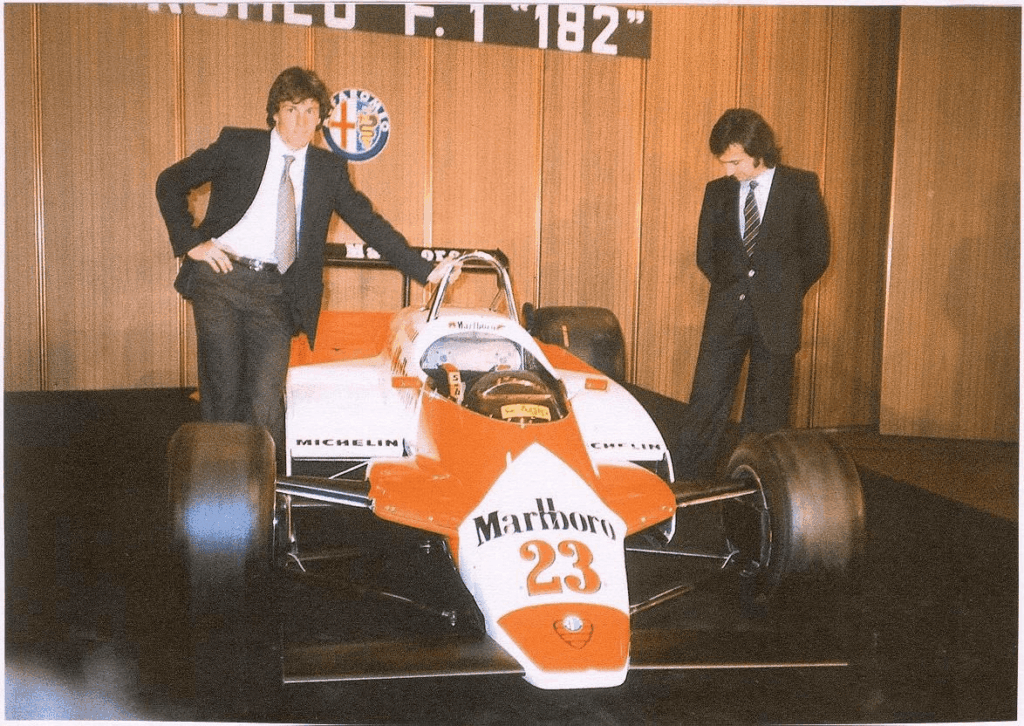
Image Credit: Gel – Own Work, CC BY-SA 3.0, Link.

At the front, Piquet got away cleanly, but Patrese stuttered momentarily. The delay caused the second BT50 to briefly fall to third behind Prost, but the light fuel load and power of the Italian’s Brabham soon told and Patrese rocketed back past immediately.
Rosberg meanwhile had a lightning start from sixth, but Tambay blocked his path and forced him to lift. This in turn allowed de Angelis in the Lotus to slip past and run as the top non-turbo car in 6th at the end of lap 1.
A chaotic lap 1 gave way to an equally dramatic second tour. The fourth placed Ferrari of Tambay along with the midfield Tyrrell of Michele Alboreto both suffered punctures due to debris. Tambay was able to limp back round to the pits, while Alboreto was out on the spot. As this action was unfolding, at the front of the field Patrese set about making up for his poor start by passing his team leader Piquet to regain the lead he’d lost on lap 1.
Brabham’s Brilliance
After a frantic first two laps, the race situation settled down somewhat for a time. The Brabhams pulled well clear of the two chasing Renaults, while de Angelis ran a somewhat lonely but very impressive 5th, clear of all other non-turbo cars.
The relatively stable running order was disrupted on lap 15 when Arnoux’s Renault came into the pits from 4th place. His turbocharger had failed, and while he tried to resume, it was a fruitless effort.
Two laps later there was more drama as Piquet shot into the pits unexpectedly. While the Brazilian had a stop planned, this was well ahead of schedule and the mechanics weren’t ready for him. It later transpired that Piquet had come in as a result of blistered tyres.
Whatever the reason, Brabham’s mechanics sprang into action to service Piquet’s car as quickly as they could, swapping on a new set of heated tyres and piping fuel into the BT50 from a set of pressurised beer kegs. The stop was a slow one, but Piquet eventually got back out into the race in fourth place.
After another lull, eventually the time for Patrese’s much-anticipated pit stop came around. This time, with the car coming in as scheduled and the mechanics having got their eye in with Piquet’s earlier stop, everything went as planned. In under 20 seconds Patrese was turned around with new tyres and another half tank of fuel. It was the first successful planned fuel stop in some 25 years, and Patrese emerged from it still in the lead of the race. If he could just keep running, victory looked certain.
Turbo Turmoil
Unfortunately Brabham’s plans soon fell apart in spectacular fashion. Just three laps after his stop, Patrese’s engine went bang at the high speed Texaco bends. This caused the Brabham’s rear axle to seize, sending the car spearing off the circuit into a grass embankment.
Worse still, Piquet was clearly having issues too. Despite having turbo power and fresh tyres, he was making no impression on de Angelis ahead. In fact, the Williams of a resurgent Keke Rosberg was actually chasing him down, eventually passing the Brabham on lap 31. One lap later, Piquet too would retire from the race. While Brabham had finally executed their refuelling plan, they once again left with zero points.
All of this left Prost in his Renault in a comfortable lead which he looked almost certain to retain. Attention therefore turned to positions and potential battles further down the field.
One driver on a charge was Tambay, who had quietly and assuredly been working his way back up the order. From nearly two laps down he was now on the fringes of the points with the McLaren of title contender John Watson ahead of him. Both McLarens were having a poor race, but Watson was having a particularly rough time stuck down in 7th behind the uncompetitive Arrows of Mauro Baldi. When Tambay pulled up behind this pair, Watson’s engine almost seemed to expire out of frustration. Tambay then passed Baldi too, and was back up into the points.
The other driver to watch was Keke Rosberg. After having had a fairly anonymous race to begin with, his car was finally performing as desired now the fuel load had lightened. He therefore set about closing the 10 second gap to de Angelis ahead in second. The resultant charge was scintillating to watch, with the Finn visibly hustling his car into the corners. As the gap came down lap by lap, it looked like a brawl for second could be on the cards.
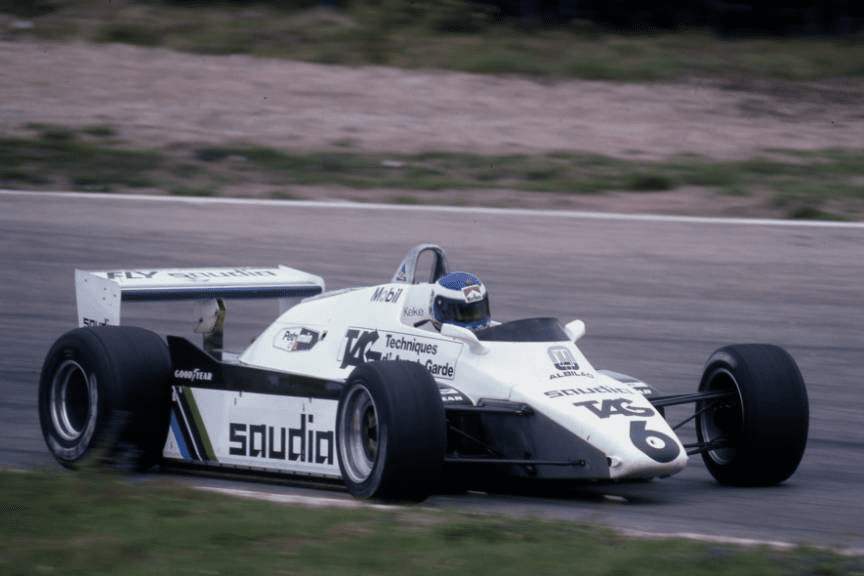
Image Credit: Williams Racing
[adrotate banner=”6″]
Get 10% off all official F1 Merch at TheRaceWorks.com using code ‘EF1’ at checkout.
A Photo Finish
With just three laps to go, the unbelievable happened. From his comfortable 30 second lead, Prost ground to a halt with flames spewing out the back of his car. His fuel injection system had packed up, and de Angelis and Rosberg would now be fighting for the win. For either driver, it would be his first grand prix victory.
Both drivers knew the stakes, and on the penultimate lap each set their fastest lap of the grand prix. Rosberg was still clearly quicker though, with de Angelis struggling with worn tyres and fuel exhaustion. The Williams was 1.6 seconds behind the Lotus as they began the final tour.
The final lap was undoubtedly one of the most exciting F1 has ever seen. Rosberg was giving everything and visibly closing on the Lotus through every corner. By the time they reached the run up to the final corner Rosberg was right on the Lotus’ tail and ready to challenge.
De Angelis defended well, blocking the inside and forcing Rosberg to tuck back in behind. Rosberg wasn’t done however, and carried more speed through the final corner in an attempt to slingshot past the Lotus. As they approached the line, the pair ran side by side and took the chequered flag in parallel.
The gap? 0.05 seconds to de Angelis. It was one of the closest grand prix finishes in history at the time. De Angelis was justifiably elated to win his first grand prix, while Rosberg was disappointed to miss out, but also grateful to bank 6 valuable points in the title fight (which he would eventually win). The Ligier of Jacques Laffite rounded out the podium, while Tambay finished fourth after overtaking Niki Lauda near the end.
De Angelis’ victory was all the more poignant due to circumstances. It was Lotus’ first win in four years, and also the last to be witnessed by team founder Colin Chapman, who sadly died of a heart attack later that same year.
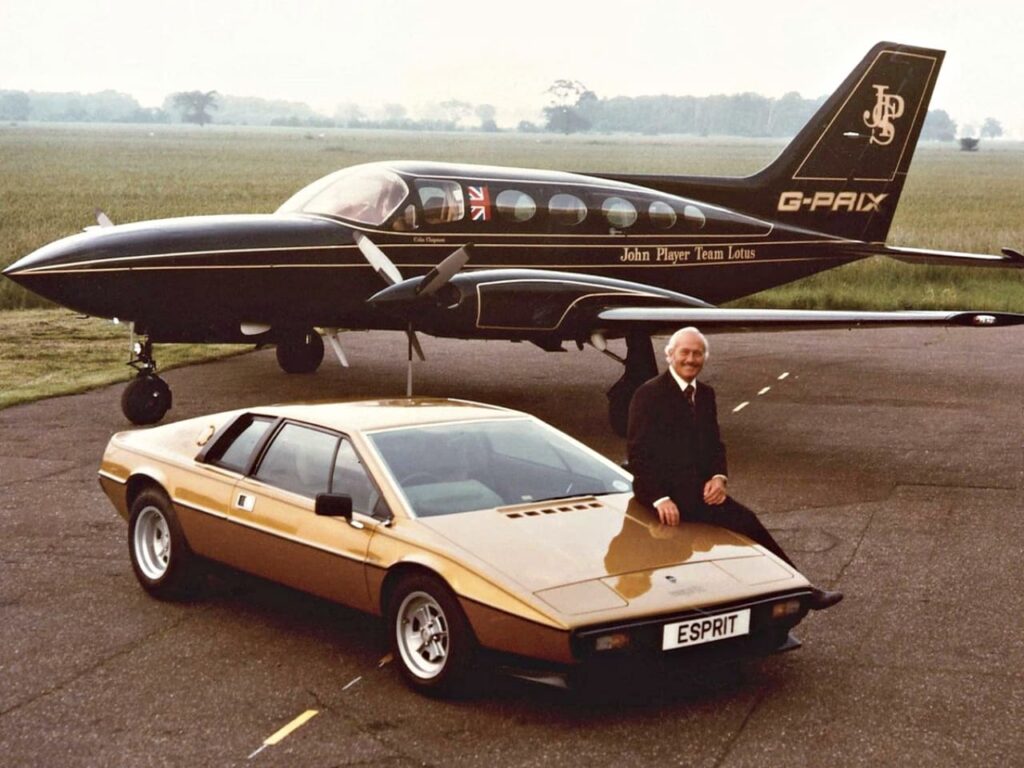
Image Credit: Public Domain
Featured Image Credit: Vanessa Machelett – Own Work, CC BY-SA 4.0, Link.
Red_Bull_Ring.jpg)
[adrotate banner=”8″]
Get 10% off all official F1 Merch at TheRaceWorks.com using code ‘EF1‘ at checkout.