

Formula 1 returns to China after a five-year absence from the race calendar.

Circuit Stats
| Track Length | 5.451km |
| Number of Laps | 56 |
| Race Lap Record | 1:32.238 (Michael Schumacher – 1994) |
| Qualifying Lap Record | 1:31.095 (Sebastian Vettel – 2018) |
| First Grand Prix | 2004 |
| First Race Winner | Rubens Barichello |
| 2023 Race Winner | N/A (the most recent winner was Lewis Hamilton in 2019) |
[adrotate banner=”10″]
Get 10% off all official F1 Merch at TheRaceWorks.com using code ‘EF1‘ at checkout.
Circuit History
Shanghai authorities wanted a way to showcase the city to the world – and what better way than by attracting the pinnacle of motorsport to race there?
A 5.3 sq/km site was selected in the Jiading District in the north-west of the city. A budget of 2.6 billion yuan ($450 million) was raised by a government-funded joint-venture company, the Shanghai Jiushi Group.
Herman Tilke was hired to design the circuit and associated buildings. Engineers drew up their plans between April and May 2003. Extensive work had to be carried out on the chosen site, as the land had previously been used as rice paddy fields. This meant that the circuit was essentially being built on swampland.
3,000 workers were on-site daily over a period of 18 months. The intensive groundworks and construction of the circuit in such a short period of time was an extraordinary feat.
The Shanghai International Circuit was the first in China to be purpose-built for Formula 1. It has hosted the Chinese Grand Prix every year since 2004. In 2020, the race was cancelled due to the Covid-19 pandemic. The race subsequently had further cancellations in 2021, 2022 and 2023.
Inspired Design
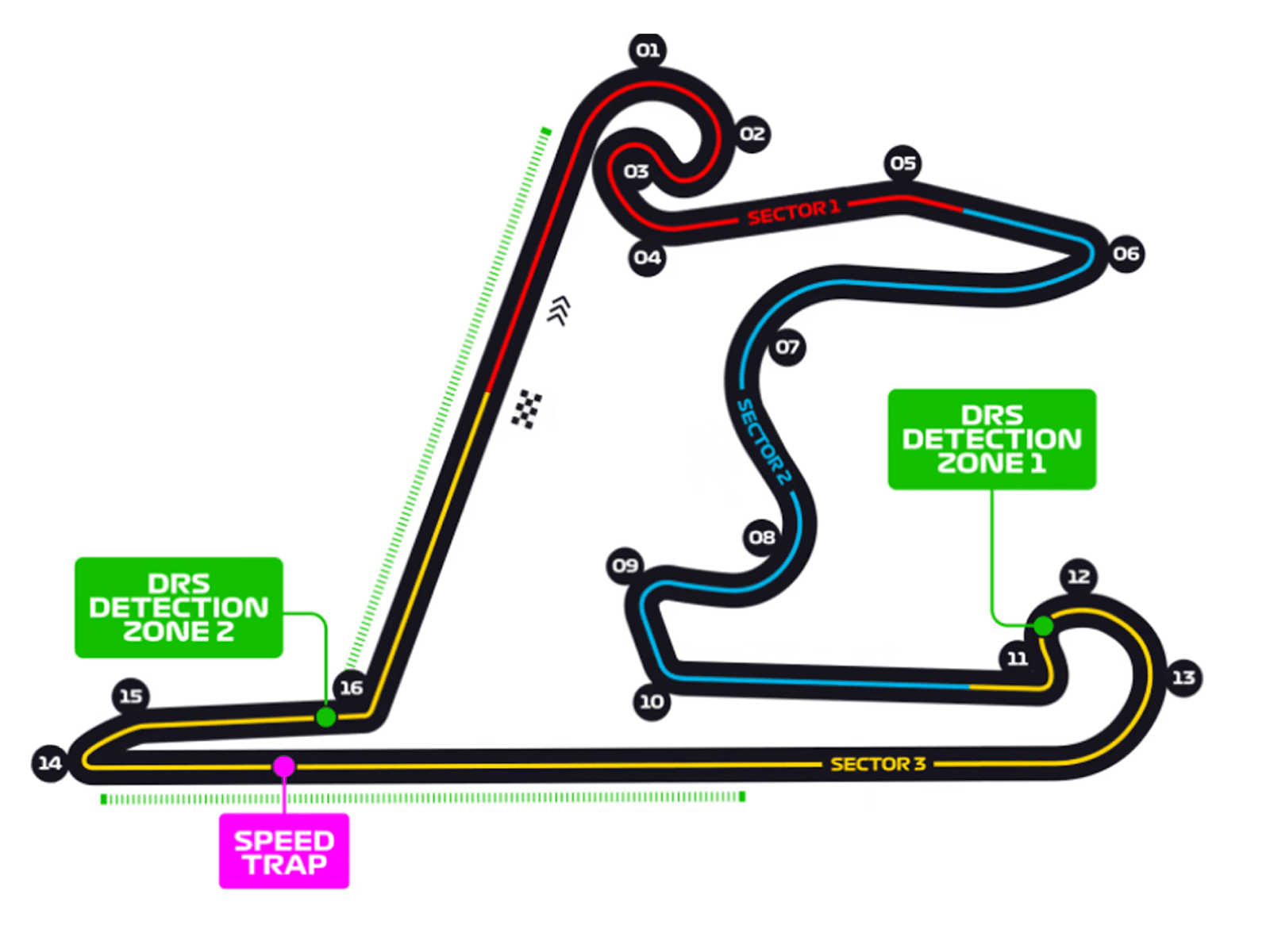
Shanghai International Circuit is one of the most visually-pleasing circuits on the Formula 1 race calendar. The influence of Chinese culture is clear to see both on the ground and from the air.
The shape of the track is said to have been inspired by the Chinese symbol for “shang” (meaning “upwards”). The Paddock facilities are also unique, with each F1 team having their own building, arranged like pavilions in a lake. The design of the Paddock facilities was specifically created to resemble the ancient Yuyuan Garden in Shanghai.
The circuit has a 200,000 spectator capacity. 30,000 of these can be held in the main grandstand and pit complex. The main grandstand also has wing-like viewing platforms that cross the circuit at either end.
Drivers have had mixed reactions to the circuit over the years. Turn 1 divides opinion, with some feeling that the turn is simply never-ending. Some drivers feel that the super-high g-force experienced in turns 7 and 8 is particularly impressive. The twists and turns are relentless right from the start, until you reach the 1.2km straight between turns 13 and 14.
Formula 1’s 1000th Grand Prix
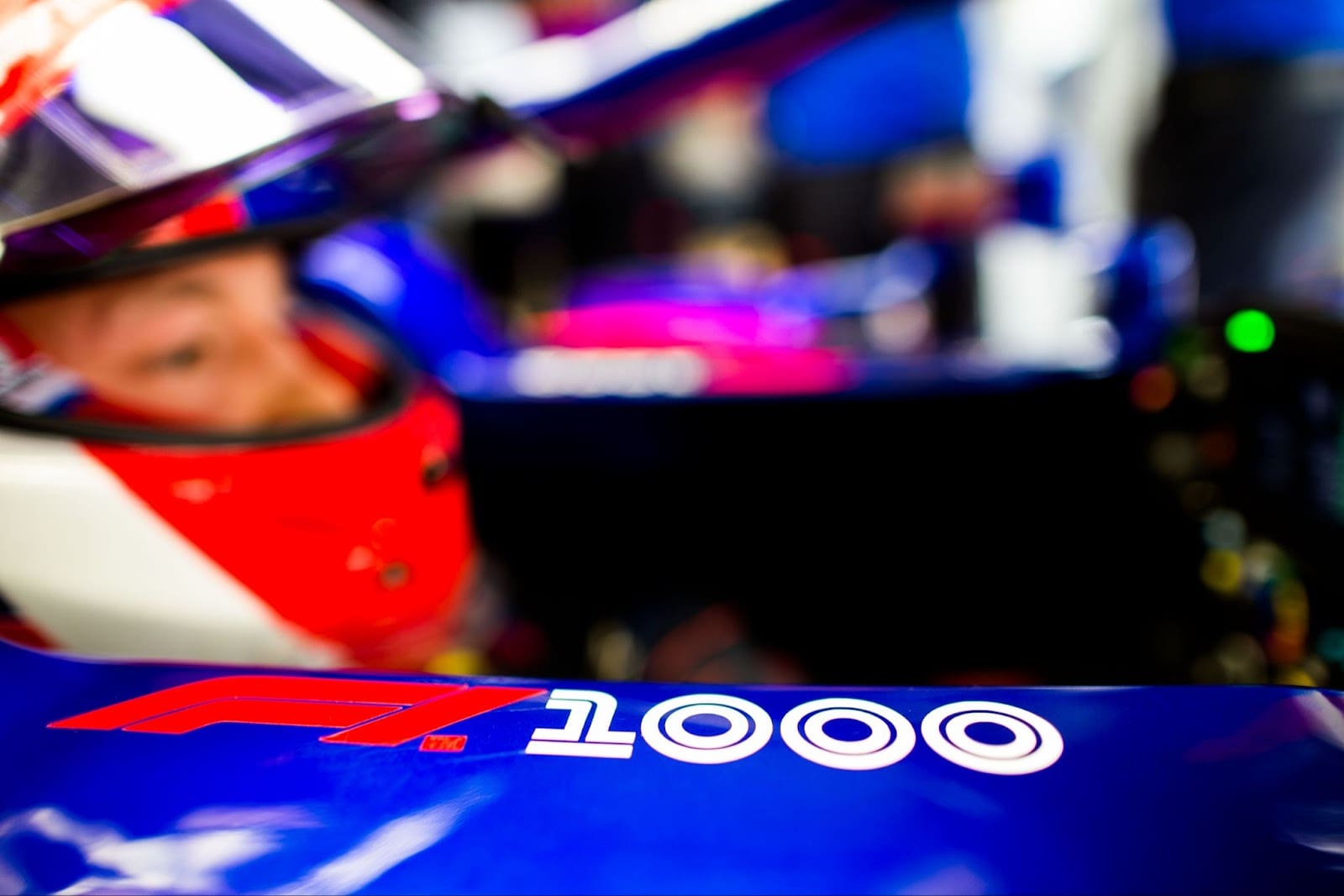
In 2019, Shanghai hosted Formula 1’s 1000th Grand Prix. The milestone event took place just shy of 69 years after the first ever Grand Prix at Silverstone in 1950. Back then, there were just 7 races on the calendar (most of which were held in Europe). It’s a far cry to the 21 race, worldwide calendar of the 2019 season!
Valtteri Bottas clinched pole position by a mere 0.023 seconds. Teammate Lewis Hamilton stormed to the race victory with a 6.5 second lead. In 2019, Mercedes reigned supreme.
2024 sees the Chinese Grand Prix returning with full momentum. The weekend’s track action includes the first of the season’s six Sprint races.
[adrotate banner=”10″]
Get 10% off all official F1 Merch at TheRaceWorks.com using code ‘EF1‘ at checkout.
Iconic Moment
At the end of the first practice session in 2010, the world witnessed what has to be one of the most bizarre moments in Formula 1.
Sebastian Buemi was flying down the back straight towards turn 14, when both front tyres exploded off his car. The Toro Rosso slid into the gravel and the wheels, whose tethers had snapped completely off, went bouncing over the spectator fences.
Sebastian avoided injury, and the team determined that the incident had been caused by a front right upright failure. Once the right upright failed, the left side component failed almost simultaneously as the load simply became too great for it to handle.
The incident bears an uncanny resemblance to a fighter pilot hitting the “eject” button. It’s a moment that will certainly be remembered by fans for years to come!
What’s your iconic Chinese Grand Prix moment? Let us know in the comments!