

Bringing a new chassis onto the world stage is never easy. Teething problems are inevitable, solving them quickly is critical. How a team adapts to a new car separates the good from the great.
In 2024, the World Endurance Championship (WEC) introduced LMGT3 to replace LMGTE. With GT3 racing’s explosive growth, increased manufacturer support was inevitable. In 2023, automotive giant Ford threw its (cowboy) hat into the GT3 ring. They partnered with Multimatic Motorsport to develop the iconic Mustang for competition. Ford choose German outfit Proton Competition to run the programme in both WEC and IMSA’s GTD category.
Steeped in History
Gerold Ried founded Proton Competition in Germany in 1996 to run Porsche GT cars and then transitioned into endurance racing in the Le Mans Series (now ELMS). A Le Mans debut followed in 2008 and they secured their first class win in 2010. The team continued to grow, winning races in WEC and ELMS. This resulted in another Le Mans class win in 2018 and four ELMS championships. This established Proton as a top-tier privateer Porsche team, also running cars in partnership with other teams, including prototype programmes.
The addition of LMP2 and Hypercar machinery came in 2023 and the team hasn’t looked back since. Given this pedigree, it was no surprise Ford approached the team to run its Mustang GT3. Proton revealed the decision was straightforward, citing the Mustang being “a very popular car with a huge following among motorsport fans.” and that working with Ford “was a great opportunity to immerse ourselves in that on the global stage.”
Initial Challenges
Being involved in the Mustang project from the start was a huge help for Proton. They quickly realised “how much potential there is in the car” which meant the project could focus on “continuously developing” and “refining” the platform to “unlock that potential.”
The team views the FIA WEC as the “best arena in which to do that (as they) compete against the best.” The team developed the car throughout 2024, highlighted with a strong 3-4 finish at Le Mans. The major challenges they faced involved integration – “putting together a package that runs in harmony.” Proton revealed that “being successful in such a highly competitive class is all about combining all of our strengths as a team”. This is particularly crucial as very little separates the GT3 competitors “the smallest of misjudgements can make the difference between finishing on the podium or being back in the pack.” Having a strong car is only part of the puzzle – world class drivers are also critical for success.
Team Identity
For 2026, Proton Competition fields a renewed driver line-up compared to 2025. The two-car team brought drivers from a range of backgrounds to spearhead its WEC season. The #77 Mustang retained GT specialist Ben Tuck while Eric Powell replaces Portuguese rally driver Bernardo Sousa as the team’s bronze rated driver. WEC veteran and 2027 Ford Hypercar driver Sebastian Priaulx completes the #77 roster as they aim for their first WEC podium this season. The sister #88 car retains the combination of Stefano Gattuso and Giammarco Levorato. 2026 sees the addition of former F1 driver Logan Sargeant, who is set to drive Ford’s Hypercar entry in 2027.
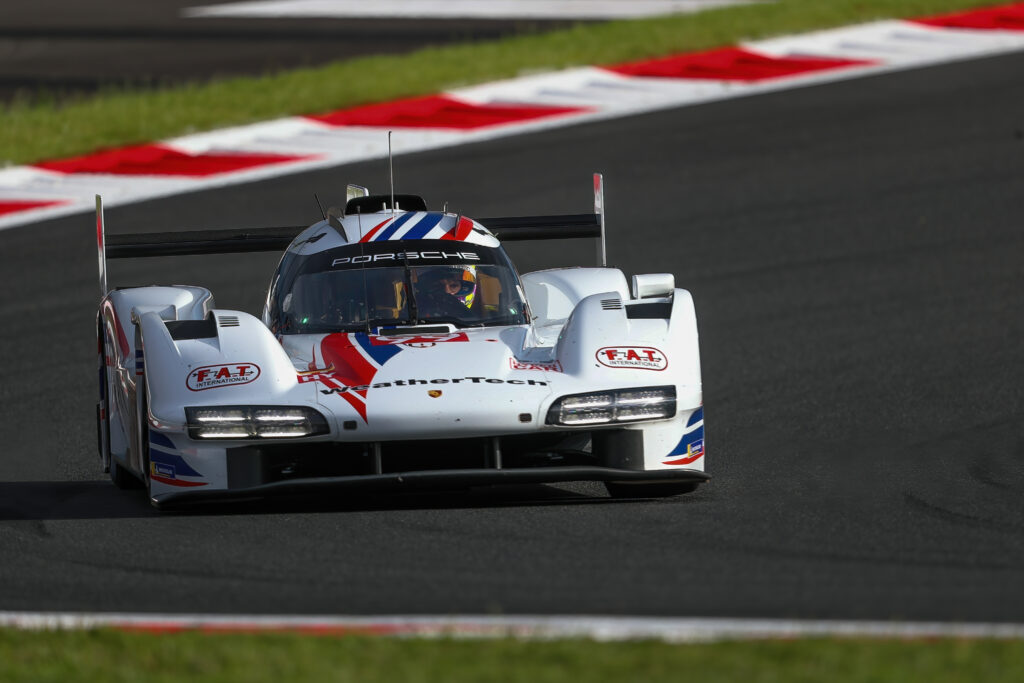
Unfortunately due to Porsche Penske Motorsport pulling out of WEC, Proton Competition’s privateer 963 has also disappeared from entry lists. This marks the end of the team’s three-year stint with the Hypercar class. When asked if the team had any plans for a return to prototypes they said: “We have already acquired a great deal of expertise in this area and are always looking for ways in which we can utilise that.” Fortunately the team’s LMP2 project is still running well in European and Asian Le Mans Series LMP2 cars.
Building on Success and High Aspirations
The team remains optimistic about the 2026 WEC season despite the rearranged calendar. The logistics of moving cars, equipment and personnel from A to B across multiple continents remains a challenge. This contrasts ELMS, where the cargo can travel overland in lorries. It also helps that most of the races are closer to the team’s base in Ummendorf. The team is aiming to continue on its “positive trajectory” for the 2026 season. This was started by the team’s first front-row lockout when WEC visited Ford’s home turf at COTA. The #88 car also scored a stunning podium at Spa, with the sister car in 4th. The team has a very clear goal for the 2026 season, to secure the Mustang’s first WEC victory. With Proton’s experience, factory support and a refined package, that first WEC victory looks less like a distant goal and more like an inevitability.
Featured image photo by Marcel Wulf | FocusPackMedia