

There’s certainly no shortage of controversial championship deciders throughout Formula 1 history. Whether it’s Prost and Senna’s clashes in 1989 and 1990, or the infamous Abu Dhabi 2021 race, the intensity of a championship battle has often boiled over in extremely contentious ways which lead to them still being talked about to this day.
[adrotate banner=”10″]
Get 10% off all official F1 Merch at TheRaceWorks.com using code ‘EF1‘ at checkout.
There are however some title deciders which have largely drifted from memory despite featuring an abundance of drama and controversy. Among these races is the 1980 Canadian Grand Prix, which provided a dramatic climax to an exceptionally hard-fought F1 season.
The Background
Unusually compared to its current place on the F1 calendar, the 1980 Canadian Grand Prix took place in late September. This made it the penultimate round of a season where the championship battle was going down to the wire.
That battle was largely the story of two men and two teams. Situated in one corner of this face-off was burly Australian veteran Alan Jones, driving for an ascendant Williams team. Jones’ opponent meanwhile was the comparatively youthful Brazilian Nelson Piquet, driving for Bernie Ecclestone’s Brabham team.

Image Credit: LAT Photography – United Autosports, CC BY-SA 2.0, Link.
Jones and Piquet had traded wins all season long, with their team’s form fluctuating throughout the year. By the time they got to Canada, just one point separated the pair, with each having three victories apiece.
Early in the season Jones and Williams held the advantage, building on a strong end to the previous 1979 season. This had helped the Williams team to clinch the constructor’s championship at the previous race in Imola. However, as the season neared its close it appeared Brabham had found form, with Piquet winning two races in a succession just prior to the Canadian event. As a result, despite Jones leading for most of the season, Piquet now held the advantage in the title battle.
The Die is Cast
Qualifying for the race seemed to confirm Jones and Williams’ worst fears, and also provided numerous other notable stories.
Jones and Williams had often run well at the Circuit Île Notre-Dame (Later renamed the Circuit Gilles Villeneuve). The previous year he and his team had taken pole at the circuit and then converted it into a fine victory on race day. Hopes were therefore high for a repeat performance in 1980.
Jones and Williams would face stern competition however. 1980 was before the days of parc ferme conditions which prohibit modifications to the cars between qualifying and the race, and Brabham took full advantage of this fact. For qualifying, they equipped Piquet’s car with a special tuned-up Cosworth DFV engine featuring a new design of piston. These pistons were fragile and could not last the full race, but contributed to a valuable increase in engine power.
Partly as a result of Brabham’s adjustments, Williams found themselves totally outgunned in qualifying. Despite Jones setting a lap nearly two seconds quicker than he’d managed the previous year, Piquet comfortably outqualified the Australian by over eight tenths of a second, making full use of his tuned-up engine. The pair therefore locked out the front row of the grid, setting the stage for a titanic title showdown.
Mixed Fortunes
While Williams were disappointed with second, a front row start would have been beyond the wildest dreams of some other prominent teams — chief among them being Ferrari.
The Scuderia had endured a terrible season, but Canada proved perhaps their lowest ebb, with a performance which provided the main story of qualifying outside of the title battle.
The team’s home hero Gilles Villeneuve managed only 22nd on the grid at the track which would later bear his name. The Quebecois’ legion of Canadian fans therefore looked like they would have a long race ahead of them.
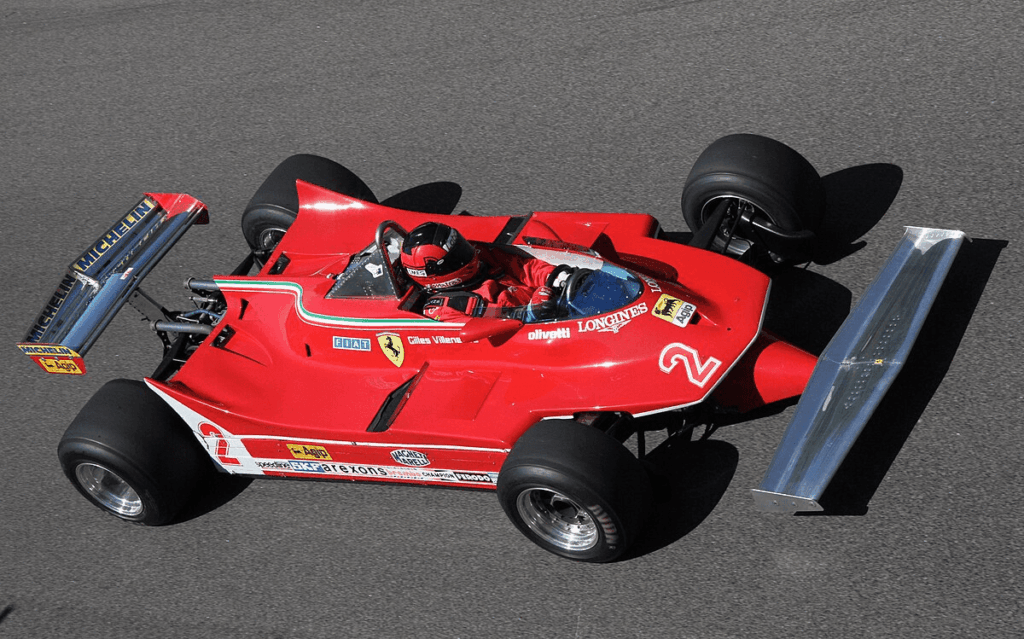
Image Credit: Legends of Motorsports – Own Work, CC BY-SA 2.0, Link.

For Villeneuve’s reigning world champion teammate Jody Scheckter however, things were even worse. Despite wringing the neck of his troublesome Ferrari 312T5, Scheckter could only manage a lap time of 1:31.688. This was nearly 4.5 seconds slower than Piquet’s pole time.
The time itself was bad, but its implications were even worse. Scheckter’s lap was good enough for just 26th on the grid, behind the likes of 19 year old Tyrrell debutant Mike Thackwell. With only the top 24 cars in qualifying being allowed to start the race, this meant that, for the first time ever, a reigning Formula 1 champion had failed to qualify for a race in his title-defending season.
Lights Out
Despite the absence of the reigning world champion, there was no shortage of drama in the race itself. Indeed, perhaps the single most climactic moment of the weekend, or even the entire season, happened almost the moment the race began.
As the lights turned to green, Jones made an excellent launch from his second place on the grid. This allowed him to get alongside Piquet and challenge him for the lead of the race. As the two title rivals negotiated the Circuit Île Notre-Dame‘s distinctive curved pit straight however, all hell broke loose.
Jones squeezed Piquet to attempt to consolidate his good start, but in doing so the Williams and Brabham came together. Jones darted clear, while Piquet came off worse of the two, with his BT49 being sent into an unavoidable spin. The closely following pack behind had nowhere to go, and six car pile up ensued. This led to the race being swiftly red flagged.
Several cars were damaged, but at the time teams were allowed to keep spare cars in case of accidents. Most drivers were therefore able to swap to their spare chassis in time for the restart, including Piquet. Few realised however that this car switch would have grave consequences for Piquet and Brabham’s title hopes…
A Rousing Restart
The second race start proved somewhat less dramatic than the first, but nevertheless provided more intrigue. This time, the best start was attained by Didier Pironi, who leapt forward from third place on the grid to challenge for the lead in his Ligier.
Jones, who once again got the jump on Piquet, was just able to see Pironi’s challenge off into the first corner. Despite holding the lead though, it was clear that the Australian was not going to have everything his own way.

Image Credit: Ian McWilliams – Own Work, CC BY 2.0, Link.
That fact was soon confirmed, as Piquet began putting the searing pace of his Brabham to good use. First he scythed almost effortlessly past Pironi on lap 2, making the Frenchman’s Ligier look totally outclassed. A lap later, he then repeated the move on Jones. It was clear that when it came to pace, the Brabham was in a league of its own in Canada.
After Piquet had passed Jones, it seemed the battle at the front of the field was all but over. Attention therefore turned to action further down the field. Of particular note was Gilles Villeneuve, who was putting in a storming recovery drive in the sole Ferrari. From 22nd on the grid he had worked his way up, and now looked a strong contender for a points finish. The hard-charging Canadian’s legion of home fans were doubtless heartened to see such a performance.
Championship Implications
Just as it seemed like things were winding down however, the whole complexion of the race changed abruptly.
That change came on lap 24, when Piquet’s Brabham ground to an agonising halt, trailing a cloud of white smoke. The Brazilian’s engine had given out, and Piquet now faced the distinct possibility of losing the title.
To rub salt in Piquet’s wounds, it transpired that the cause of the engine blow-up was an almost direct result of the accident at the first start.
The damage incurred in that accident had forced Piquet to swap to the spare car for the restart. However, what few realised at the time was that Piquet’s spare car was set up with the special qualifying engine Brabham had used to get pole. Brabham knew full well that this engine would not last the race, but were left with no choice but to use it for the restart due to the damage to Piquet’s primary car. Few in the Brabham pit were surprised when Piquet pulled to the side of the track as a result.
Jones was now in a position where if he won the race, he would be champion. However, the Australian was not out of the woods yet, as Pironi was rapidly closing on the Williams. Jones could not afford a tangle with the fiery young Frenchman if he was to win the title.
Jones’ plight was aided however by an accident neat the rear of the field. On lap 25, the Renault of Jean-Pierre Jabouille had a sudden suspension failure which launched it into the barriers at turn 3. This brought out yellow flags while marshalls extracted the wounded Jabouille, which protected Jones from being overtaken.
Crowning a Champion
Soon after Jabouille’s accident, Jones’ luck would improve even further, as it was announced that Pironi had jumped the start. The standard penalty for this at the time was to add 1 minute to a driver’s race time. Jones therefore just needed to stay within a minute of the Frenchman to claim the win.
After some uncertainty about the penalty, Williams showed its pit boards to Jones on lap 41, instructing him to ease off and allow Pironi past. While Jones’ racer’s instinct doubtless told him to fight Pironi for position, eventually the burly Australian complied with the order.
Pironi took the lead on lap 44 and held it to the flag, with Jones following the Ligier home. Second on the road became first on the dais after Pironi’s penalty, and Jones was duly crowned as 1980 champion.
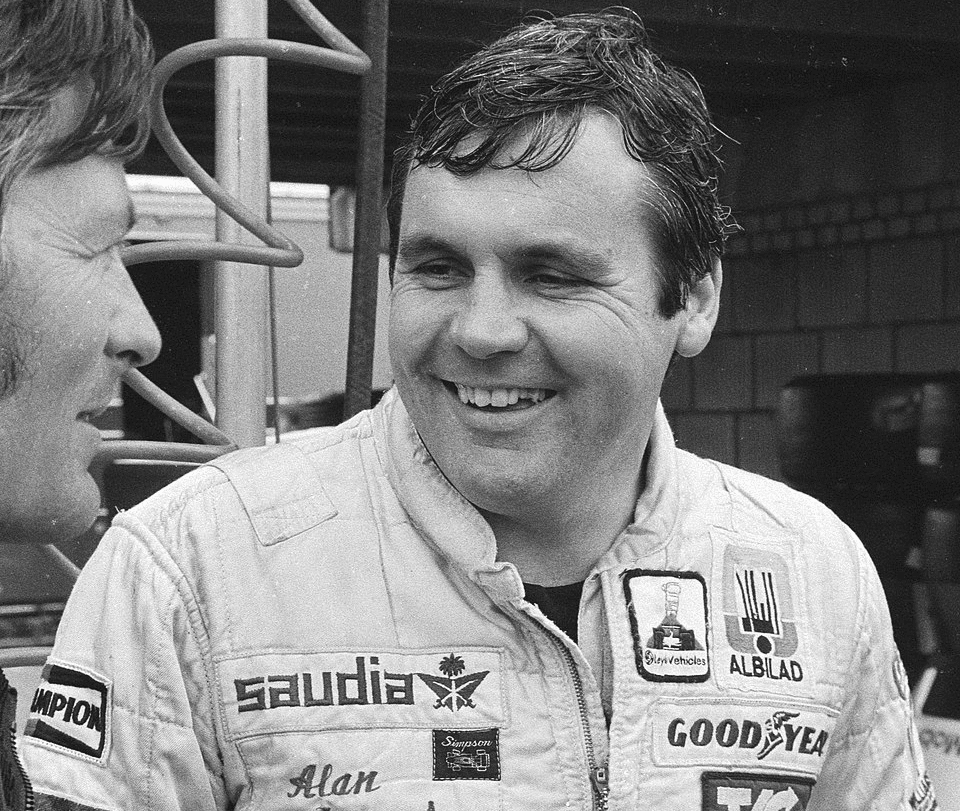
Image Credit: Hans van Dijk – Anefo, CC0 1.0, Link.

Jones and the Williams team were understandably overjoyed, but for some the race proved a bitter pill to swallow. Even to this day, rumours persist that Jones deliberately crashed into Piquet on the first start, knowing that his spare car was set up with an engine which wouldn’t last.
It’s unlikely that we’ll ever know if there is any truth to this claim. However, what is for certain given all the events of that fateful weekend is that the 1980 Canadian Grand Prix truly deserves to be remembered in the pantheon of dramatic and controversial F1 title deciders.
Featured Image Credit: Jbitte – Own Work, CC BY-SA 4.0, Link.
