

When it comes to beloved Formula 1 circuits, it’s hard to get much better than Interlagos. The spiritual home of the Brazilian Grand Prix has given F1 some of its most memorable races, and with this year’s championship battle hanging in the balance, 2025 could well add to that number.
The 2025 Brazilian Grand Prix will have a significance which goes beyond this year’s title battle though. This is because it will mark 50 years since a home hero scored his sole F1 victory at Interlagos. The driver in question’s career was tragically cut short, but his legacy lives on in the very identity of Interlagos — or to give it its proper name — the Autódromo José Carlos Pace.
Half a century on from his momentous home win, it seems only fitting to explore the career of Carlos Pace. In doing so, we can begin to understand why Brazil chose to name the country’s greatest racing circuit after him.
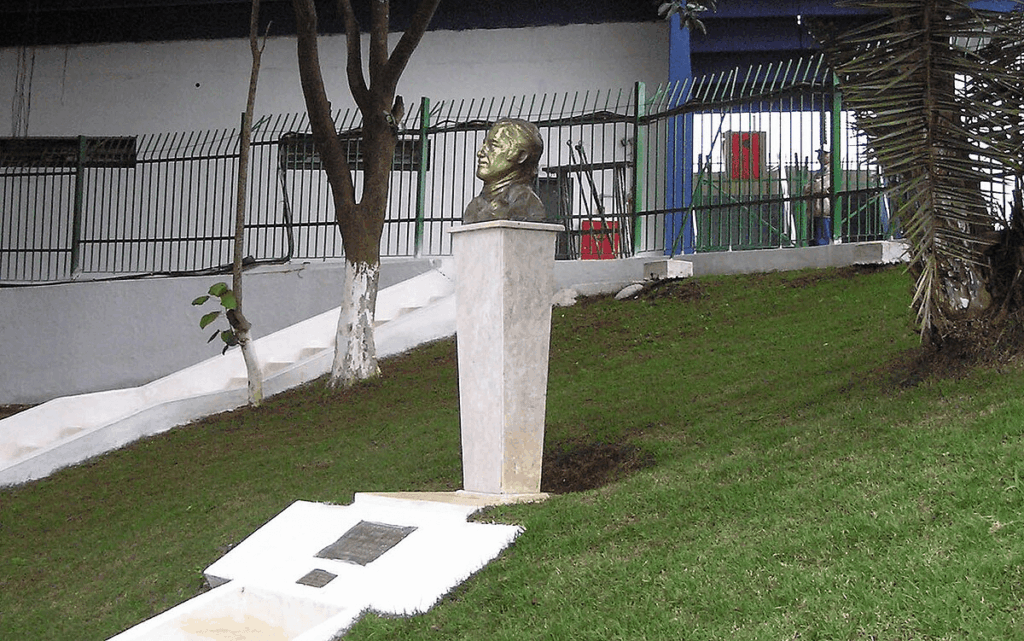
Image Credit: Morio – Own Work, CC BY-SA 3.0, Link.

A Golden Generation
As previously mentioned, Brazil has played host to some of the sport’s most memorable moments, and given F1 some of its most legendary drivers. However, the country’s involvement in F1 actually had a relatively slow start. A few somewhat forgettable drivers in the 1950s came and went, while the 1960s passed without a single Brazilian driver or race appearing in F1.
In the early 1970s though, a trio of promising Brazilian drivers burst onto the European racing scene. Together, they who would help to put their country on the Formula 1 map.
Two of these drivers were the Fittipaldi brothers — Emerson and Wilson. The former was destined to be Brazil’s first F1 world champion, while his brother gave the country their very own F1 team starting in 1975.
The third member of this group was Carlos Pace — or “Moco” as his friends called him. Pace was close friends with the Fittipaldis, and had first taken up karting at their recommendation. When the brothers began racing in Europe in the early 1970s, Pace soon joined them.
Success in Formula 3 against the likes of James Hunt soon blossomed into a Formula 2 seat with Frank Williams’ team. Williams was constantly cash-strapped at the time, and results were hard to come by. Nevertheless, Pace was able to start making a name for himself — even securing a surprise win at the Grand Prix of Imola. As it turned out, such results had not gone unnoticed…
A Breakthrough Season
Frank Williams had been very much enthused with Pace’s performances in his Formula 2 team. As a result, when the Brazilian was able to secure some sponsorship, the hard-trying British team owner offered him a shot at Formula 1. Williams could only offer him a year-old customer March chassis to drive, but it was nevertheless an invaluable opportunity.
Pace’s F1 debut came at the second round of the 1972 season in South Africa. As first races go though, it could scarcely have been tougher. After qualifying 24th, the Brazilian debutant’s chances got even more remote when his fuel pump failed before the warm-up lap. Pace’s mechanics changed the unit in the pits, but by then the race had started, and he began three laps down. Pace ran on gamely to the finish, but 16th place was little reward for his efforts.
Pace’s fortunes soon changed though, as in just his second race he was able to secure his first championship point. This was quickly followed by a battling drive to fifth at the unpopular Nivelles circuit in Belgium. In fact, only horrendous luck while lapping traffic (including a certain Dr Helmut Marko) kept Pace from an even stronger fourth place.
Either way, the young Brazilian was quickly proving himself, and beginning to turn heads among the F1 establishment. The reward for this was a seat offer for 1973 with the team run by 1964 world champion John Surtees.
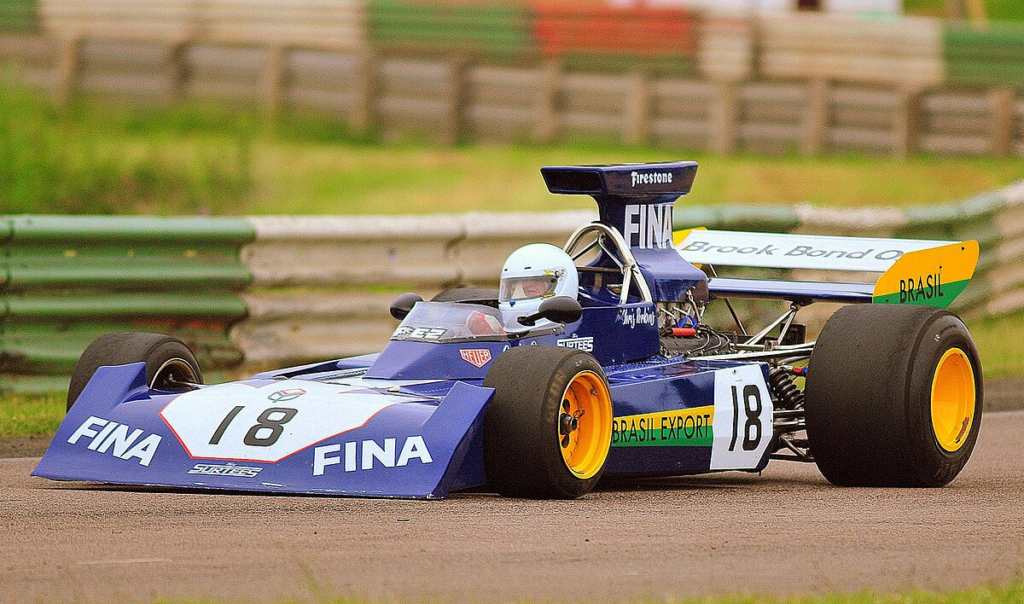
Image Credit: Tom – Picassa, CC BY-SA 3.0, Link.

Feast and Famine
Frustratingly, despite early hopes, 1973 would prove to be the epitome of a mixed year for Pace. On the one hand, the Brazilian often qualified well, becoming a regular feature in the top 10 grid positions.
However, a consistent failure to score marred his season. Usually this was down to retirements, caused by a bevy of issues ranging from persistent drive shaft failures to a rear wing collapsing. This meant that by round 10 out of 15, Pace and the whole Surtees team had yet to score.
Fortunately, a purple patch which began at the fearsome Nürburgring. rescued Pace’s season. On the long, undulating “Green Hell”, the Brazilian was in fine form and made strong progress despite qualifying 11th. This even included setting a new lap record for the terrifying track, as he powered onward to fourth place.
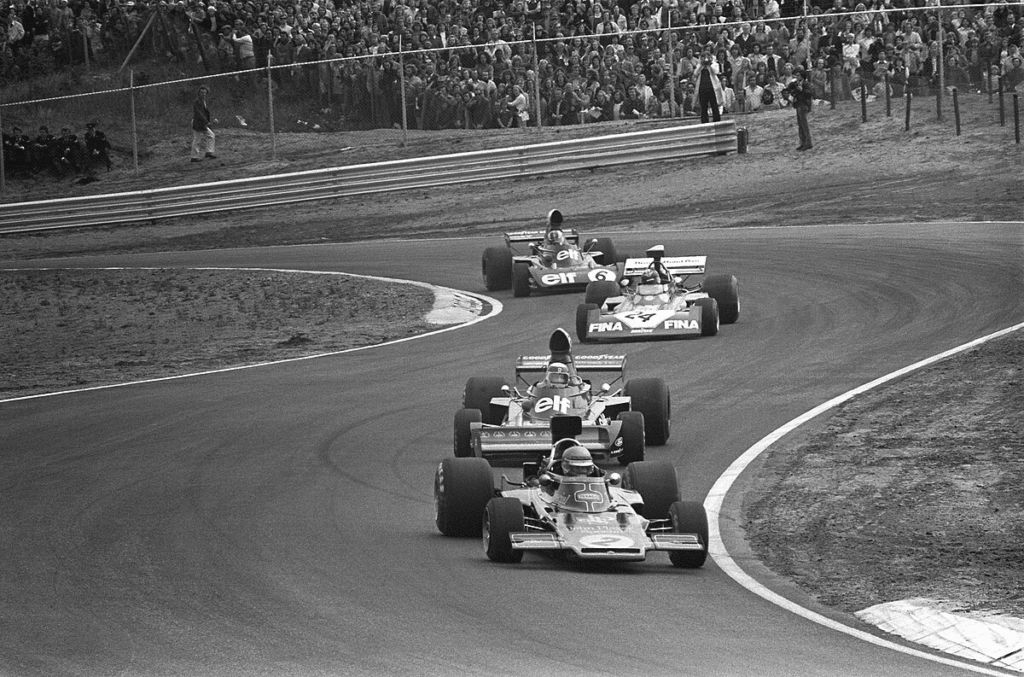
Image Credit: Rob Mieremet – Anefo, CC BY-SA 3.0 NL, Link.
The result at the Nürburgring was Pace’s best finish in F1 to date, but this wouldn’t last long. At the very next race in Austria, Pace showed truly frontrunning form for the first time. Yet again he found his Surtees running well and stormed up the field, this time from 8th on the grid.
However, where his Nürburgring charge had stalled once he was among the frontrunners, in Austria he was able to keep going. He overtook the Brabham of fellow South American Carlos Reutemann for third, and began to close on the Tyrrell of double world champion Jackie Stewart. Given Pace’s speed, an overtake looked certain, and he again set the fastest lap of the race. However, right as Pace got up behind Stewart, his engine began to cough and splutter — almost out of fuel. This obliged him to lift his foot and settle for a still excellent third place.
Opportunity Knocks
Pace would not score again in 1973, but he had nevertheless underlined his promise. As a result, Surtees eagerly re-signed him for 1974, and from his early season performance it was clear why. Another fourth place came on home soil in Brazil, while in South Africa Pace qualified an outstanding second.
However, there were hints of issues under the surface. Rumours of budget problems at Surtees were rife even during 1973, and the relationship between Pace and Surtees himself deteriorated. Things came to a head at the Swedish Grand Prix, where Pace opted to retire a healthy car after being appalled by its handling. In response, Surtees dropped the Brazilian, and he missed the next race at Zandvoort.
Pace was not out of a drive for long though. Almost as soon as it became clear he was out at Surtees, he began negotiations with the Brabham team.
This was a canny move on Pace’s part. Brabham had shown great promise in 1974, with lead driver Carlos Reutemann even winning the South African Grand Prix. However, the pay drivers used in the team’s second car had proven woefully inadequate.
Signing Pace seemed an ideal solution to this problem, and after a few races to get settled he quickly showed he was the right man for the job. His first points for the team came at Monza, and he capped off the season by following Reutemann home at Watkins Glen in a dominant 1-2 finish. Understandably, Brabham chose to retain his services for the following year.
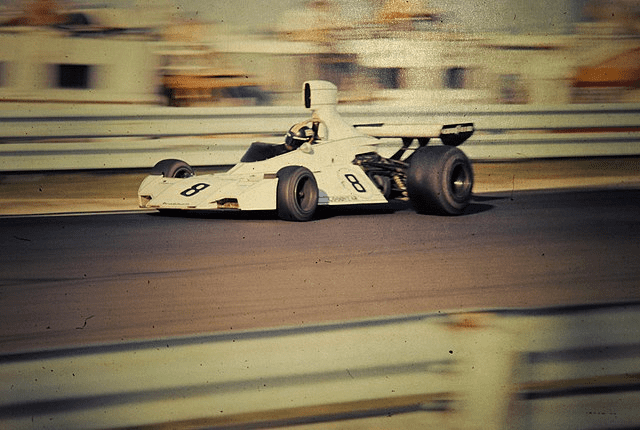
Image Credit: Christian Sinclair – Own Work, CC BY 2.0, Link
The Hero of Brazil
1975 saw Brabham continue its upwards trajectory. Martini provided substantial new sponsorship, and designer Gordon Murray’s lightened BT44B chassis proved highly competitive. The driver pairing was also strong, with Pace proving closely matched with his fellow South American teammate Carlos Reutemann. It was in this climate that Pace finally achieved his dream of F1 victory which, fittingly, came on home soil.
Brazil was the second race of the season in 1975, meant several teams — most notably Ferrari — had not yet introduced their true 1975 cars yet. As a result, the pecking order in the first few races what somewhat different to the rest of the year. Happily for Pace and Brabham, their BT44B proved to be among the quickest cars in this period.
Pace qualified a slightly disappointing 6th for his home race, but once again he was able to show his prowess as a racer. An excellent start elevated him to third almost immediately, and set him up to contend for victory.
By lap 12 he was up to second, after passing his teammate Reutemann who was struggling after choosing harder tyres. Only pole-sitter Jean-Pierre Jarier in his Shadow stood between Pace and a memorable home win.
For most of the race though, it looked like a still-excellent second was the best Pace could hope for. Jarier was not putting a foot wrong, and by half distance his lead looked unassailable.
Quite suddenly however, the gap between Pace and the leader started to tumble. The Brabham man was pushing hard, but even that didn’t explain the rate he was closing in at. Jarier was in trouble!
Jarier’s problems were confirmed on lap 33 out of 40 as the partisan Brazilian crowd went berserk. The Shadow’s fuel system had packed up, and Pace was now in a healthy lead. 7 laps remained, and Pace nursed the car home to win. Even sweeter for the home crowd and indeed for Pace, his friend and compatriot Emerson Fittipaldi had made his way up to second place. It was the first ever Brazilian 1-2 in F1, and on home soil at that.
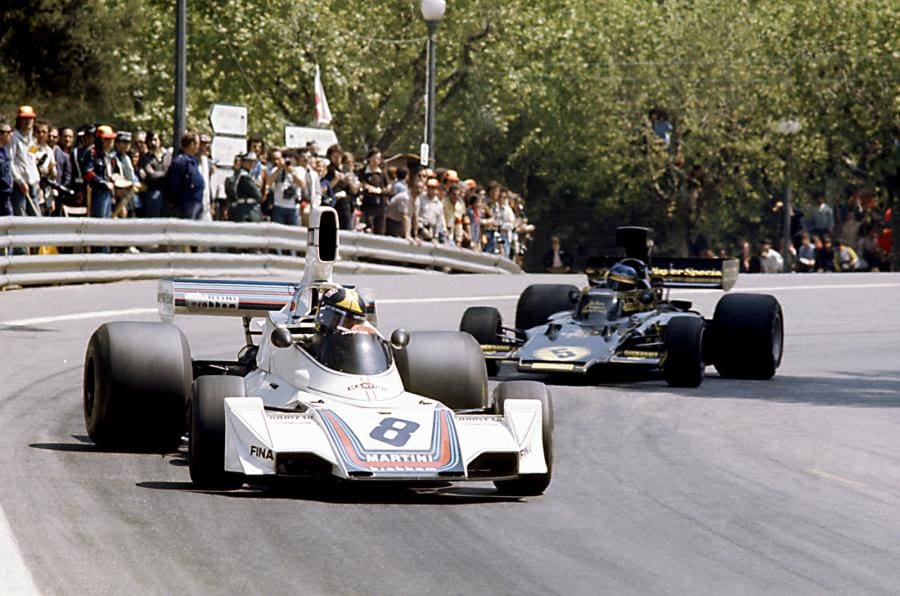
Image Credit: Crazylenny2 – Own Work, CC BY-SA 2.0, Link.
Losing Momentum
Pace would not manage to repeat his home victory in 1975. He claimed pole at the following race in South Africa, but quickly faded with brake issues. Thereafter, he was consistently competitive, claiming podiums in Monaco and Britain, but could not recapture winning form.
Part of that was down to the performance of Ferrari. Once the Scuderia introduced their 312T chassis, they became comfortably the dominant force in F1 in 1975. Part of this was put down to the power of their 12-cylinder engine, and as a result Brabham did a deal with Alfa Romeo to secure supply of a similar engine for 1976. The hope was that this would be the last piece of the puzzle to make the team world champions.
Unfortunately for Pace and Reutemann, it wasn’t to be. The Alfa Romeo engine initially proved to be overweight, underpowered and unreliable. The result was a car far less competitive than its Cosworth-powered predecessor.
Pace knuckled down to help develop Brabham’s new BT45 car. This notably included becoming the first driver ever to race with carbon brakes at the 1976 Austrian Grand Prix. However, results were still hard to come by, and Pace’s teammate Reutemann opted to leave Brabham before the year was out.
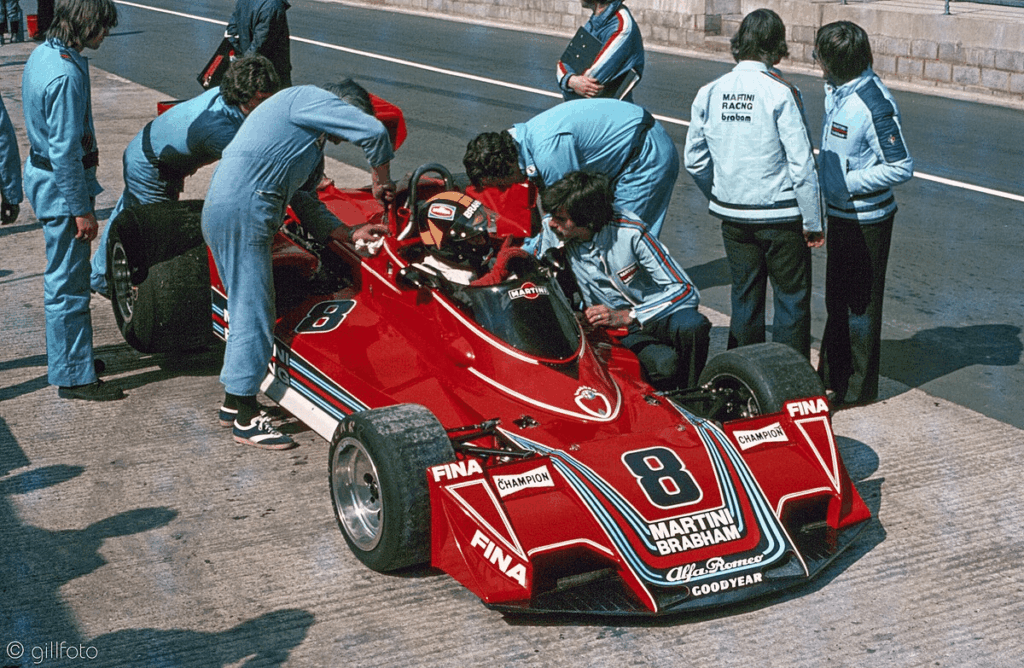
Image Credit: Gillfoto – Own Work, CC BY-SA 3.0, Link.

A Promising Start
Reutemann’s departure promoted Pace to clear number 1 driver at Brabham for 1977, and there was reason to be upbeat. Development efforts had begun to yield results in late 1976, and the new BT45B chassis looked quick in testing.
The early races of 1977 seemed to confirm this form. Both Brabhams performed well at the first race of the season in Argentina. In fact, Pace looked set for victory until 5 laps from the end, when he was passed by the Wolf of Jody Scheckter after having to slow down due to heat exhaustion. A second place finish still got his season off to a strong start though.
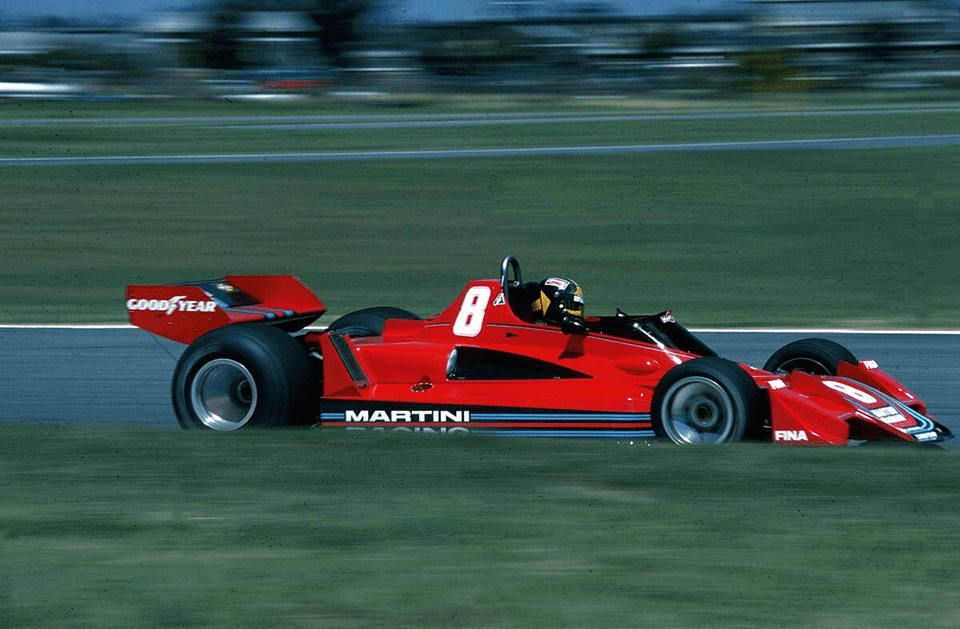
Image Credit: Crazylenny2 – Own Work, CC BY-SA 2.0, Link.
Pace was eager to avoid potentially having to concede the lead again at his home race in Brazil, and spent the gap between races doing fitness training. Once again he ran well, taking the lead at the start, but this time a collision with James Hunt scuppered his chances.
Despite these mishaps, Pace and Brabham were clearly in good form, and were being talked about as potential title contenders. Most considered it only a matter of time before Pace added to his victory tally.
Gone, But Not Forgotten
However, after a tragic third race of the season at Kyalami, where fellow driver Tom Pryce died, the F1 paddock experienced another calamity. After returning home to Brazil to get some relaxation in between races, Pace was killed in a light aircraft crash. This made him the second F1 driver fatality in just two weeks.
Pace’s death wracked the Brabham team, and indeed all of Brazil. While other Brazilian talents arrived in F1, such as Nelson Piquet and Ayrton Senna, the nation never forgot the impact of Carlos Pace and his home victory. It was for that reason that in 1985, ten years on from his win, the Interlagos circuit was renamed the Autódromo José Carlos Pace. It has retained that name ever since, and 50 years on from his win there, it continues to thrill crowds just as it did back in the day…
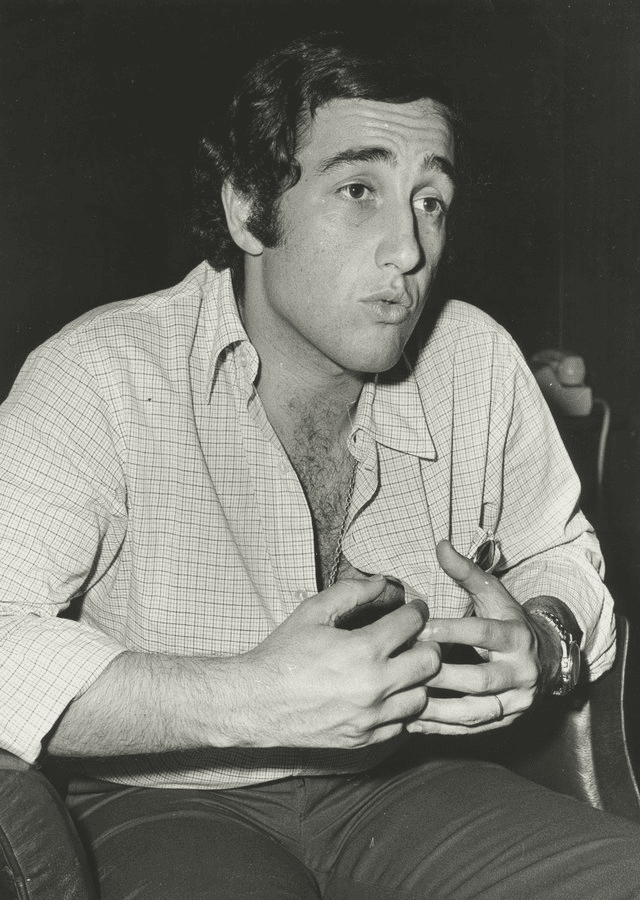
Image Credit: Public Domain – Brazilian National Archives
Featured Image Credit: Image Credit: Raimund Kommer – Own Work, CC BY-SA 3.0, Link.
