

With F1 Returning to the Spanish capital in 2026, the memory of its divisive previous circuit, remains.
A Circuit is Born
Since 1991, the Circuit de Barcelona-Catalunya has been Formula 1’s home in Spain. The upcoming 2025 Spanish Grand Prix will be the 35th F1 race held on the circuit. This record is only surpassed by stalwarts of the calendar like Monza and Silverstone.
However, it looks like Catalunya’s place as the home of Spanish F1 could well be superseded in the near future. While the circuit has a contract to host F1 until the end of 2026, in early 2024 Formula 1 management signed a deal to move the Spanish Grand Prix to a newly constructed street circuit in the heart of Spain’s capital — Madrid.
That deal is set to come into effect next year, with the new circuit being dubbed the “Madring”. However, while the circuit itself will be all-new, this will not be Madrid’s first time hosting Formula 1.
In fact, the Spanish capital has a fairly storied history when it comes to F1. Indeed, nine championship F1 races took place on a circuit just 20 miles from Madrid.
That circuit was Jarama — named after the river which bore witness to one of the bloodiest battles of the Spanish Civil War.
Impetus for the construction of the circuit was provided by the Real Automóvil Club de España. Looking to return the Spanish Grand Prix to the F1 calendar for the first time since 1958, they commissioned legendary Suzuka designer John Hugenholtz to devise a new circuit.
What Hugenholtz came up with was a tight, twisting circuit featuring eleven corners in its original layout. Even for the time the track was considered narrow and challenging for drivers, though its modern facilities received much praise.
Jarama Finds its Place
The track hosted its first Formula 1 race in 1967. As was typical for the time though, this was a non-championship event meant to ensure the circuit’s preparedness.
The 1967 event went off largely without a hitch, and F1 duly signed a contract with the race organisers. Come 1968, Spain would make its return to the F1 calendar properly, with Jarama as its home.
That 1968 race proved to be a poignant one. As the second round of the season, it marked the first race since the death of double world champion Jim Clark in a Formula 2 event a month earlier. There was brief concern that the race may be cancelled on safety grounds. All involved were therefore thrilled when the race went ahead and Graham Hill won for Lotus. This lifted the spirits of a team which had been Clark’s home for his entire F1 career.
A successful first race could not prevent F1 from signing a deal with a rival Spanish circuit for 1969 however. Drivers considered the track at Montjuich park in Barcelona to be more entertaining and challenging than Jarama, and its bid to join the F1 calendar was therefore accepted. From that date onward, Jarama and Montjuich would alternate as hosts of the Spanish GP.
Nevertheless, Jarama still played an important role in F1. With its position at the start of the European leg of the F1 season and its excellent pit facilities, teams often chose the track as the venue to debut new cars or large upgrade packages. Despite moving homes numerous times, the Spanish Grand Prix has maintained this role ever since.
Cracks Start to Show
Fittingly, the 1970 race at Jarama saw the debut of the Lotus 72 — one of F1’s most historically significant cars. However, that race was best remembered for its colossal, fiery crash between Jacky Ickx and Jackie Oliver.
Jackie Stewart navigated the carnage in his Tyrrell-entered March 701 to win. This marked a historic first win for both Tyrrell as a team, and March as a constructor — both of which were in their first seasons in Formula 1.
In many ways, that 1970 race started a chain of events which would eventually see Jarama drop off the F1 calendar. Influenced by the Lotus 72, F1 cars began to sprout more and more downforce-generating wings, and got wider and wider. By the middle of the 1970s, most cars were around 2.15 metres wide — even wider than modern F1 cars.
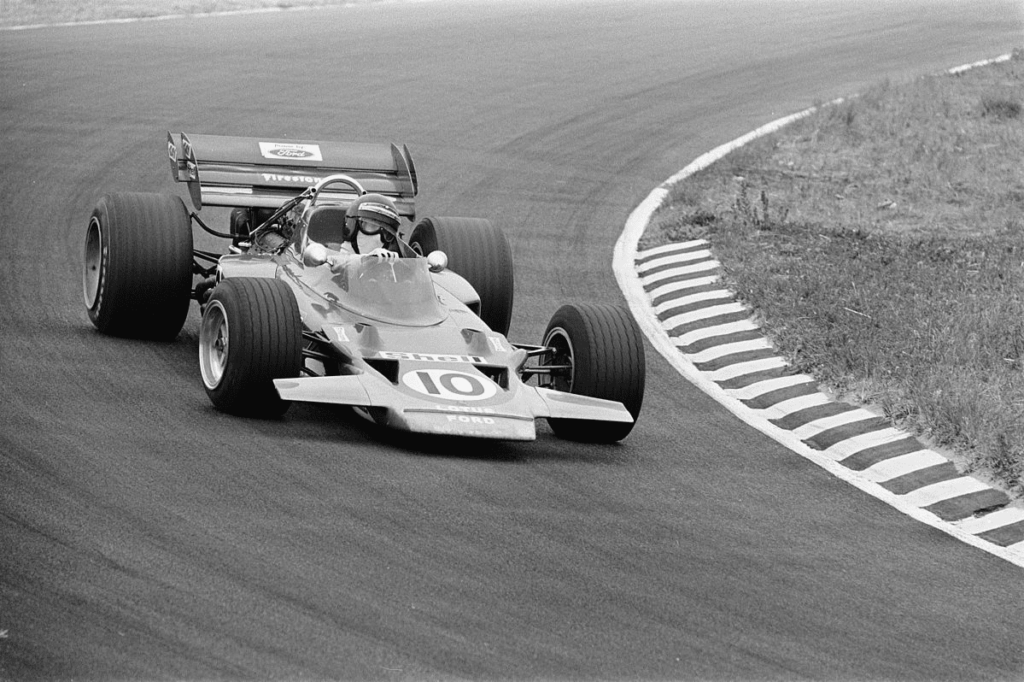
Image Credit: Joost Evers / Anefo – Own Work, CC BY-SA 3.0 NL, Link.

This was bad news for Jarama, which was already narrow for the more svelte cars of the 1960s. With cars getting wider, overtaking on Hugenholtz’s track now became a near impossibility.
Nevertheless, Jarama was thrust into a more prominent role from the mid 1970s onwards. A tragic accident at the 1975 Spanish Grand Prix at Montjuich saw Jarama’s rival Spanish circuit dropped from the calendar. Madrid would therefore be the sole home of Spanish F1 for the rest of the decade.
Bright Spots
Jarama did still provide some notable intrigue during its latter years on the calendar. The 1974 event proved very watchable, with mixed conditions eventually seeing Niki Lauda claim his first F1 victory for Ferrari. Even in cases where there was a lack of frenetic overtaking action, the off-track drama Jarama provided often made up for it.
The 1976 race meanwhile, in the midst of the famed Lauda vs James Hunt title battle, included entertainment both on and off track.
Perhaps the most talked-about development of that race weekend was the long-awaited debut of Tyrrell’s P34. Their famed six-wheeled Formula 1 car had been unveiled late the previous year, and Jarama was chosen as the destination for the radical machine to finally make its grand prix debut.
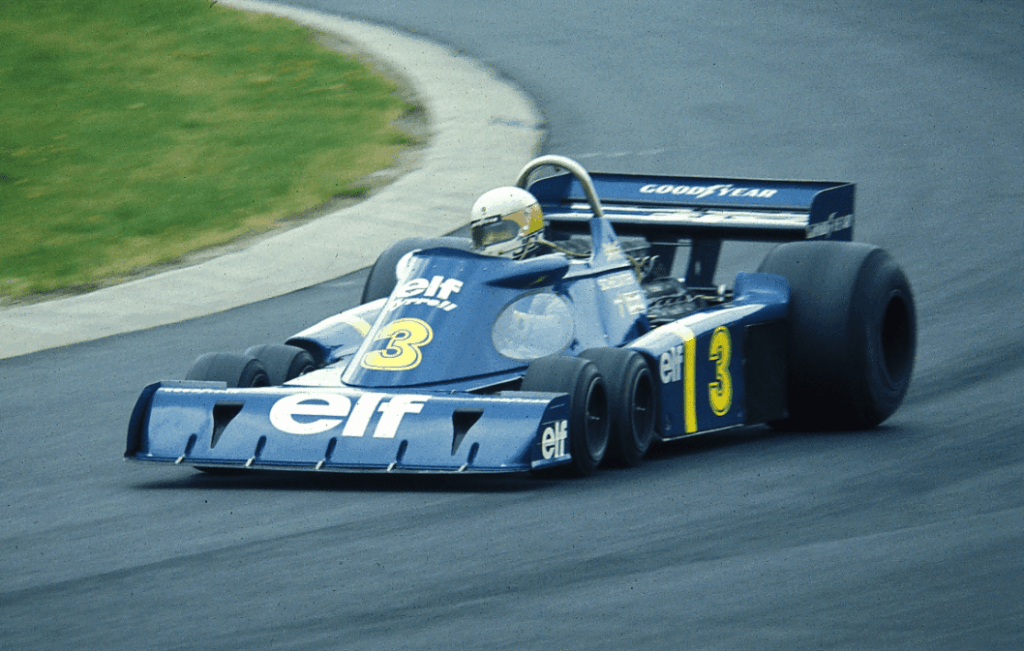
Image Credit: Lothar Spurzem – Own Work, CC BY-SA 2.0 DE, Link.

In the race itself, Hunt delivered his strongest drive of the season up to that point. In his newly upgraded McLaren M23, he reeled in the Ferrari of Lauda and overtook him on track to win. Soon after though, Hunt was disqualified, as it was discovered his car was wider than the new 2.15 metre width limit introduced for that race. The subsequent political wranglings which led to Hunt’s eventual reinstatement proved to be one of the many storylines of that season.
Even races like 1976 couldn’t fully hide Jarama’s issues though. As the decade wore on, quality races at the track became rarer and rarer. Fans, drivers and pundits alike became frustrated with the track, with some denouncing it as a “mickey mouse” circuit. Calls therefore grew louder for the track to be dropped from the F1 calendar.
A Last Hurrah
Jarama’s cause wasn’t helped by a dispute in 1980 which saw that year’s race relegated to non-championship status. This placed huge financial strain on the race organisers.
The combination of financial issues along with complaints from fans and drivers alike were too much for Jarama. As a result, the 1981 Spanish Grand Prix was to be the last F1 race on the circuit.
That final race proved a fitting send off, albeit one defined by the performance of one man — Gilles Villeneuve.
Villeneuve was driving for a Ferrari team which was having a difficult start to the 1980s. The team’s 126CK car featured an immensely powerful turbocharged engine, but its chassis was extremely poor.
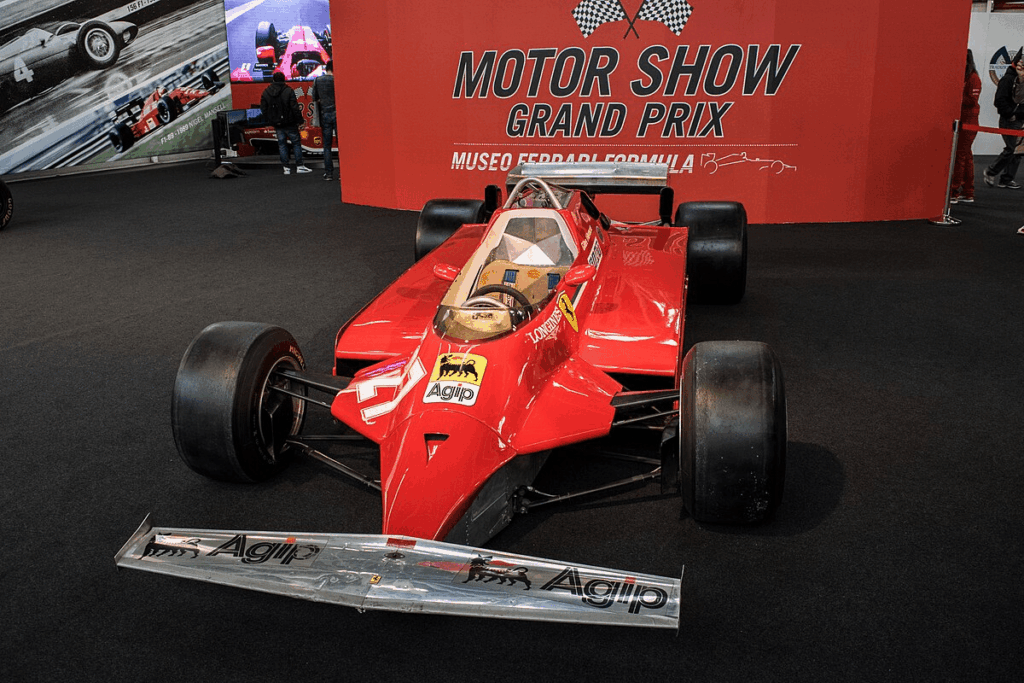
Image Credit: Maurizio Cefariello – Own Work, CC BY 2.0, Link.
.jpg)
Nevertheless, Villeneuve qualified 7th at Jarama, and then darted up from that grid position to take second place at the start. Second place then became first when early leader Alan Jones spun off on lap 13.
With 66 laps still to run however, Villeneuve had his work cut out to maintain the lead in his ill-handling Ferrari.
Villeneuve held firm however, taking advantage of the difficulty of overtaking around Jarama. A gaggle of faster cars formed behind the Ferrari, but Villeneuve remained error-free all race long.
At the fall of the chequered flag, the Ferrari was tailed by four quicker cars, each separated by just 1.24 seconds. It was the second closest finish for a top five in Formula 1 history.
Lessons for the Future
While Jarama may be long gone from Formula 1 today, its history can nevertheless inform us on what the new Madrid circuit needs to do to be successful.
Jarama did several things very well. Its excellent facilities for the time made it a favourite destination for teams to get a read on new cars and upgrades. This is a factor which the current Barcelona-Catalunya track has also taken advantage of.
Jarama’s location was also a boon, with its placement right outside Madrid always ensuring strong crowds at races.
However, being located in the capital of a country with a rich motorsport history like Spain is not enough to make a circuit successful on its own. The new “Madring” must provide a track which is more conducive to quality racing than Jarama did if it is to be successful.
For the time being though, we can only speculate on if the Madring will be a success story for Spanish F1, or if it will be relegated to the pages of history like the last track in Madrid which hosted Formula 1.
Featured Image Credit: Carlos Texidor Cadenas – Own Work, CC BY-SA 4.0, Link.

Get 10% off all official F1 Merch at TheRaceWorks.com using code ‘EF1‘ at checkout.