

The Suzuka International Racing Course (aka “Suzuka Circuit”) remains a firm favourite for both fans and drivers.

Circuit Stats
| Track Length | 5.807km |
| Number of Laps | 53 |
| Race Lap Record | 1:30.983 (Lewis Hamilton – 2019) |
| Qualifying Lap Record | 1:27.064 (Sebastian Vettel – 2019) |
| First Grand Prix | 1987 |
| First Race Winner | Gerhard Berger |
| 2023 Race Winner | Max Verstappen |
Circuit History
Soichiro Honda first laid out his plans for a racing facility in the early 1960’s. His car and motorcycle manufacturing company (which you may have heard of) began racing internationally in the late 1950’s. Seeking to turn his business into an automotive powerhouse, Soichiro determined that the company should have its very own test track.
Japanese infrastructure was some way behind that of the Western world. There were few paved roads, and permanent racing facilities were rarer still. In 1959, land was purchased to construct Honda’s circuit. One year later, construction began, based on an initial design around a lake complex. Consisting of several long straights, the circuit was flat but was likely to have been fast. However, Honda felt something was missing and decided to recruit some expert help in order to produce what would become a world-class venue.
Expert Design
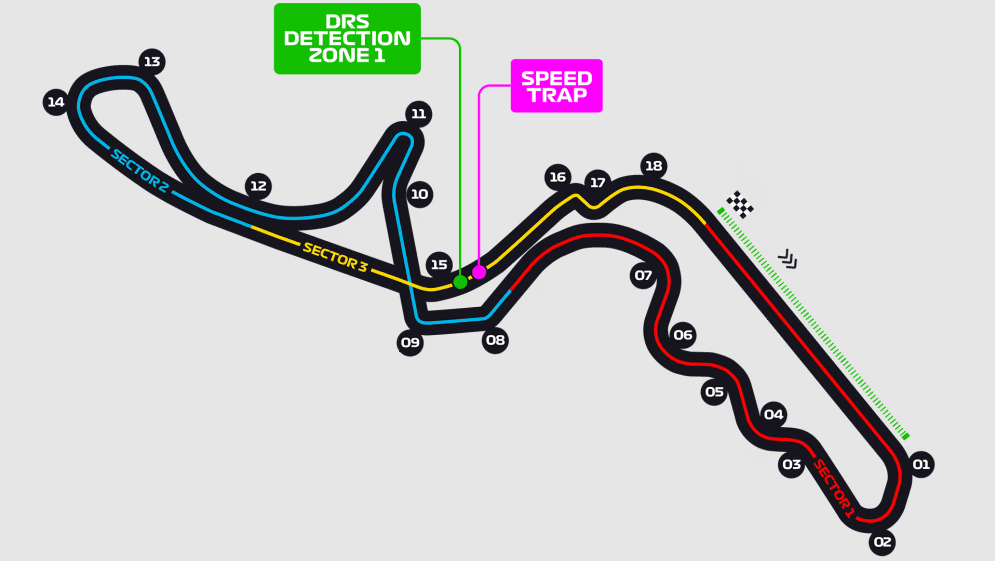
In 1961, a telegram was sent which simply read “I’m building a circuit. Please come to Tokyo, Soichiro Honda”. The recipient of this telegram was none other than John Hugenholtz, who had designed the Zandvoort circuit. Hugenholtz produced a design which originally had 3 crossover sections, although this was later reduced to one. There was also a complex of hairpin bends, which is now the site of the famous “Esses”.
Hugenholtz did have some concerns, notably the number of rice fields in the area. Honda told the Dutchman “Tell me where you want the track, and we’ll sort it out”. The farmers were paid off and given new sites for their fields, and construction began. By 1962, the completed circuit opened for business.
Among the first car races was a “sportscar Grand Prix”, with Peter Warr’s Lotus 23 taking victory. World championship motorcycle racing, along with Honda’s participation, took place at the circuit in the 1960’s. Major events included Formula 2, and the famous 8 hour endurance motorcycle event, which began in 1978.
Ambition Reborn
The ambition to become a world-beating venue was reignited in the 1980’s. This was partially fuelled by Fuji’s (brief) emergence onto the F1 calendar. In 1982, Honda re-entered the FIM world championships. One year later, renovations commenced, with the ultimate goal of having Suzuka hosting F1 in Japan.
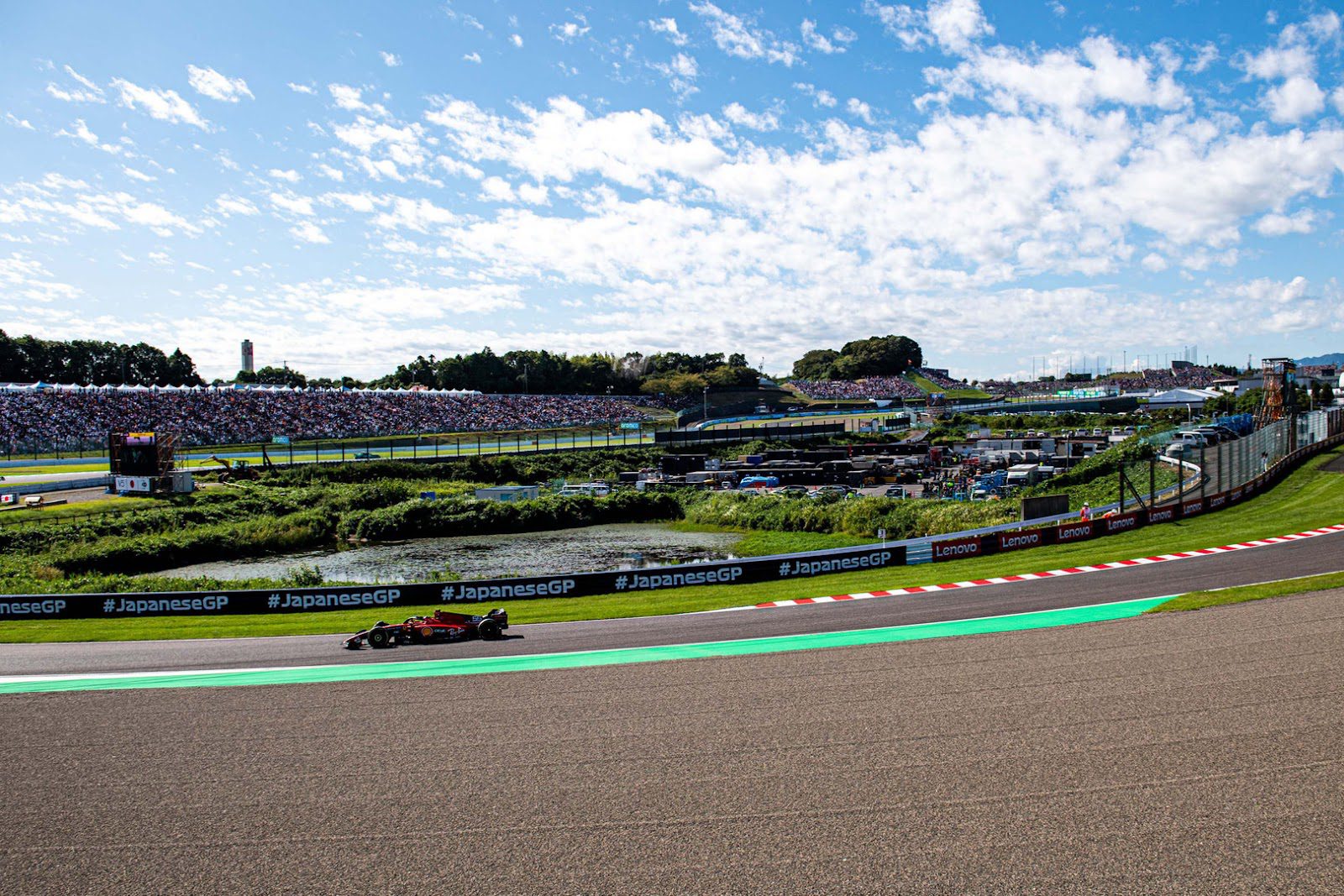
The installation of a chicane before the last curve was the first of the changes, implemented in 1983. Armco barriers were also installed at additional points around the circuit, whilst run-off areas were increased at others. These changes were largely down to the increasing speed of cars. A lack of run-off at the final corner had also been a point of concern for some time.
More drastic changes came in 1984. The Spoon Curve section (turns 13 to 14) was realigned in its entirety. This allowed the creation of a large run-off area for the first time. A side-effect of this was the requirement to remodel the 200R curve (turn 12) so that it blended in with the new section. In 1985, the first corner was also tweaked, with a short straight now connecting turns 1 and 2.
Suzuka Success
The hard work paid off, and it was announced that Suzuka would join the Formula One calendar from 1987. In the off-season, medical facilities, new pit buildings, a heliport and a refurbished control tower were installed. Modifications were made to the Degner Curve in July, with the corner being squared off into two sharper bends connected by a straight. The hills surrounding the Degner Curve were also altered to help visibility, and a gravel trap was installed.
The anticipation for Suzuka’s first F1 race was so high, grandstand tickets had to be allocated through a lottery system. It gained popularity at an incredible rate, and remains a firm favourite on the calendar.
Continual Evolution
In 2001, Fuji Speedway expressed fresh interest in Formula One returning to the circuit. Suzuka responded with a new programme of upgrades, ensuring they kept their coveted spot on the calendar. A pledge of £18-million for circuit alterations and facility improvements was made, which included creating room for more run-off and the repositioning of perimeter walls.
In 2002, the run-off at the 130R (turn 15) was urgently improved following Allan McNish’s huge crash, re-profiling the high-speed corner into a more sweeping turn. A new chicane was also added closer to the 130R.
Unfortunate Tragedies
Such is the risk in any motorsports race, Suzuka has seen its share of tragedy. In 2002, Japanese MotoGP star, Dajiro Kato, was killed when he high-sided and was thrown from his bike into the retaining wall on the approach to 130R. MotoGP dropped the circuit from its race calendar due to their concerns regarding safety.
Formula One also experienced tragedy at Suzuka. In 2014, Jules Bianchi lost control of his car on lap 43 and collided with the rear of a wheel loader that was tending to the removal of Adrian Sutil’s crashed Sauber. The left side of Bianchi’s Marussia was extensively damaged, and the roll bar was completely destroyed as it slid underneath the wheel loader. The impact was so great, that the wheel loader partially jolted off the ground, causing it to drop the Sauber back to the ground.
The race was stopped, with Lewis Hamilton being declared the winner. Sadly, nine months later, Jules Bianchi passed away as a result of his injuries from the crash at Suzuka. This made him the first Formula One driver to be killed by injuries sustained during a Grand Prix since Ayrton Senna’s death 20 years prior.
The Home of the Japanese Grand Prix
Suzuka is highly rated by drivers, as it is one of the few circuits that still throws a serious challenge to them. In such a small space, almost every type of corner is represented, and the crossover section is a truly iconic race circuit feature.
The circuit previously hosted Formula One on an alternating basis with the Fuji Speedway. However, Suzuka has exclusively hosted the Japanese Grand Prix every year since 2009, with the only exceptions being in 2020 and 2021 due to the Covid-19 pandemic. It remains one of F1’s most influential tracks, and is set to host the Japanese Grand Prix until at least 2029.
Iconic Moment
It’s 1989. Ayrton Senna needs to win the Japanese Grand Prix in order to keep his championship hopes alive. His championship rival? Alain Prost.
Senna started from pole position, but Prost took the race lead. A slow pitstop for Senna aided the Frenchman’s advantage, but newly fitted tyres shifted the power balance. By lap 43, the only hurdles left for Prost and Senna were each other.
Senna caught Prost on lap 40. The gap between them remained at roughly one second for the next five laps. On lap 46, as the pair flew through 130R, Senna made a dive down the inside of his teammate. Prost, however, moved across the track to block his path.
The two McLaren drivers collided just before the apex, wheels locked and engines stalled. The pair slid to a halt in the chicane escape road. Prost unbuckled his restraints and vacated his car, convinced that the race was done and the world championship settled in his favour.
Senna had other plans, and signalled to the marshals. As the McLaren was pushed forward, he restarted his engine and accelerate back to the pits for repairs. Senna re-joined the race and, two laps later, retook the lead (ironically in the same place his earlier collision had occurred). Senna soon took the chequered flag, but the controversy wasn’t over yet.
Immediately after the race, Senna was disqualified by the stewards for missing the chicane following his collision with Prost. McLaren appealed, citing that Senna hadn’t gained any advantage by missing the chicane. The disqualification was upheld, with a further $100,000 fine and a suspended six-month ban were imposed on the driver.
What’s your iconic Japanese Grand Prix moment? Let us know in the comments!