

Formula 1 is back for the Emilia Romagna Grand Prix. We take a look at the history of Imola’s Autodromo Internazionale Enzo e Dino Ferrari.
[adrotate banner=”10″]
Get 10% off all official F1 Merch at TheRaceWorks.com using code ‘EF1‘ at checkout.
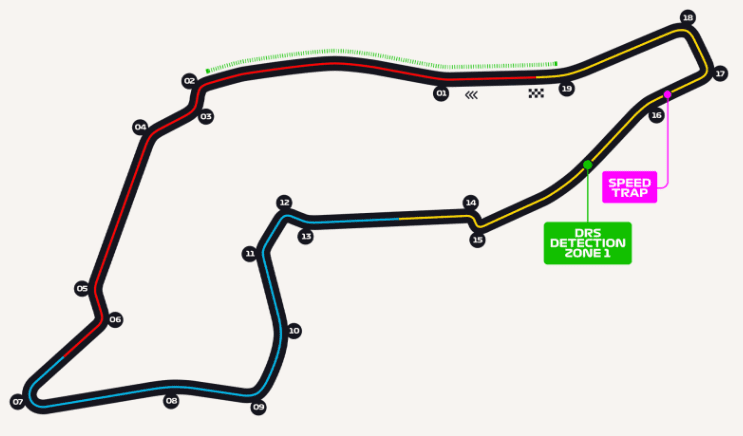
Circuit Stats
| Track Length | 4.909 km |
| Number of Laps | 63 |
| Race Lap Record | 1:15.484 (Lewis Hamilton – 2020) |
| Qualifying Lap Record | 1:13.484 (Valtteri Bottas – 2020) |
| First Grand Prix | 1980 |
| First Race Winner | Nelson Piquet |
| 2023 Race Winner | N/A (the most recent winner was Max Verstappen in 2022) |
Circuit History
Imola is one of four locations in Italy to have hosted a Formula 1 Grand Prix. Monza, Mugello and Pescara make up the other three.
The Autodromo Internazionale Enzo e Dino Ferrari is a combination of complex curves and extreme technicality. It can be difficult to read, especially in changing weather conditions, and takes an impressive amount of skill to avoid getting caught out.
The circuit was designed by Checco Costa, and was opened in 1953. It has since hosted multiple motorsports events, including Formula 1, the European Le Man Series, MotoGP and World SBK Superbike.
A Race By Many Names
The name of the Grand Prix hosted at Imola has changed multiple times over the decades.
Imola first hosted a non-championship Formula 1 race in 1963, with Jim Clark taking the victory for Lotus. A second non-championship race took place in 1979, with Niki Lauda driving his Brabham-Alfa Romeo to take the win.
One year later, Imola made its official Formula 1 World Championship debut, hosting the 1980 Italian Grand Prix. This marked the first (and only) time since 1948 that Monza did not host the Italian Grand Prix.
From 1981, Imola gained the title of the San Marino Grand Prix. It ran alongside Monza’s Italian Grand Prix until the end of the 2006 season. In 2007, Formula 1 dropped Imola from the calendar, and it wouldn’t return until 2020.
2020 And Beyond
The Covid-19 pandemic forced some drastic changes to the race calendar. Imola placed their bid to fill a gap left by the cancelled Chinese Grand Prix, later confirming their return. The race was named the Emilia Romagna Grand Prix, in honour of the region that the circuit is located in.
The 2020 race saw an unusual break in tradition. Instead of the 3-day weekend format, it was instead held as a 2-day weekend. Friday was scrapped entirely, and there was just one practice session before qualifying on Saturday.
The race returned again in 2021 (due to the postponement of the Chinese Grand Prix), and again in 2022. Imola was, however, absent from the 2023 calendar due to extensive flooding in the Emilia-Romagna region.
Imola is currently due to host a Formula 1 Grand Prix until 2025.
[adrotate banner=”10″]
Get 10% off all official F1 Merch at TheRaceWorks.com using code ‘EF1‘ at checkout.
Ferrari’s Stomping Ground
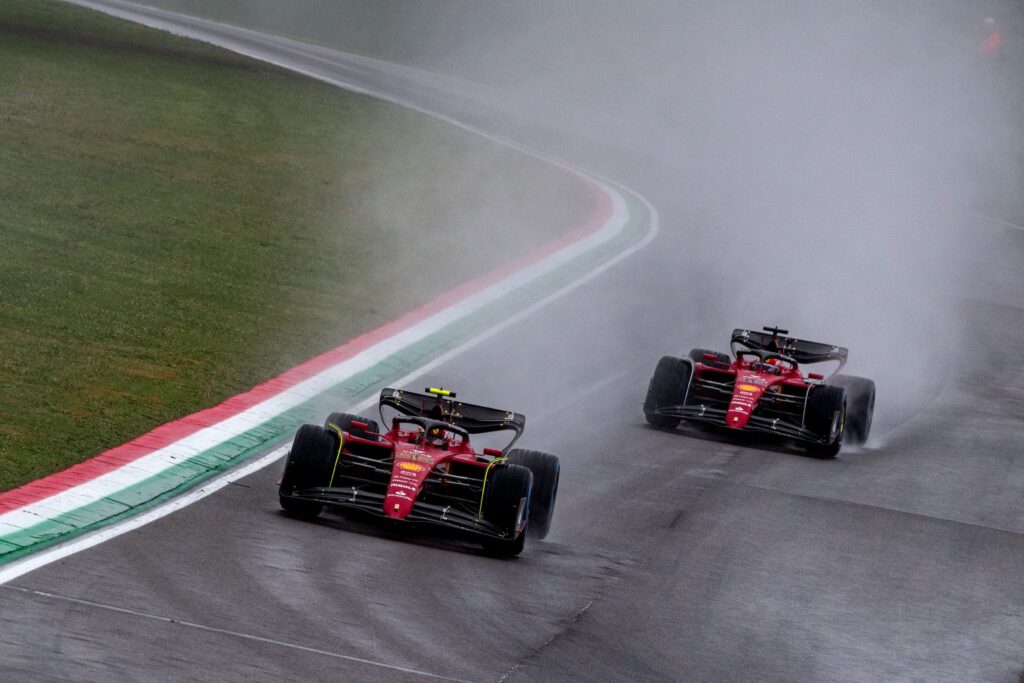
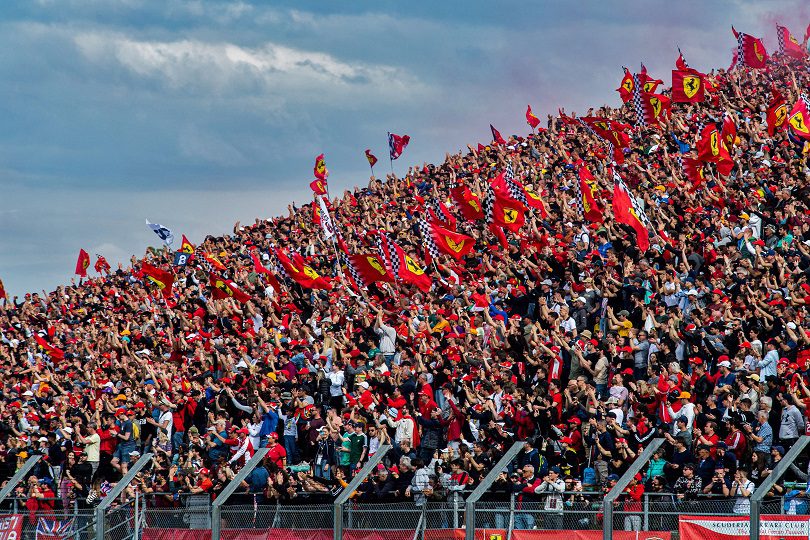
Imola is considered the home race of Ferrari, as the team is situated in nearby Maranello. It’s an impressive sight to witness the sea of red in the grandstands, as the Tifosi cheer on their drivers.
The circuit was orignally named “Autodromo di Imola” between 1953 and 1956. In 1957, the name was changed to “Autodromo Dino Ferrari”. In 1988, the name was extended to “Autodromo Internazionale Enzo e Dino Ferrari”.
The ties between the Ferrari family and the circuit run deep. Enzo recalls the origins of the racetrack in his 1980 book.
“My first contact with Imola dates back to the spring of 1948. I thought from the first moment that this hilly environment could one day become a small Nürburgring due to the natural difficulties that building the road belt would have to cross, thus offering a truly selective path for men and machines. From this opinion, the promoters of Imola felt comforted. In May 1950, construction began. I was present at the ground-breaking ceremony, which was hosted by the lawyer Onesti with the greeting of CONI and a contribution of 40 million that I think was the first gesture of the body to motorsports.
A small Nürburgring – I repeated that day looking around – a small Nürburgring, with equal technical resources, spectacular and an ideal path length. This belief has been achieved through the decades that have passed since then.”
Safety Concerns Prompt Changes
Throughout the 1980’s and the 1990’s, a number of safety concerns were raised. Adjustments were made to several parts of the lap, including chicanes at the Acque Minerali, Variante Alta and Variante Bassa.
However it was the high-speed Tamburello corner that would prove to be the most dangerous. It was bumpy, and there was extremely little room between the track and a concrete wall separating the circuit from the Santerno river.
Nelson Piquet suffered a tyre failure during practice in 1987, crashing heavily and missing the race due to his injuries. Ferrari’s Gerhard Berger crashed at Tamburello in 1989, after his front wing failed. The 300 km/h (190 mph) crash caused the car to immediately ignite, and Berger suffered burns on his hands, causing him to miss the Monaco Grand Prix. In 1991, Riccardo Patrese crashed at Tamburello whilst testing for Williams. Michele Alboreto escaped injury at the same corner, after a shunt in his Footwork Arrows.
[adrotate banner=”10″]
Get 10% off all official F1 Merch at TheRaceWorks.com using code ‘EF1‘ at checkout.
Double Tragedy
It would be the 1994 San Marino Grand Prix that brought the world to a standstill.
18 minutes into the final qualifying session, Roland Ratzenberger’s front wing snapped off and went under the car. The Simtek’s front wheels were lifted off the track surface, causing Ratzenberger to lose control of the car. Unable to steer or fully brake, he left the track at 314 km/h (195 mph).
There were no tyre barriers at the Villeneuve Curva corner. This meant the car slammed into a bare concrete wall at a record force of 500 G. The impact killed Ratzenberger immediately. It was discovered later that he had suffered a basilar skull fracture, blunt trauma from the front-left tyre penetrating the survival cell and a ruptured aorta.
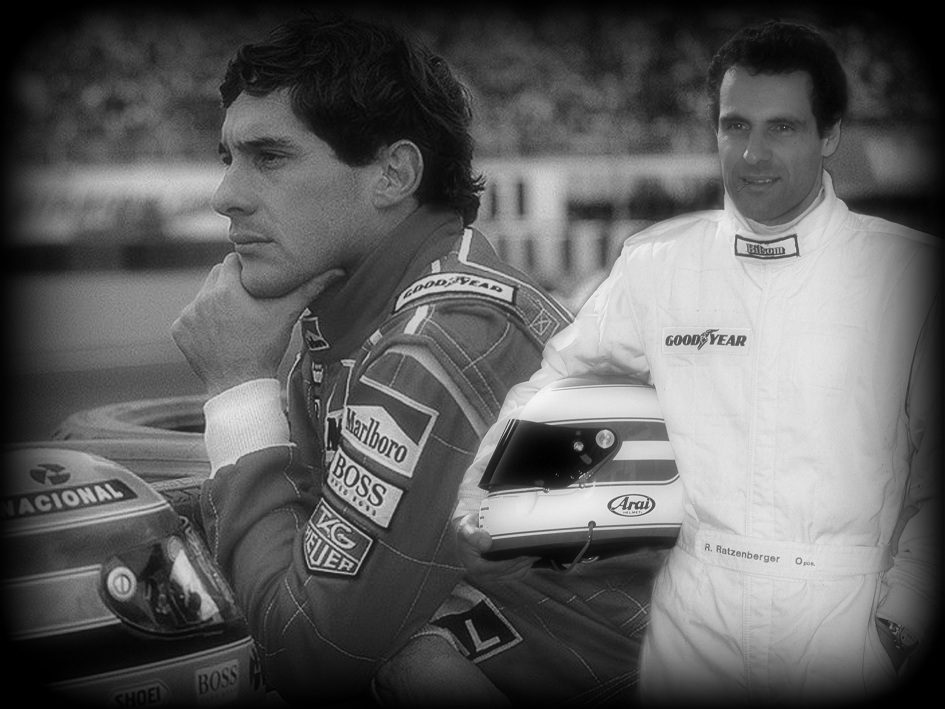
After the drivers’ briefing on Sunday, the Grand Prix Drivers’ Association was reformed. Ayrton Senna, Gerhard Berger and Michael Schumacher were named as its first directors. The race started as planned, but a collision between JJ Lehto and Pedro Lamy brought out an early safety car.
At the end of lap 5, the safety car came in and the race restarted. On the 7th lap, Senna was leading Schumacher. The Brazilian arrived at Tamburello at a speed of 305 km/h (190 mph). The car continued in a straight line, slamming into the concrete barrier.
The impact was at a reduced speed of 211 km/h (131 mph) due to Senna’s efforts to brake. Despite this, it was enough to kill him instantly. Whilst examining the wreckage of Senna’s car, Track Officials found a furled Austrian flag. Senna had planned to raise the flag after the race in honour of Ratzenberger.
The 1994 layout of the Autodromo Internazionale Enzo e Dino Ferrari was never used again. Chicanes were added at various points, including the infamous Tamburello.
Iconic Moment
In 2005, it became clear that there was a changing of the guard.
Michael Schumacher, already a 7-time world champion, was starting from 13th on the grid. The German fought his way through the field, eventually reaching 2nd place. There was now only one thing standing between the Ferrari the top step of the podium…
Fernando Alonso.
The closing stages of the race saw a tense battle being played out. Schumacher stuck to Alonso’s gearbox, but the Spaniard provided a masterclass in defensive driving. The Ferrari desperately tried to find a way past, pulling right alongside the Renault when traffic came into play.
Ultimately, Alonso held onto his lead, crossing the line just two tenths of a second ahead of the 7-time champ. It was a true spectacle, and a sign that Alonso had what it takes to challenge the legendary Schumacher for the championship.
What’s your iconic Imola moment? Let us know in the comments!