

When most Formula 1 fans think about the Japanese Grand Prix, the circuit they think of is almost inevitably Suzuka. With the upcoming 2025 race marking the circuit’s 35th grand prix since its debut in 1987, this is hardly surprising. However, Suzuka is not the only Japanese circuit to have hosted F1, nor indeed was it the first. That honour instead goes to an oft-forgotten track which hosted a race that changed the very fabric of the sport — Fuji Speedway.
Humble Origins
The concept for Fuji Speedway was first put forth in 1963, with the original intention being to create an oval circuit for stock car racing. When this plan hit funding problems, the track was hastily converted into a more conventional road circuit, which opened in December 1965.
Fuji’s original high-speed layout was a mainstay of national-level racing for nearly a decade. However, an accident in 1974 forced a redesign of the track which removed the last vestiges of its oval origins.
After paying for the costly redesign, Fuji’s owners were looking for a big event to draw patrons to the circuit. As it happened, they wouldn’t have to wait too long for such an opportunity. Courtesy of a deal brokered by one Bernard Ecclestone, the picturesque track would host the 1976 Japanese Grand Prix — finale of that year’s Formula 1 season.
[adrotate banner=”10″]
Get 10% off all official F1 Merch at TheRaceWorks.com using code ‘EF1‘ at checkout.
Opportunity Knocks
The timing of the Formula 1 deal would prove to be fortunate. 1976 saw a titanic battle for the championship between Ferrari’s Niki Lauda and McLaren’s James Hunt. With drama aplenty even prior to the final race — including a fiery crash and subsequent comeback for Lauda — the pair came into the Fuji Finale separated by just three points.
Neither Fuji’s owners nor Formula 1 itself could possibly have hoped for a better backdrop for the first world championship Japanese Grand Prix. A final race title decider in the shadow of Mount Fuji had all the hallmarks of being a race for the ages.
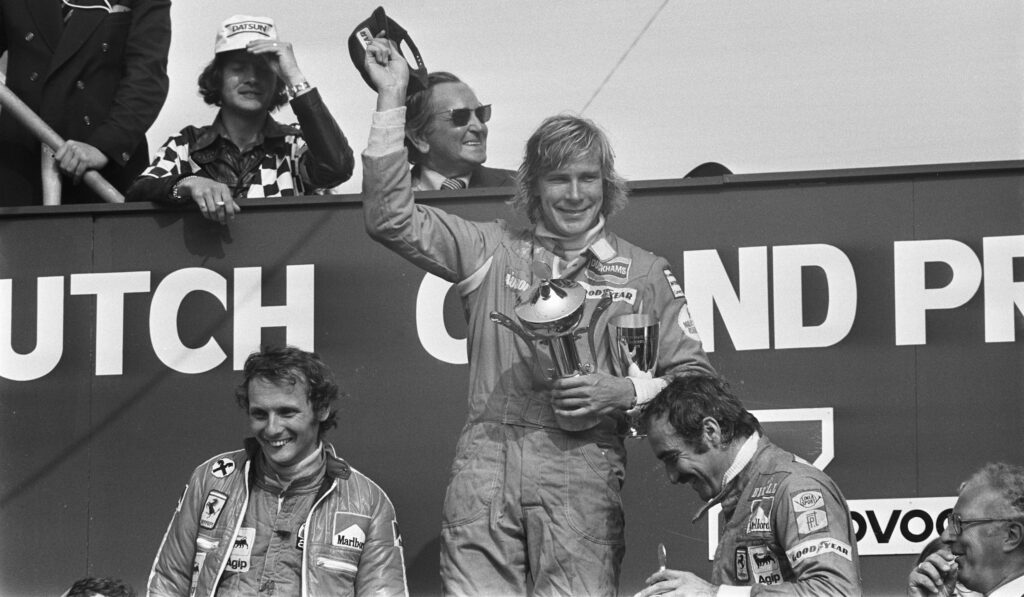
Image Credit: Rob Croes – Anefo, CC BY-SA 3.0 NL, Link.

Everyone involved was key to capitalise on this unique opportunity, and pulled out all the stops in response. Most notably, the race would be shown live on television around the world for the first time in Formula 1 history.
Bernie Ecclestone was again the mastermind behind this TV rights deal, for which he paid the princely sum of $1,000,000.
The savvy Ecclestone then went to his fellow Formula One Constructor’s Association members with a proposal. For $100,000 each, he would offer them a 10% stake in the TV rights he had just purchased.
It was a calculated gamble on Ecclestone’s part, but just as he had hoped, not one of the FOCA members took up his offer. They were concerned that televised F1 might not take off, and reasoned that they could spend that £100,000 on testing. With Ecclestone therefore gaining sole control over the sport’s TV rights, the structure which would turn F1 into a media powerhouse over the following four decades was duly created.
When it Rains, it Pours
The two days of qualifying for the big race proved relatively trouble free. Mario Andretti claimed pole position for a resurgent Lotus team, while title contenders Hunt and Lauda were second and third respectively. The hoped-for showdown for the championship looked very much on the cards.
On race day however a torrential downpour drenched the track and occluded the circuit in dense fog. With Lauda’s Nürburgring accident fresh in their minds, several drivers declared that they did not want to race.
With the TV rights deal in place though, F1’s bosses were not prepared to cancel the race. The result was a substantial delay while the likes of Ecclestone attempted to persuade the drivers into their cars.
Things did eventually get underway though, and for the first couple of laps the race seemed relatively normal. Hunt made the strongest start to take the lead, while the injured Lauda dropped backwards at an alarming rate.
One notable runner further down the grid was the local driver Kazuyoshi Hoshino in his privateer Tyrrell. Hoshino was one of several Japanese drivers entering, but was the only car to be equipped with tyres made by Bridgestone. This marked the first F1 appearance of a manufacturer which would go on to win 11 championship titles.
Hoshino was among those to overtake Lauda in the early laps, darting up from 21st position to a remarkable eighth. With the rain showing no sign of easing and Hunt well in the lead, it appeared the Briton was on track to win the championship.
Championship Implications
Hunt’s chances got even stronger when on Lap 2, Lauda made the remarkable decision to pull into the pits and retire. While there was initial speculation that he had a car issue, the Austrian eventually made it known that he simply considered the conditions too unsafe to continue. The title was therefore Hunt’s to lose as long as he could finish fourth or higher.
Hunt continued to push hard regardless, but soon came under threat from other drivers. The March of Vittorio Brambilla proved particularly fast, and by lap 21 he was challenging Hunt for the lead.
Brambilla made his move at the hairpin turn 5, briefly getting ahead of Hunt’s McLaren. The exuberant Italian got on the throttle too soon though, and spun mere inches from Hunt’s McLaren.
With Brambilla no longer a threat, Hunt continued to lead. However, it soon became apparent that he had pushed too hard early on. By half distance the track was beginning to dry slightly, and Hunt’s wet tyres were starting to overheat. This allowed the Tyrrell of Patrick Depailler and Andretti’s Lotus to catch right up to the McLaren.
Hunt again resisted gamely, but by lap 62 his tyres were almost completely bald. The Tyrrell and Lotus therefore breezed past, only for things to get worse still for Hunt’s championship hopes…
Charge to the Finish
After losing the lead, Hunt tried desperately to cling on to his fading tyres for the remaining 11 laps. However on Lap 68 the inevitable happened, as his front left tyre punctured due to excessive wear.
Hunt was able to dive into the pits to have his tyres changed, but the frantic stop dropped the McLaren down to fifth place. With just five laps to go, Lauda would be champion if Hunt did not gain places.
Hunt had no choice but to throw caution to the wind and charge with everything he had for the last few laps. Nevertheless, when he crossed the finish line a full lap behind winner Andretti, he was certain he’d lost the championship.
However, Hunt failed to realise that he had overtaken the Ferrari of Clay Regazzoni and Surtees of Alan Jones in all the excitement. This elevated him to third position, and gave him the championship by a single point over his friend and rival Lauda.
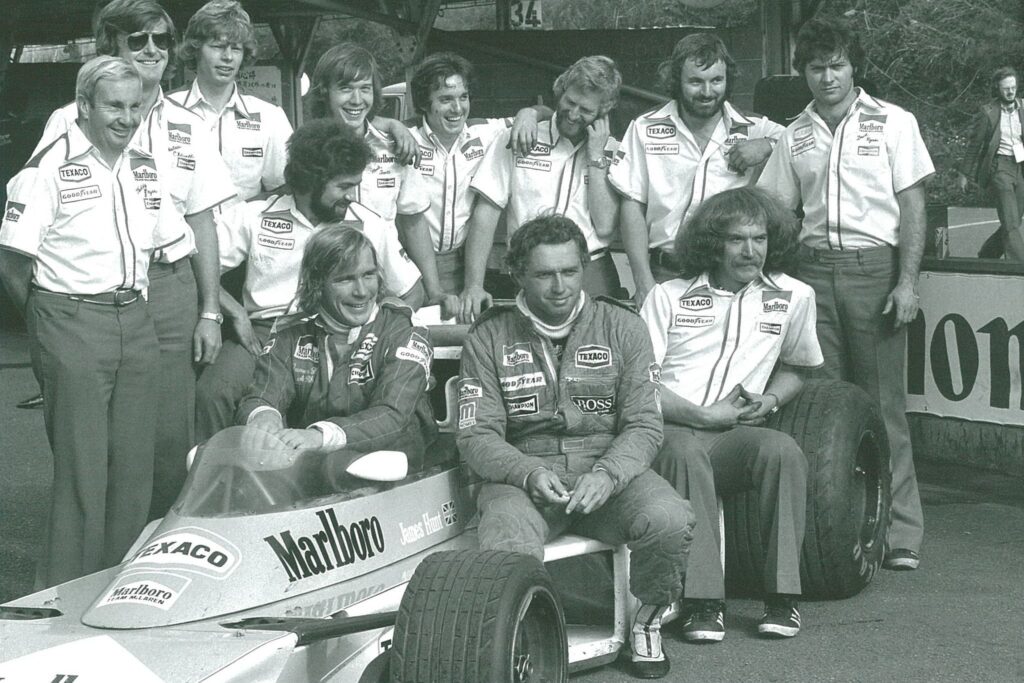
Image Credit: Daniel Incadella / Jean Damon, CC BY-NC 2.0, Link.
Fuji’s Legacy
With the circumstances in mind, it’s hard to see Fuji 1976 as anything other than a success. It cemented Formula 1 in the minds of the watching public through the drama of Hunt and Lauda’s showdown, and ensconced Bernie Ecclestone at the very top of the F1 power structure. It’s small wonder that the race played a key role in Hollywood’s 2013 adaptation of the 1976 season — Rush.
However, when it came to establishing Fuji as the home of F1 in Japan, the race was less successful. F1 returned to Fuji in 1977, but the race was marred by a tragic crash which killed a spectator and a marshal. The incident, combined with persistent financial issues, led to F1 leaving Japan for a full decade. When the Japanese Grand Prix finally returned to F1 in 1987, it did so at its current home of Suzuka.
A renovated Fuji Speedway did briefly return to the F1 calendar in 2007 and 2008 at the behest of Toyota. However, despite both races both providing memorable moments such as 2008’s collision between title rivals Lewis Hamilton and Felipe Massa, they could not prevent F1 from once again abandoning Fuji in favour of Suzuka.
It therefore seems that, despite its significance in F1 history, Fuji Speedway is doomed to always be F1’s second home in Japan…
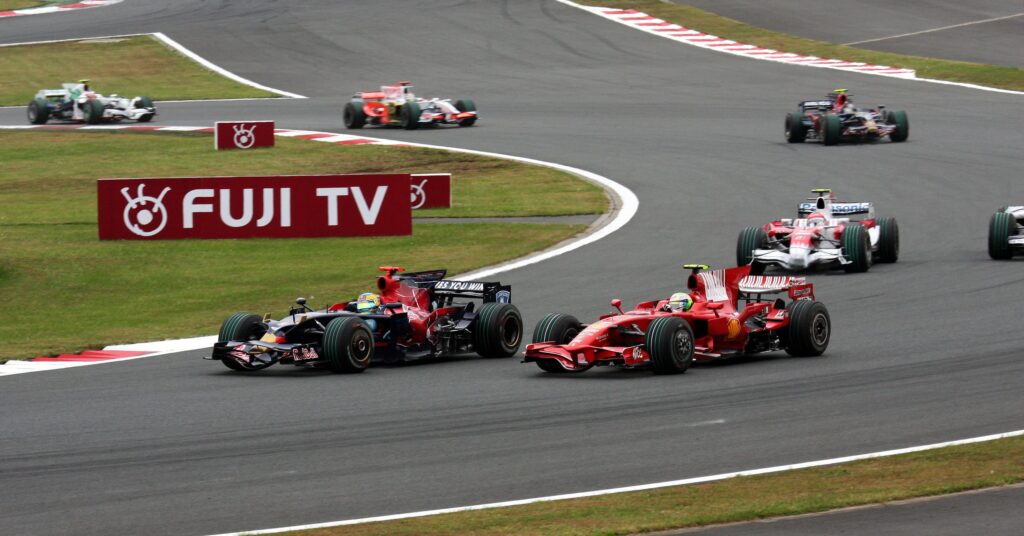
Image Credit: Morio – Own Work, CC BY-SA 3.0, Link

[adrotate banner=”8″]
Get 10% off all official F1 Merch at TheRaceWorks.com using code ‘EF1‘ at checkout.
Featured image credit: Matsuoka Kohei – Own Work, CC BY-2.0, Link
