

The 2025 Formula 1 season is nearing its climax, with just three races left to run. While the constructor’s championship has already been secured by McLaren, the much prized driver’s title is still up for grabs. These next three rounds could therefore be make-or-break events.
Such stakes will undoubtedly please the promoters for this weekend’s race in Las Vegas. F1’s newest addition to the calendar has always focused on foregrounding the glamour and drama of Formula 1, and the notion of a late twist in the championship fight will doubtless have done ticket sales for the race no harm at all.
This idea of a championship fight on the streets of ‘sin city’ has long been tantalising to Formula 1. While the current Las Vegas Grand Prix only joined the calendar in 2023, the 1980s saw a previous attempt to bring the drama of F1 to the city. However, the circuit used to do so was about as different from the current high-speed blast down the Vegas strip as it is possible to get…
An American Dream
Even by the 1970s, a race in the United States had long been a fixture of the end of the F1 season. Traditionally, this took place at the secluded Watkins Glen circuit in New York. “The Glen” first hosted F1 in 1961, and drivers generally liked its fast, flowing layout. However, concerns over the track’s remote location and a series of horrendous accidents led to talk of Watkins Glen being replaced.
The bevy of other locations looking for a place on the calendar did not aid The Glen’s plight. Among those looking for a place was Las Vegas. Rumours of the city wanting to host F1 had been circulating since the mid 1970s, but as the decade neared its close they increased in intensity. The pitch was that the glitz and glamour of Vegas would make it an ideal home for F1. This appealed greatly to a sport which was becoming increasingly focused on its prestigious image.
Among those keen on a race in Vegas was Bernie Ecclestone. At the time Ecclestone was the head of the Formula One Constructor’s Association (FOCA), comprised of most F1 teams. FOCA had huge leverage in deciding which races got onto the Formula 1 calendar at the time, so with Ecclestone on board, plans for the Vegas race progressed quickly.
A Race in a Car Park?
Those plans became public on 8th October 1979, when the FIA announced that Las Vegas would host an F1 race. The announcement stated that the race would be given the title of Caesars Palace Grand Prix, with a provisional date of 13th April 1980. At least initially therefore, Watkins Glen would retain its place as the season finale.
Perhaps the most surprising detail of the plans was the venue for the race though. The initial rumour had been that the event would be a street race much like the modern Las Vegas race. However, the plan was actually to build a circuit in the enormous car park of the Caesars Palace casino.
The idea was that since Caesars Palace commonly played host to other big-ticket sporting events, it was a natural venue for F1. Ecclestone had also pitched the race to casino chairman Clifford Perlman as an ideal way to draw punters to the gaming tables.
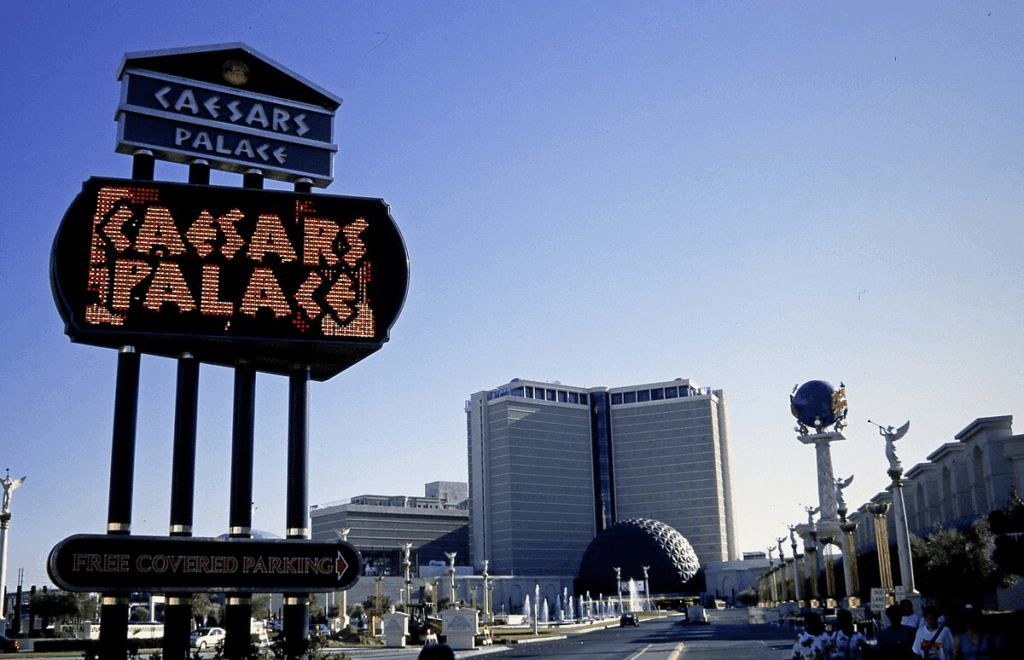
Image Credit: Christian Schmitt – Own Work, CC BY 2.0, Link.
.jpg)
Calendar Carnage
As April 1980 approached, it became increasingly apparent that the new circuit wouldn’t be ready in time. This prompted a calendar reshuffle which saw Vegas take up the position of season finale. Watkins Glen meanwhile was dropped from the schedule altogether.
Watkins Glen’s owners fought back though, and were soon able to regain their place on the calendar. Las Vegas by comparison was in trouble, with work on the track progressing slowly. As a result, the race quietly dropped off the 1980 calendar, and also didn’t feature on the initial schedule for 1981 either.
However, plans for the race were not dead, and a revised 1981 calendar soon emerged with Vegas as the season finale on 17th October. Ecclestone also began shopping the race around to TV networks in hopes that they would be eager to broadcast this big event. With such coverage, the hope was that the glitzy new race would end the F1 season with a bang.
Twists and Turns
The big date for the race finally came around, and this time the track was ready. As it turned out though, opinions of the new circuit were rather less glowing than hoped.
The layout the designers had come up with was a flat, incredibly twisty counter-clockwise affair with a huge number of hairpins. Not only would the track be slow, but in the ground effect cars of the day, it also promised to put immense strain on the drivers’ necks.
Concrete walls also lined the majority of the circuit, with little if any run-off areas. As a result, drivers were almost universally critical of the track, which certainly did not please the organisers. Indeed Caesars Palace actually threatened legal action against a newspaper which published a quote from one driver comparing the circuit to a Go-Kart track. At this late stage of the game though, there was little the drivers could do but get on with the job at hand.
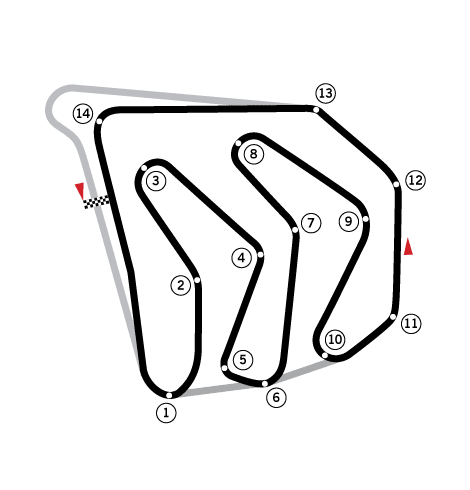
Image credit: Public Domain

The Big Decider
As it happened, the organisers had got their dream scenario, with the title battle still undecided coming into the finale. Three men remained in contention — Carlos Reutemann, Nelson Piquet and Jacques Laffite. By the time the Vegas race was over, one of that trio would be champion.
It was Reutemann who got his weekend off to the best start. Already leading the championship by the slender margin of 1 point from Piquet, the Argentinean put in a scintillating lap to claim pole position for the race in his Williams, despite a tangle with Piquet in practice. The young Brazilian was fourth himself, with Laffite down in twelfth. Since the Frenchman needed to win with the other contenders off the podium to claim the title, his chances seemed slim.
Unfortunately for the organisers, despite an intriguing qualifying, the hoped-for championship showdown failed to materialise on race day. Instead, the race was dominated by Reutemann’s teammate Alan Jones. The retiring 1980 world champion led every lap, and never looked at threat all race.
When it came to the title contenders, their performances were all fairly unspectacular. Reutemann slid inexorably backwards from pole to finish 8th, prompting rumours of foul play. Laffite meanwhile looked at one point like he might pull a surprising championship out of the bag, running as high as second, but tyre issues forced him to pit and finish sixth.
Piquet finished the highest of the three, coming home 5th. This gave him the title by 1 point over Reutemann, but it was hardly the climactic showdown the organisers had been hoping for. Indeed, perhaps the most dramatic event of the race was when Laffite’s teammate Patrick Tambay crashed in a big way, tearing the whole front off his Ligier, but thankfully walking away with only a bruised leg. When it came to the actual racing though, there was little excitement to be had.
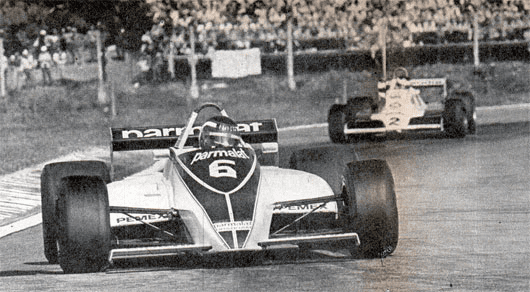
Image Credit: Public Domain
.jpg)
If At First You Don’t Succeed…
Most pundits reflected on the first race at Caesars Palace as something of an underwhelming ending to the 1981 season. The race had largely seen the drivers’ pre-race criticisms of the track borne out, and many considered racing in a car park to be unbecoming of a supposedly prestigious series like F1.
Nevertheless, the 1982 schedule retained the Caesars Palace race as the season finale once again. With a new street race in Detroit also joining the calendar, and the well-established race in Long Beach also staying, this made the USA the first country to host three F1 events in a single year.
Despite the complaints from both drivers and fans in 1981, the layout for the Vegas track remained unchanged in 1982. Reports from the time were perhaps even more uncompromising than they had been the year prior in their condemnation of the “mickey mouse” circuit.
Once again though, the championship was undecided by the time the F1 circuit arrived in Nevada. Williams driver Keke Rosberg was runaway favourite following a consistent campaign, but McLaren’s John Watson was still mathematically in contention.
This time at least one of the title contenders was in the conversation for victory. Watson delivered a fine, attacking drive from 9th on the grid, aptly showing that overtaking was possible at Caesars Palace. However, the Ulsterman needed victory to take the title, and unfortunately for him his charge petered out at second place.
The man who beat Watson to the win was Michele Alboreto, who won his first race in his Tyrrell. Given that his car was typically a midfield runner, this was a fine performance from the young Italian.
Most jubilant of all however was Rosberg. While he had undoubtedly played things safe on the unforgiving concrete-lined track, his patience had been rewarded. 5th place gave him the title, and while he had not finished in the top 3, he was nevertheless invited onto the podium to celebrate his championship alongside singer Diana Ross.
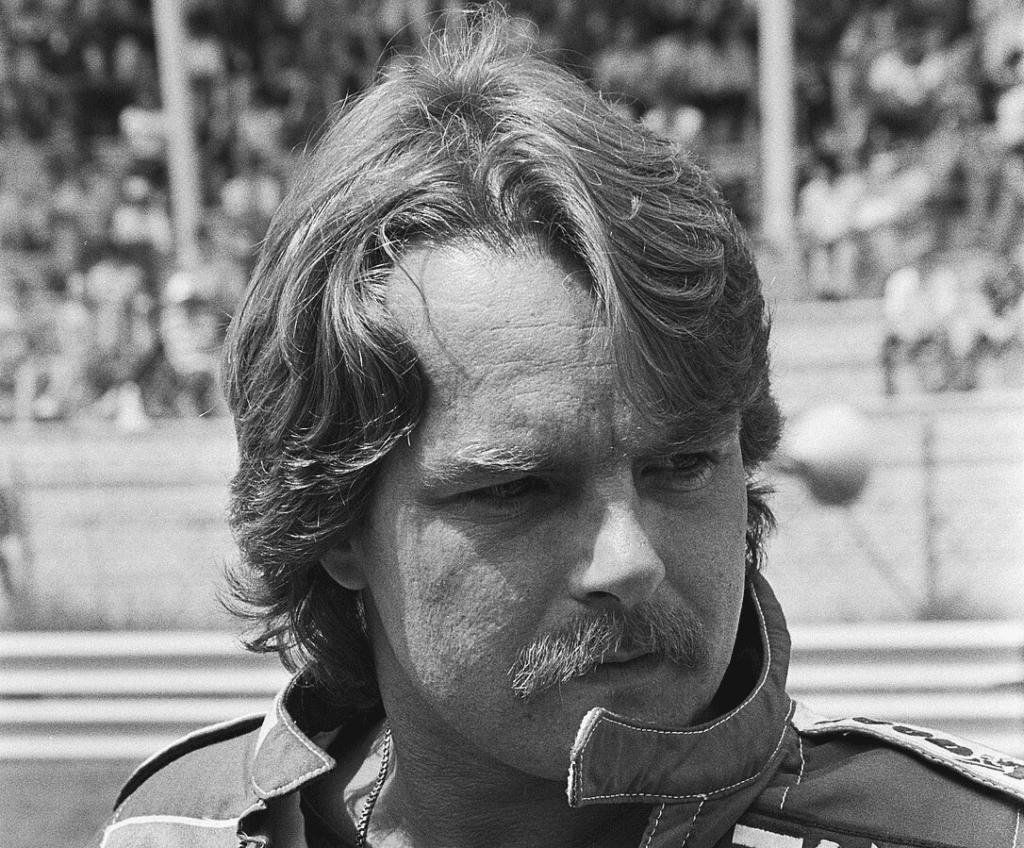
Image Credit: Mattias v.d. Elbe – Own Work, CC BY 4.0, Link.

A Failed Experiment
As it turned out though, even two back-to-back final round title deciders couldn’t save the Caesars Palace circuit. The promised audience for the race had never materialised, and even the much-hyped TV coverage proved unremarkable.
The initial 1983 calendar released in December 1982 did still feature Caesars Palace. However, the South African Grand Prix had taken its place as season finale. When combined with the scathing press coverage, the lack of enthusiasm for the track was clear.
After much speculation, in June the inevitable announcement finally came. F1 would not race at Caesars Palace in 1983 after all. Bernie Ecclestone attributed this to the track owners not securing a TV rights deal for that year, but the core issue preventing that deal was the lack of overall enthusiasm for the race.
To their credit, Caesars Palace did initially try to keep racing at the circuit alive after F1’s departure. They hastily modified the track layout into a pseudo-oval, and hosted races in the CART Indycar series. However, even this only lasted another two years, and in 1985 racing at the circuit ceased for good. By 1987, the land where the track had once stood was reappropriated to build a shopping centre.
The memory of the Caesars Palace circuit is therefore all that remains. However, for all the criticism of the track itself and the racing it provided, it is hard to argue that the event was not memorable. After all, how many other times has Formula 1 raced in a car park?
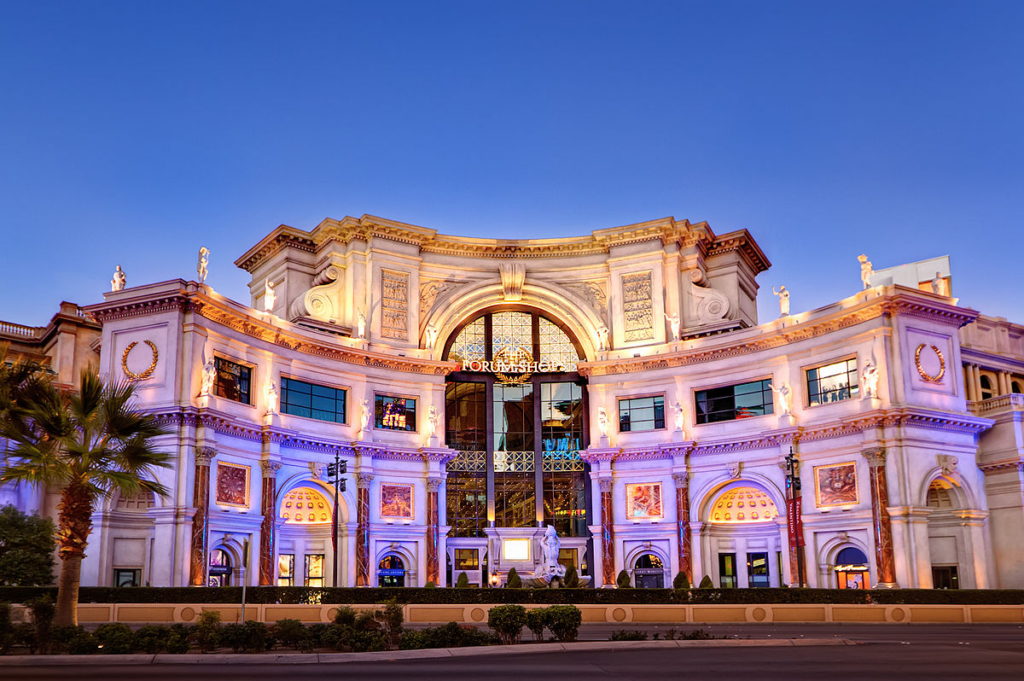
Image Credit: Pedro Szekely – Own Work, CC BY-NC-SA 2.0, Link.
Featured Image Credit: Yoyodu10 – Own Work, CC BY-SA 4.0, Link.
