
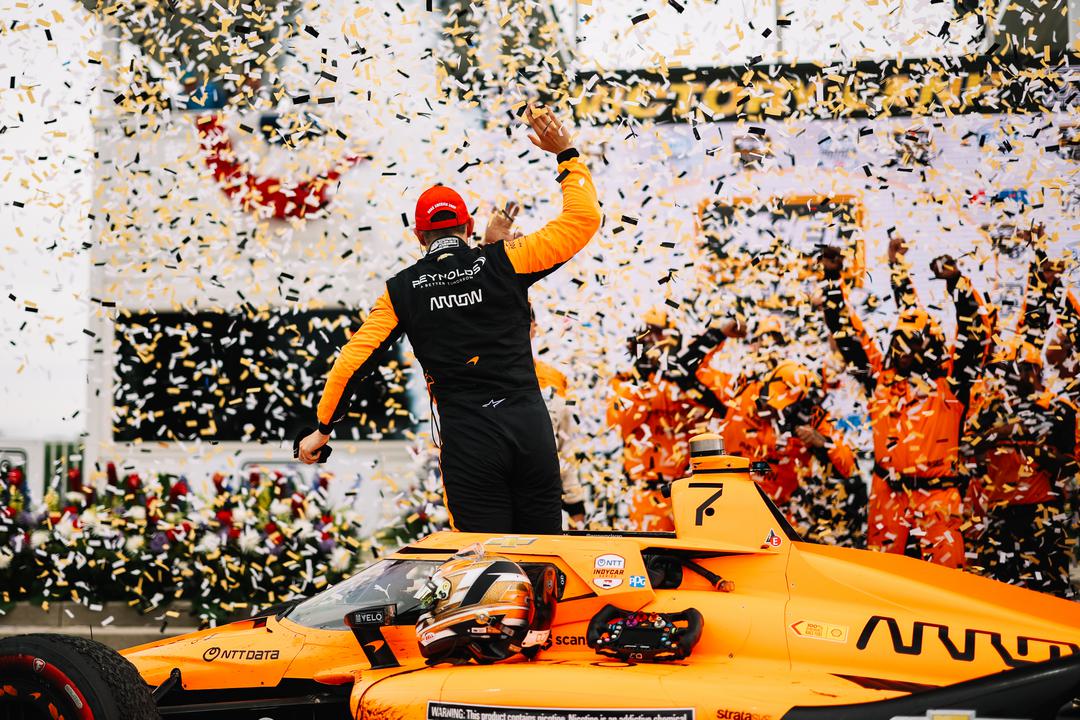

Christian Lundgaard finished Road America with a question that many were asking: “How did we do that?” The Dane went from an opening‑lap clash and last place to a late-stage victory in the XPEL Grand Prix at Road America, taking one of the most improbable wins of the 2026 IndyCar season so far.
Lundgaard’s Nightmare Start & Dream Finish
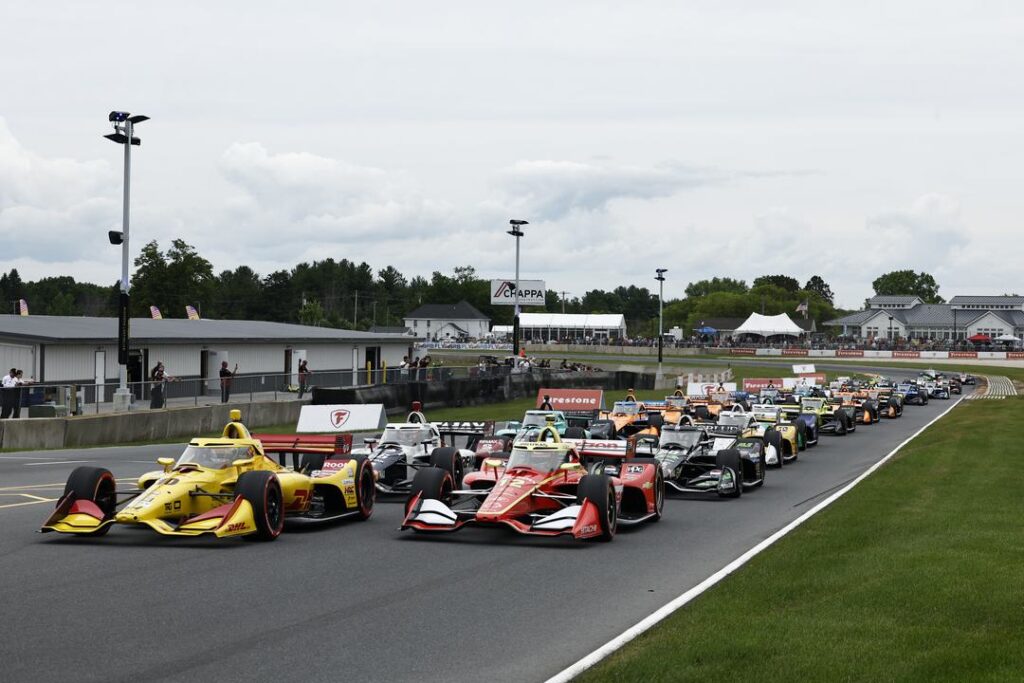
Lundgaard’s afternoon almost ended before it began. Contact with Scott Dixon at Turn 1 on Lap 1 left the Arrow McLaren driver with a damaged front wing and a deflating Firestone. He called into the pits on Lap 2 for a new wing, fresh tyres and fuel. That stop dropped the No. 7 to the back of the 25‑car field.
From there, it became a methodical comeback. Running off‑sequence, Lundgaard was able to exploit clean air and the car’s pace, moving forward as rivals stopped and the race’s strategy picture changed. He first grabbed the lead on Lap 43, when Marcus Armstrong, David Malukas and Graham Rahal all pitted from the top three.
Crucially, Lundgaard’s final stop on Lap 45 came from a massive cushion of more than 11 seconds over Felix Rosenqvist. That gap allowed him to rejoin behind Armstrong but ahead of Malukas after a quick 7.1‑second stop and a switch to alternate tyres. Malukas briefly demoted him to P3, but Lundgaard regrouped and reclaimed P2 on Lap 49. That set up a straight fight with Armstrong in the closing laps for the win.
Flu-Stricken Armstrong’s Misery Continues
If Lundgaard’s story was about a comeback, Armstrong’s was about yet another heartbreak. The Meyer Shank Racing driver had looked like the man to beat from Friday. He topped the opening practice session despite battling the flu and led a 1‑2 session finish for the team. He then backed that up with P3 on the grid as MSR put both cars through to the Firestone Fast Six.
Armstrong’s race execution was just as strong. Once strategy cycles played out, the No. 66 emerged as the benchmark, with Armstrong building a lead of nearly three seconds over Malukas as the final stint began. With five laps to go, he looked firmly in control and on the verge of a breakthrough first IndyCar win.
Then the car simply let him down. Armstrong reported that his engine began to sputter out of Turn 6, as if out of fuel, before losing power completely and coasting to a halt at Turn 5. His mechanical failure triggered a late caution on Lap 53 and handed the lead to Lundgaard, who had been sizing him up for a fight to the flag. For a driver who had dragged himself through the weekend sick, it was a brutal way to lose a race that could have been his.
Malukas, Power, and a One Lap Shootout
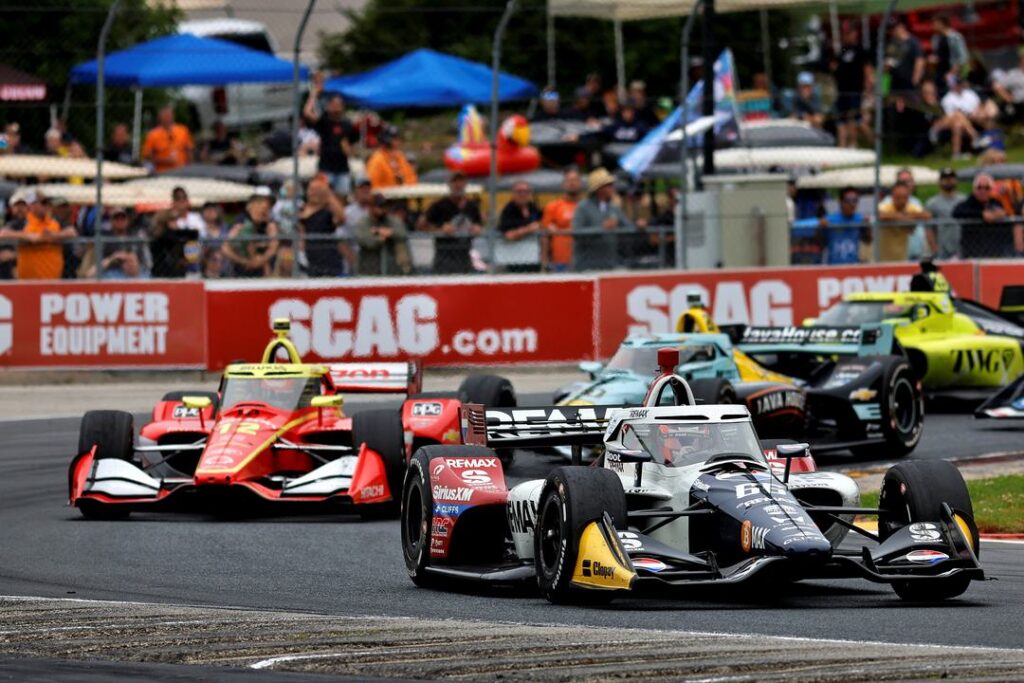
Armstrong’s stoppage set up a one‑lap sprint to decide the podium, with Lundgaard leading from Malukas and Rahal, while Will Power was just behind in fourth. On the restart, Lundgaard nailed the launch and was never seriously challenged into Turn 1, leaving the real drama to unfold behind him.
Power, enjoying a straight‑line speed advantage in his Andretti, went on the attack against Rahal down the back straight towards Canada Corner. The two made contact as Power tried to sweep around the outside, sending Rahal into the gravel and bringing the final full course caution that froze the order, with Lundgaard ahead of Malukas and Power. Kyffin Simpson delivered a quietly confident run to P4, while Alex Palou recovered to P5 after his own bit of costly misfortune.
Palou’s Costly Penalty
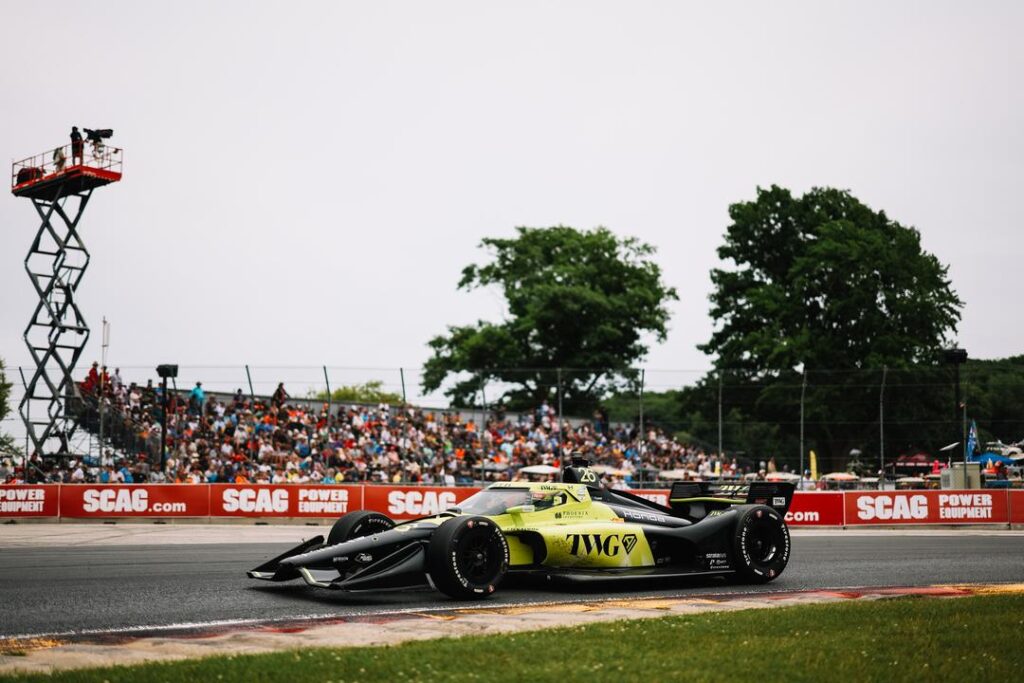
Coming into the weekend, Road America looked like more Palou domination waiting to happen. The four‑time champion arrived with three career wins at the circuit, then extended his astonishing pole streak to five consecutive races by topping the Firestone Fast Six with a 1:43.6615 lap. It was his sixth pole in ten starts this year and showed why he led the standings by 49 points arriving at Elkhart Lake.
In the race, Palou led 13 laps and appeared well‑placed in the lead group until a rare mistake unraveled his afternoon. A pit‑lane speeding violation on Lap 29 earned him a drive‑through penalty, a particularly punishing penalty at Road America given the length of pit road. The penalty dropped him to P22, turning what could easily have been a race‑winning drive into damage‑limitation.
From there, Palou went on a familiar charge, carving his way back through the field to finish P5, finishing just over 11 seconds behind Lundgaard. Given how much track position he lost on the drive‑through, it’s hard to not think that without the pit‑lane speeding penalty he would have been in prime position to fight Armstrong and Lundgaard for the win.
Even so, his result was enough to extend his championship advantage to 60 points over Malukas, with Kyle Kirkwood a further point back and Lundgaard now 77 adrift in fourth. On a day when a small mistake cost him big, Palou still left Road America in control of the title fight.
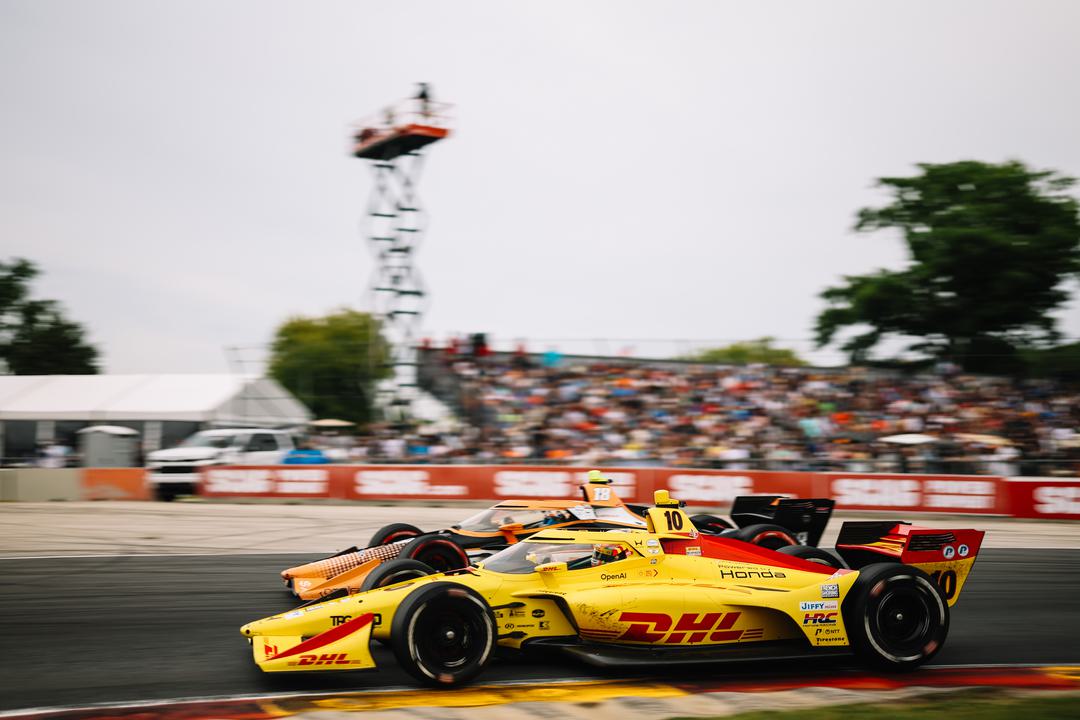
IndyCar Searches for Hybrid Fix
This weekend was also meant to be a soft reset for IndyCar’s troubled hybrid era. After a string of failures in the opening nine races, the series moved to reduce hybrid power output on a track‑by‑track basis for the rest of 2026. The plan was to roll the energy deployment numbers back towards their more conservative 2024 levels in an effort to improve durability and preserve a fragile pool of required spec units. At Road America specifically, the hybrid energy limit was trimmed from 600 kilojoules per lap to around 535 kilojoules, with the goal of easing thermal stress on the energy storage system and stabilising performance.
Even with the power dialled back, reliability questions remained. Christian Rasmussen’s race was ended by a hybrid‑related failure that left him stopped on the front straight and brought out a key mid‑race caution. Combined with Armstrong’s late mechanical drama and the wider background of engine‑side reliability work from manufacturers this year, it’s clear that the current hybrid package and powertrain combination are still a work in progress.
That matters because the championship’s future is already pointing towards a more ambitious era. IndyCar has confirmed plans to debut a new Dallara chassis and a revised engine formula in 2028, with a lighter car, a 2.4‑litre twin‑turbo V6 and a refined hybrid concept at the heart of the package. Prototype IR28 chassis tests are scheduled to begin this year using the current engines and ballast to mimic hybrid weight. The series, Honda, and Chevrolet continue to shape a new rule set that could ultimately deliver as much as 900 horsepower.
On Sunday, Lundgaard, Armstrong, and Palou gave us the kind of drama the series can build that future on; it is up to the technical side to ensure the hardware can keep up. The paddock will not have long to reset, either, with the championship heading next to the Honda Indy 200 at Mid‑Ohio on Sunday, July 5th. Palou and the rest of the field will get another chance to test both the cars and the new hybrid philosophy around one of the series’ classic road courses.
Feature Image: Joe Skibinski | Penske Entertainment