
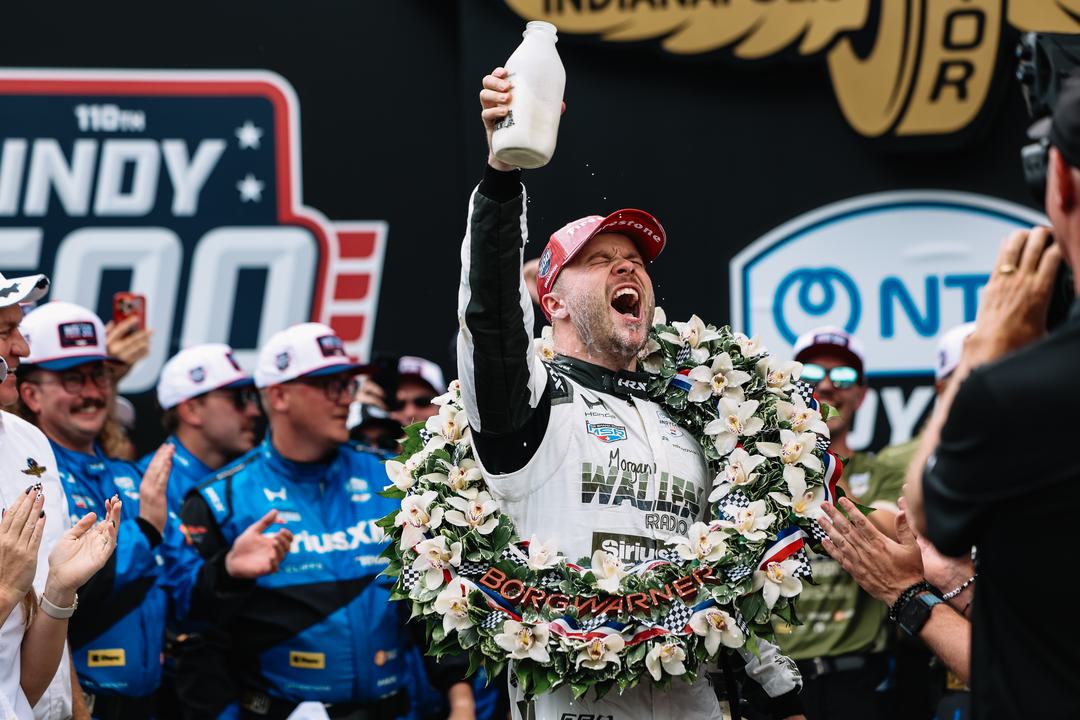

Felix Rosenqvist’s historic win will be remembered for the finish. Even with an interesting Month of May practice and qualifying, the race itself was a drama-filled story from the early laps. The win came down to just 0.0233s, but the 110th Indianapolis 500 also saw 70 lead changes from 14 different drivers. Additionally, the race had 629 total passes and an average speed of 162.021mph. There were also massive shunts, reliability retirements, and the weather. This year’s 500 was intensely entertaining.
Early Lap Intrigue
The opening phase established the tone. Alexander Rossi jumped ahead of pole sitter Alex Palou at the start. Palou soon reasserted himself, and the front of the field settled into the familiar Indianapolis rhythm. Early on, Rosenqvist, fastest for most of May, seemed content to sit in the draft and let the race come to him rather than forcing the issue too soon.
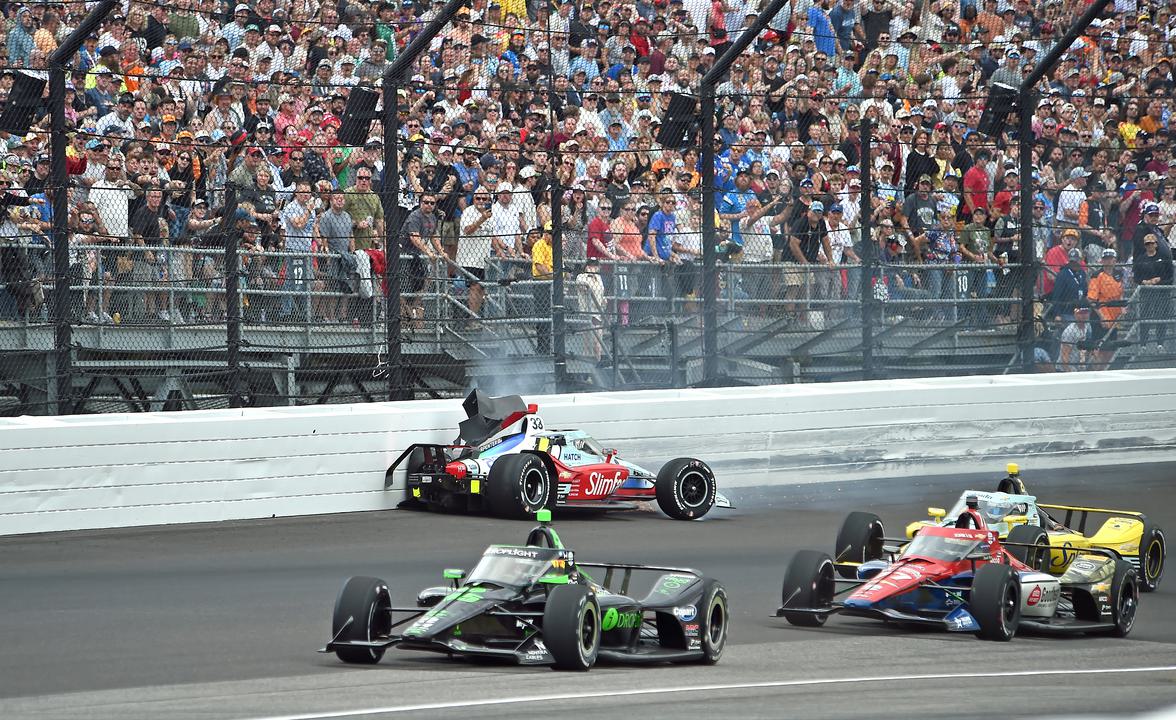
The first major incident occurred on Lap 18, when Ryan Hunter-Reay crashed heavily. Katherine Legge, trying to avoid a direct hit, locked up and ended up against the inside wall as well. That caution immediately turned the race into a strategy contest, with most of the field pitting at the end of Lap 20. Several drivers, Rinus VeeKay, Romain Grosjean, Caio Collet, and Jack Harvey stayed out. That flipped the order and gave the early part of the race a sense of “what if.”
The chaos continued on the restart. Ed Carpenter hit trouble soon after the green waved again, and the field never really settled into a normal pecking order from there. By the time the alternate-strategy runners cycled through their pit stops, it was clear this would not be a race dominated by one car. Much to pole-sitter Palou’s dismay.
Mid-race Calm… Sort of
Once the early chaos and alternate strategy leaders had faded, the race moved into a long, restless middle section. Palou looked calm out front and would ultimately lead 59 laps. But Scott Dixon, Malukas, McLaughlin, Conor Daly, Kyffin Simpson, and eventually Rosenqvist all led laps as well. The green‑flag pit stop cycle around Laps 61 and 62 reshuffled the order again. Christian Rasmussen briefly led from VeeKay, Harvey, and Mick Schumacher for a time.
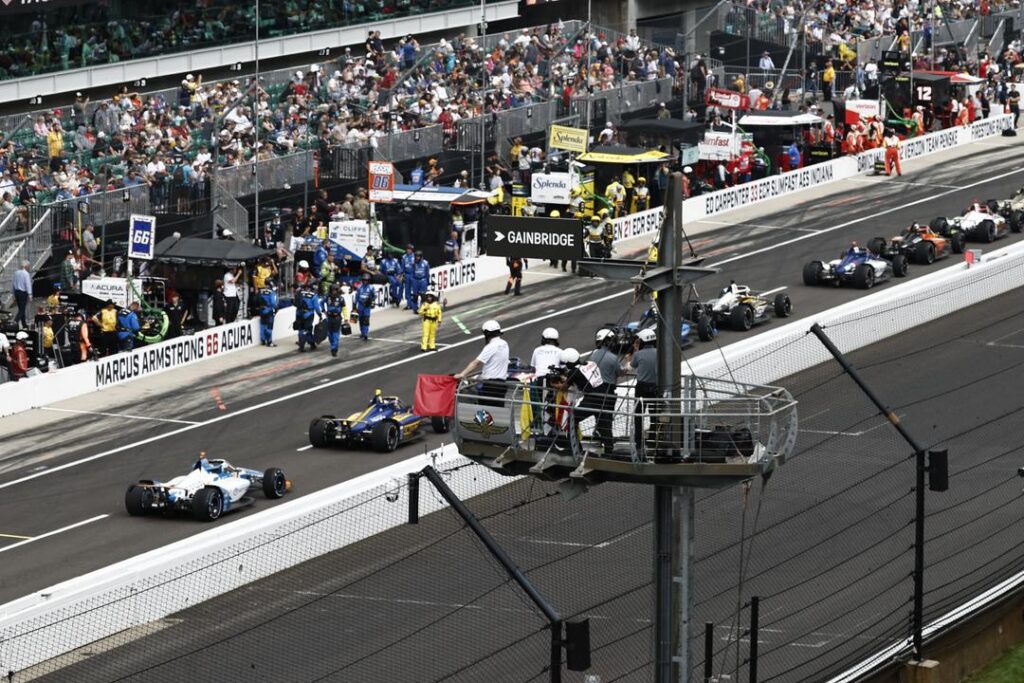
Then the weather arrived and changed the shape of the race again. Rain came and forced Race Control into a prolonged caution period before finally flying the red flag. Dixon led the caution laps before the field had to park on pit lane while the shower passed and the surface dried. The grandstands filled with ponchos, teams threw covers over the cars, and strategies changed again. Everyone waited to see whether this would be a brief interruption or an early end of the day, as the race had reached its required number of laps to count as a “recorded race.”
Behind the leaders, Malukas was quietly setting the scene for his late‑race heartbreak. He climbed into the top three by Lap 41. He looked like one of the few drivers capable of taking the fight to Palou as the laps ticked by. When Dixon and Palou began trading the lead through the 70s and 80s, Malukas was usually not far away.
More Cautions at 1/2 Distance
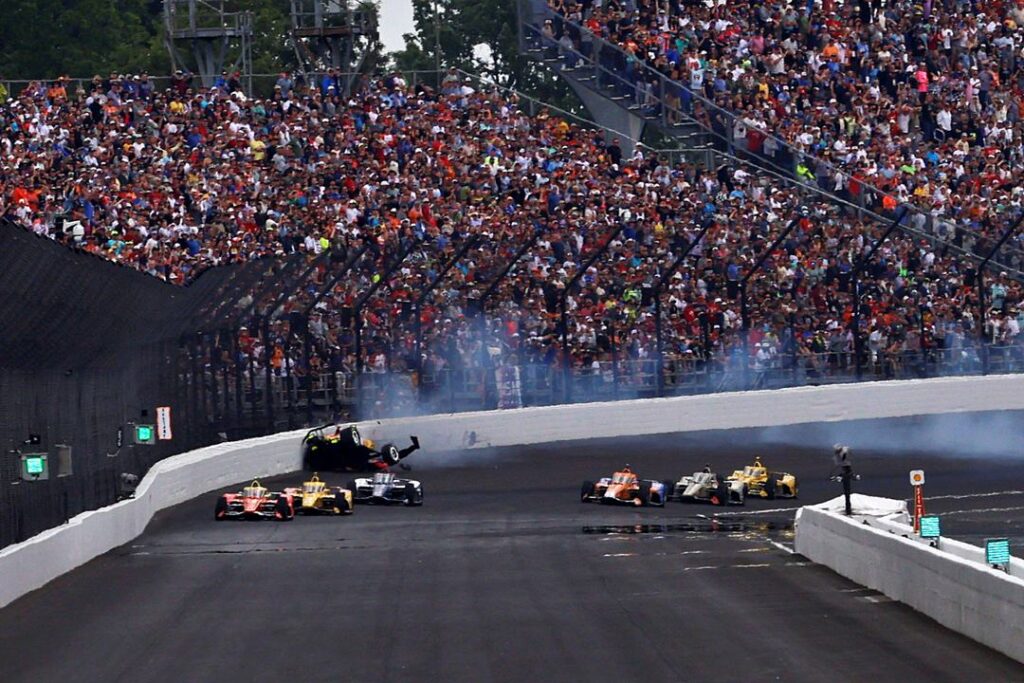
Will Power had to retire on Lap 92 as his Andretti Global had a mechanical failure at the end of the main straight. In a mirror image of last year’s Indy 500, Alexander Rossi’s car caught fire in the pit lane. The next big incident involved Team Penske’s Josef Newgarden. The recent back-to-back Indy 500 winner’s bid ended against the Turn 4 wall. It brought out the fifth caution between Laps 125 and 131, removing one of the expected late‑race players from the equation.
The longer the race went, the more it became clear that this would not be decided by one driver disappearing into the distance. Dixon and Palou swapped the lead through the first half. Simpson briefly led in the 150s. Rosenqvist staked his claim to P1 with a set of rapid laps, including the best leader lap of the day at 224.951mph on Lap 157. There was a looming sense of hope for Ganassi and Penske, but there was never the sense that anyone had properly broken away from the field.
The Historic Conclusion
The closing stages changed a busy race into a classic. A split in fuel strategies left Pato O’Ward, Armstrong, and Rosenqvist stopping on Laps 164 through 166. Malukas, McLaughlin, and Palou waited until Laps 175 and 176 for their final stops. That left O’Ward leading Rosenqvist and Armstrong, with Malukas dragging a chasing pack from more than 20 seconds back. The pack was lapping faster but had few laps left to work with.
Rosenqvist sat on O’Ward’s gearbox, knowing the Arrow McLaren car was tighter on fuel. Rosenqvist finally attacked and took the lead on Lap 185. At that point, with clear air and the fuel game won, it looked like the No. 60 had the race under control. Then, rookie Caio Collet crashed at Turn 2 on Lap 192. The shunt triggered a yellow, and eventually, a red flag to allow cleanup and set up the first of two late restarts. Rosenqvist led on Lap 196, only for Armstrong to run around the outside into Turn 1. Malukas riding the tow, slotted into P2 ahead of Rosenqvist. Before a new order could stabilize, Schumacher brushed the wall and brought out yet another caution on Lap 197, forcing Race Control into a one‑lap shootout to decide the 500.
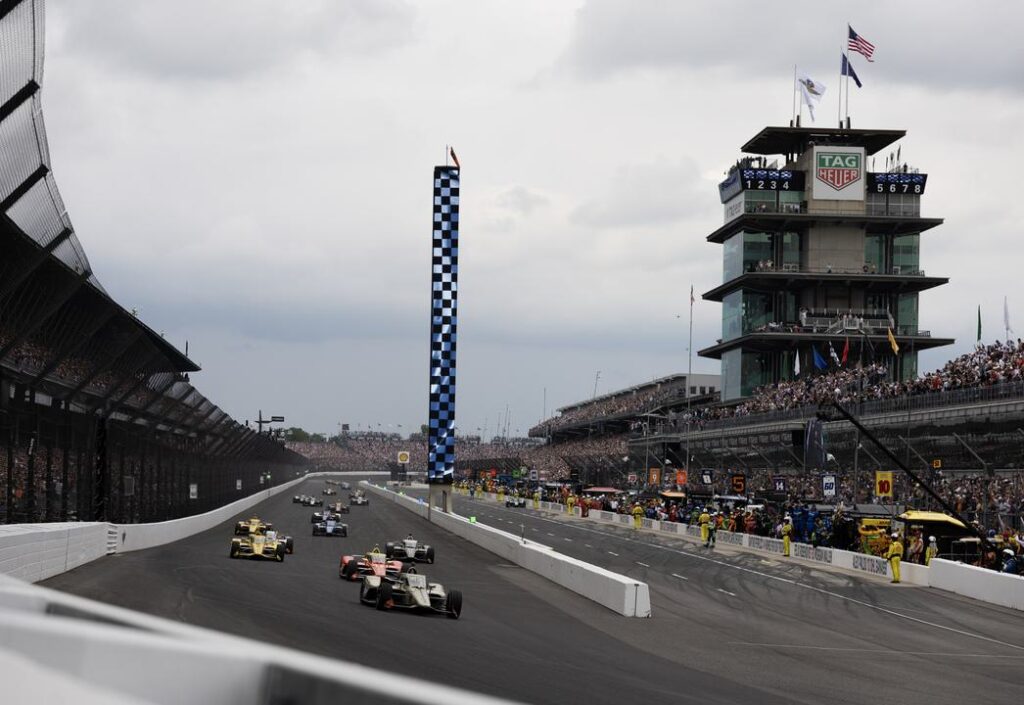
On the final restart, Armstrong took the green. Malukas immediately attacked, grabbing P1 into Turn 1 and opening a gap on the back straight. Rosenqvist, now P3, went wheel‑to‑wheel with his team‑mate and refused to back down. Malukas tried to break the tow down the front stretch. Rosenqvist swung back to the high side and used the clean top line and a huge draft to surge up alongside. The two crossed the Yard of Bricks separated by just over two‑hundredths of a second. McLaughlin, O’Ward, and Armstrong streaming across almost three‑wide behind them to complete a top five covered by only 0.4360s.
Malukas was left to process a second consecutive runner‑up finish at Indy and said later there was “nothing else” he could have done. He had driven at “150 percent” all day and still came up short. It was hard to disagree with the young Penske driver.
For Meyer Shank Racing, this was a second Indy 500 win. Team co‑owner Mike Shank described the group as having been “pushing the door open” for some time. The 110th Indianapolis 500 was the day it finally snapped wide open.
The Season Keeps Moving On
The upcoming Detroit Grand Prix will pose a very different challenge for teams and drivers. Rosenqvist arrives not only as an Indy 500 winner but as a driver who proved he can close on the biggest stage. That confidence tends to translate well to tight street circuits. Malukas leaves with a bit of trauma but also with the knowledge that he led 30 laps. He is now firmly in the championship conversation, sitting second behind Palou in the standings. Palou only claimed P7 but still controls the title race after leading the most laps and banking bonus points for pole. In Detroit’s concrete canyons, passing is harder, and the tow is much less powerful. We will have to see which drivers turn the emotional baggage of Indy into something useful over 100 laps of concrete and manhole covers.
Feature Image: Joe Skibinski | Penske Entertainment