

The Italian Grand Prix is always a special race for one F1 team in particular — Ferrari. However, the 2025 edition of the race promises to be particularly significant, as it coincides with the anniversary of one of the Scuderia’s crowning moments.
The anniversary in question is that of Niki Lauda’s first championship triumph for Ferrari. At the 1975 Italian Grand Prix, exactly 50 years to the day before the 2025 race, Lauda drove to third place at the Scuderia’s home race to secure Ferrari’s first driver’s championship since 1964 in front of the delighted Tifosi. Lauda’s teammate Clay Regazzoni also won the race, securing the constructor’s championship, and marking a truly momentous day for Ferrari.
Understandably, Ferrari have chosen to mark this anniversary at the upcoming Italian Grand Prix. The celebration will include new driver uniforms themed off similar suits of the 1970s, and a new livery for the SF25 based on the car which took Lauda to the title — the Ferrari 312T. It is that legendary car which this article will explore.
A New Broom Sweeps Clean
As with almost every Ferrari F1 car since 1964, the 312T was the brainchild of the legendary Dr Mauro Forghieri. However, while the car’s designer was the same man who had been drawing up Ferraris for over a decade, the 312T was very much symbolic of a new era and a new way of doing things for the Scuderia.
Ferrari had endured torrid seasons for much of the late 1960s and early 70s. The breaking point came in 1973, with a podium-less season prompting sweeping changes to the organisation of the team. Chief among these was the appointment of Luca di Montezemolo as sporting director for 1974, and the hiring of Niki Lauda and Clay Regazzoni (who had formerly driven for the team between 1970 and 1972) from BRM as drivers.
Following these changes, Ferrari’s fortunes turned around almost immediately. 1974 saw Lauda and Regazzoni both winning races in a new revision of the 312B chassis Ferrari had used since 1969 (which could trace its DNA all the way back to the original 312 of 1966). However, the title still eluded the Scuderia, so Forghieri duly got to work on a new car. With the goal of building on the momentum gained in 1974, this design would be christened the 312T.
Gearing Up For The Title
One of the key features of the 312T design was the transverse gearbox which gave the car its name. This meant the gearbox was mounted sideways compared to the conventional longitudinal orientation which is used by modern F1 cars.
The logic behind this change was that rotating the gearbox would allow it to be moved forward to sit between the engine and rear axle. This would centralise the car’s weight distribution, and lower the chassis’ polar moment of inertia, which would in turn provide improved balance and handling, and reduced oversteer without harming responsiveness. When combined with revised rocker-arm front suspension, this change promised unparalleled road-holding.
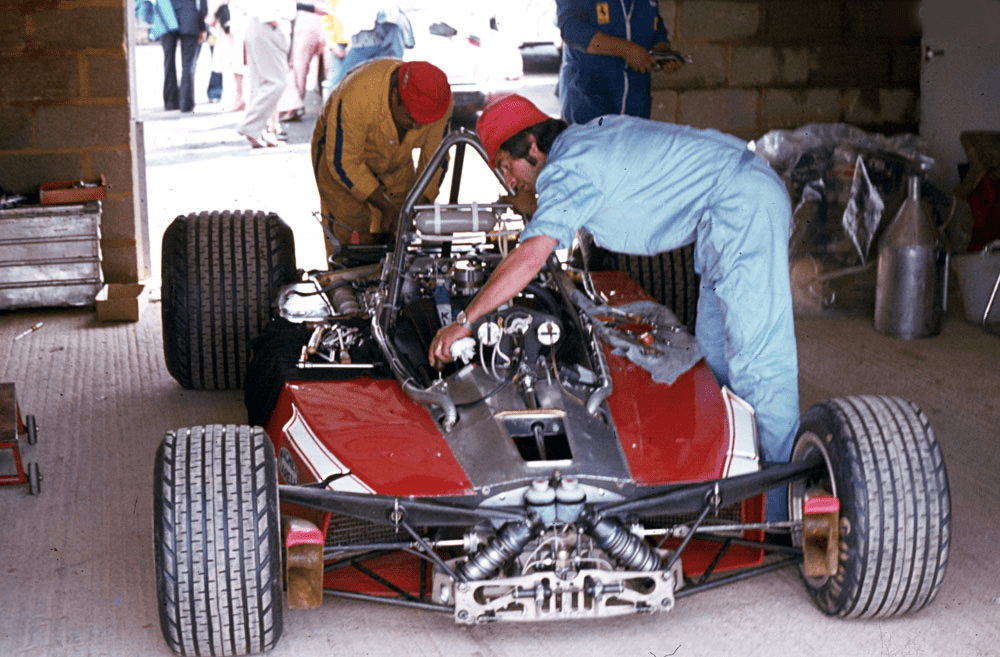
Image Credit: Gillfoto – Own Work, CC BY-SA 3.0, Link.

While the gearbox and front suspension were new, the 312T retained many design features which had proven successful in 1974. A full-width front wing on a snowplow-esque nose section provided front downforce, as on the previous year’s machine. Meanwhile at the rear, independent suspension, inboard brakes and Ferrari’s iconic 500 horsepower Flat-12 Tipo 015 engine were all retained too. Where 1974 had been about righting the wrongs of previous years, 1975 would be about refining the Ferrari formula.
At Full Gallop
While the 312T was first shown to the press in late September 1974, the team opted for a cautious approach when it came to racing their new machine. Ferrari therefore contested the first two rounds of the 1975 season with the previous year’s car, to middling results. The Scuderia put the time which this decision bought to good use though. Lauda in particular spent almost every moment he wasn’t racing pounding around Fiorano in the 312T, working on getting it fully dialled in before its debut.
All of that hard work would soon prove its worth. While the 312T’s debut at the 1975 South African Grand Prix proved relatively low-key, Lauda and Regazzoni soon locked out the front row of the grid in only its second race at Montjuïc in Spain. While both would be taken out of the running in a first corner incident, the car’s potential was clear.
Thereafter, the 312Ts soon established themselves as the cars to beat in 1975. Lauda won in Monaco in fine style to give the car its first victory, despite a late oil pressure issue. He then followed this with two more wins at Zolder and Anderstoorp, where a revised exhaust system aided his performance. Indeed, the 312T’s performance was such that only an inspired drive from James Hunt in his Hesketh at Zandvoort prevented Lauda from going on a five race winning streak.
With four wins and a second place in the span of five races, Lauda held a staggering 22 point lead over second place in the championship after the French Grand Prix in July.
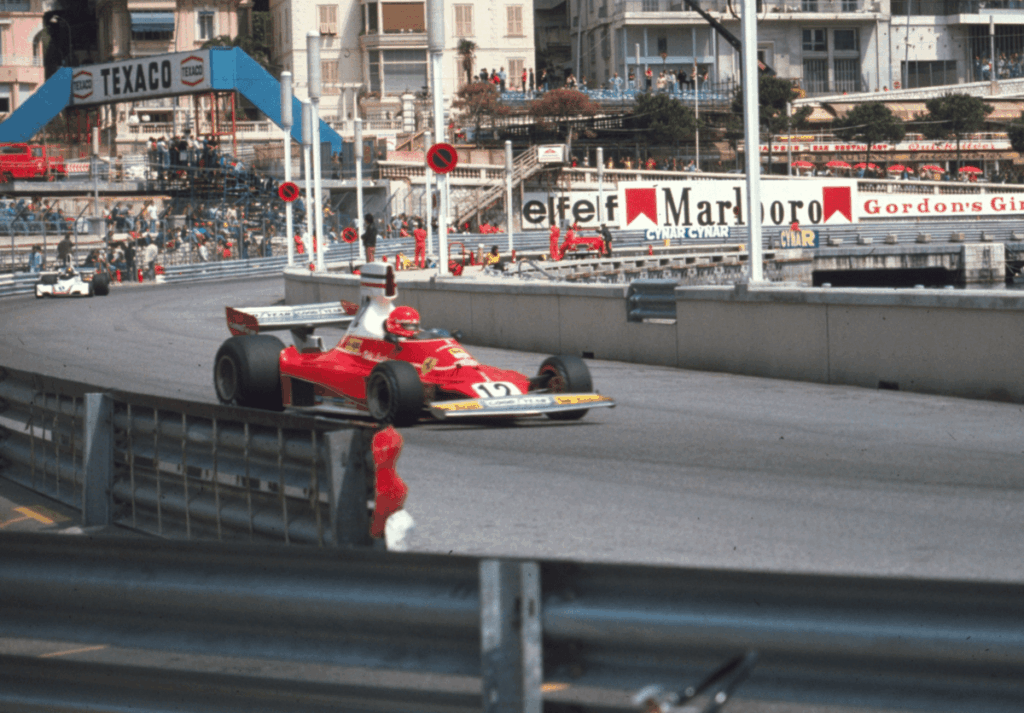
Image Credit: Jean-Philippe Lelièvre – Own Work, CC BY-SA 4.0, Link.

A Crowning Achievement
Following the French Grand Prix, Ferrari endured three winless races in Britain, Germany and Austria. While the Scuderia were doubtless displeased at this fact, it merely served to underscore the 312T’s dominance, as this was the longest the car had gone without a victory since its introduction.
For the penultimate race of the season though, Ferrari were pulling out all the stops. Not only was the race in question their home grand prix at Monza, but it was also the race where they could wrap up both championships.
The 312T’s powerful 12 cylinder engine already made Ferrari the favourites to win in Monza. However, the team wanted to leave nothing to chance. They therefore introduced an updated engine specification to further increase their advantage. The intention was clearly to win the title in style, and to stamp their authority on their home grand prix.
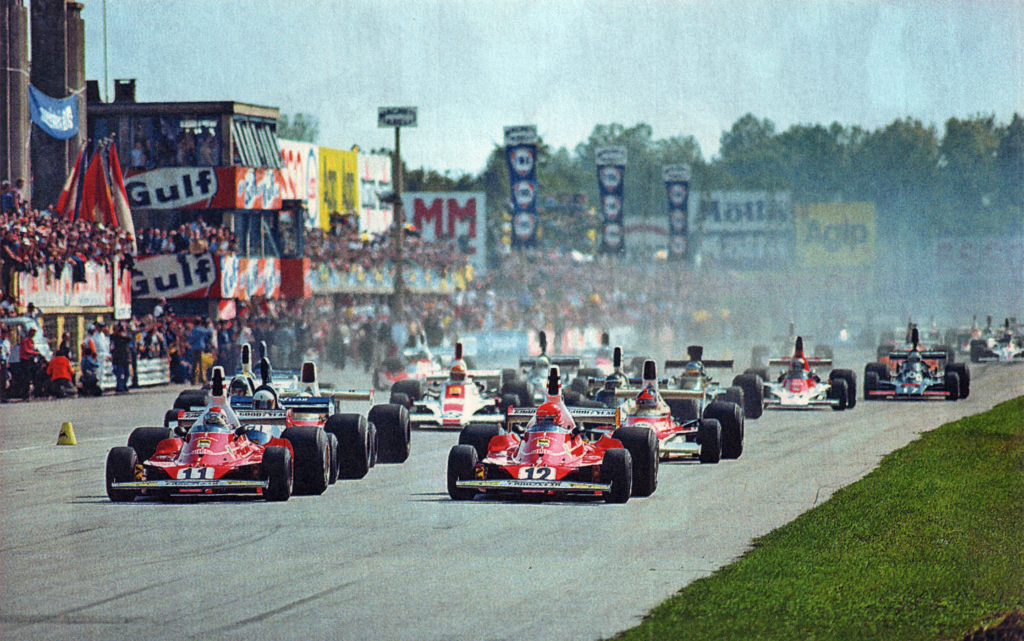
Image Credit: Gianluca Gasparini – La Gazetta dello Sport, Public Domain, Link.
.jpg)
With the upgrades in tow, Ferrari duly dominated the weekend. Lauda claimed pole by a crushing half a second, while teammate Regazzoni joined him on the front row.
While Lauda was the focus, it was Regazzoni — always strong at Monza — who had the better performance on race day. After beating his teammate off the line, the number 11 Ferrari led the number 12 in formation for a while. Eventually though the Swiss driver managed to eke away from the Austrian into a clear lead. Regazzoni then held his lead to the flag, securing a grand chelem for the 312T on its crowning day.
Lauda’s race by comparison was a slightly frustrating one, as a rear damper broke and spoiled his 312T’s handling. Showing the pragmatism which earned him the nickname “The Computer” though, Niki deftly managed the issue and soldiered on. While he eventually lost second place the to charging McLaren of Emerson Fittipaldi, third was enough for the title and both Niki and the Tifosi knew it. He therefore crossed the line to rapturous applause and cheers as the new world champion. With Regazzoni’s win also securing the constructor’s crown, Ferrari had finally broken their decade-long title drought, thanks in large part to the 312T.
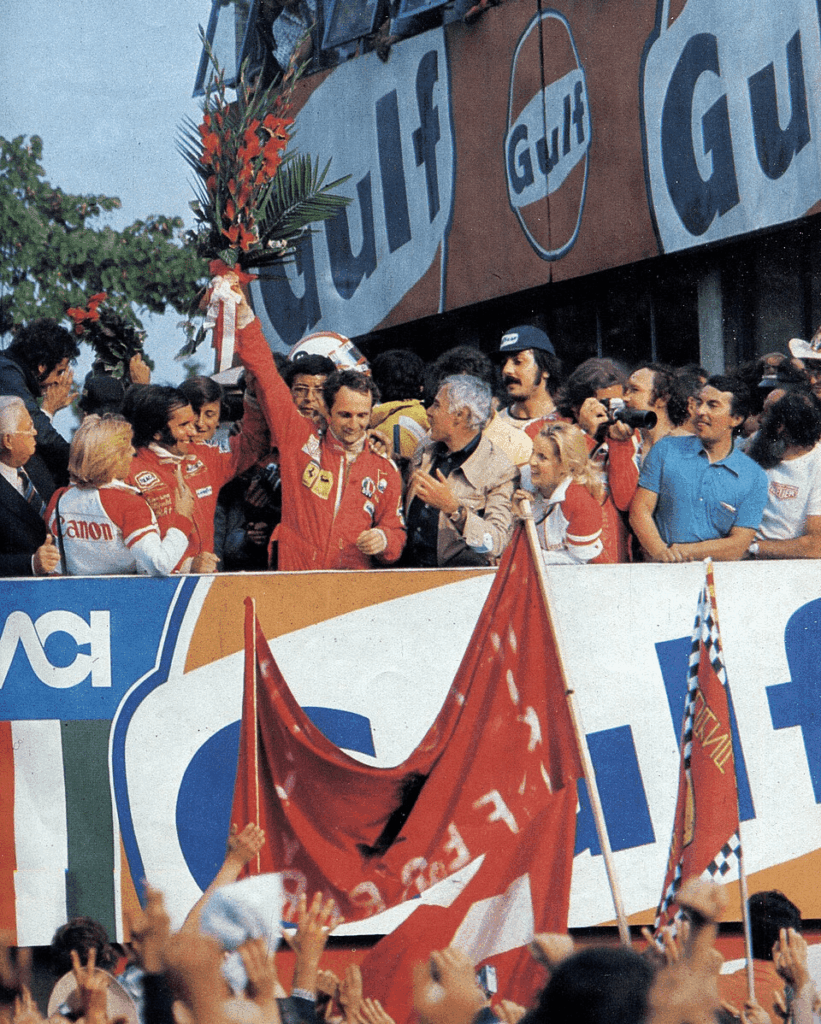
Image Credit: Attualfoto – Autosprint, Public Domain, Link.

Standing The Test Of Time
Perhaps equally impressive as the 312T’s domination in 1975 was its longevity. With various updates, the core 312T design continued winning races and championships for five seasons straight. Such a run of continued competitiveness would be almost unthinkable today.
Even the 312T as it existed in 1975 had a good shelf-life. Ferrari continued using the car totally unchanged for the first three races of the 1976 season, and won all three of them. Clay Regazzoni’s dominant victory at Long Beach street circuit seemed a fitting send-off for the car which revived Ferrari’s fortunes.
Ferrari then spent the next five seasons using variations of the 312T design, ranging from the 312T2 to the 312T5. The result was three more constructor’s championships in 1976, 1977 and 1979. Two more driver’s titles in 1977 (Lauda) and 1979 (Jody Scheckter) complimented the constructor’s crowns. Going by the sheer number of titles, the 312T series is therefore the most successful Formula 1 chassis in history.
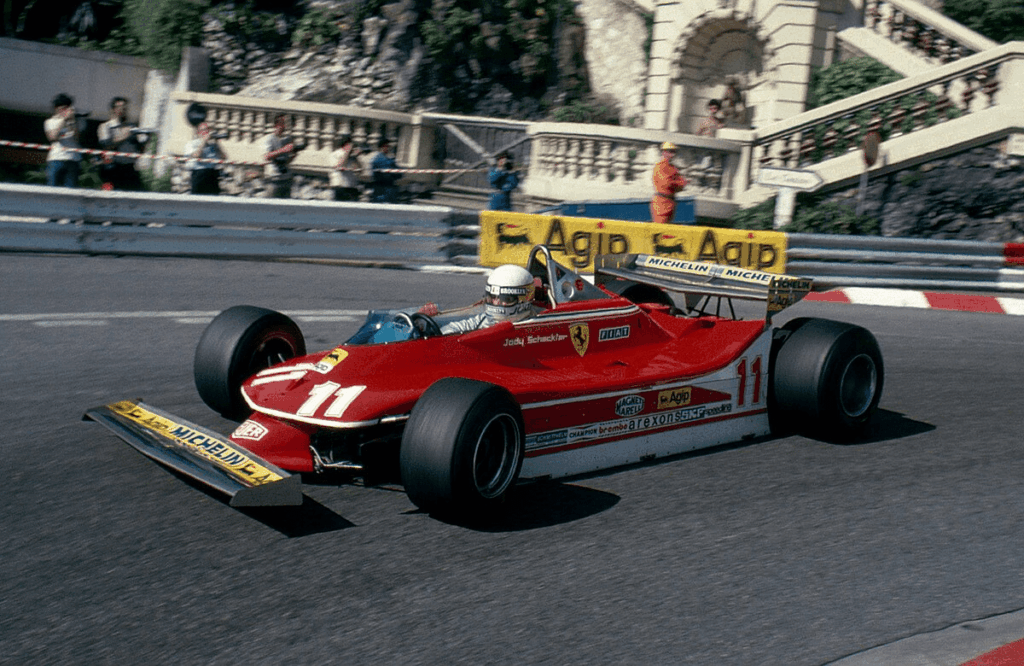
Image Credit: Crazylenny2 – Own Work, CC BY-SA 2.0, Link.
All reigns must come to an end however, and in the 312T’s case it was the ground effect revolution of the late 1970s and early 1980s which finally put paid to the old warhorse. This should not diminish the accomplishments of the 312T series however. It certainly stands as one of Ferrari’s finest cars, and one truly worthy of the celebrations planned for it at Monza this year.
Featured Image Credit: Gabriela Noris – Official Ferrari Magazine, Public Domain, Link.
