

The CEO of F3, Bruno Michel, has shared that it is “very difficult” to say if the 2025 season will be as competitive as the 2024 season as the series is set to race under new regulations.
Asked by EverythingF1 in a roundtable if he believes the regulations will increase the competitive nature of the series, Bruno was hesitant to suggest it will be as competitive as the most recent season which finished in a thrilling last lap tie-breaker.
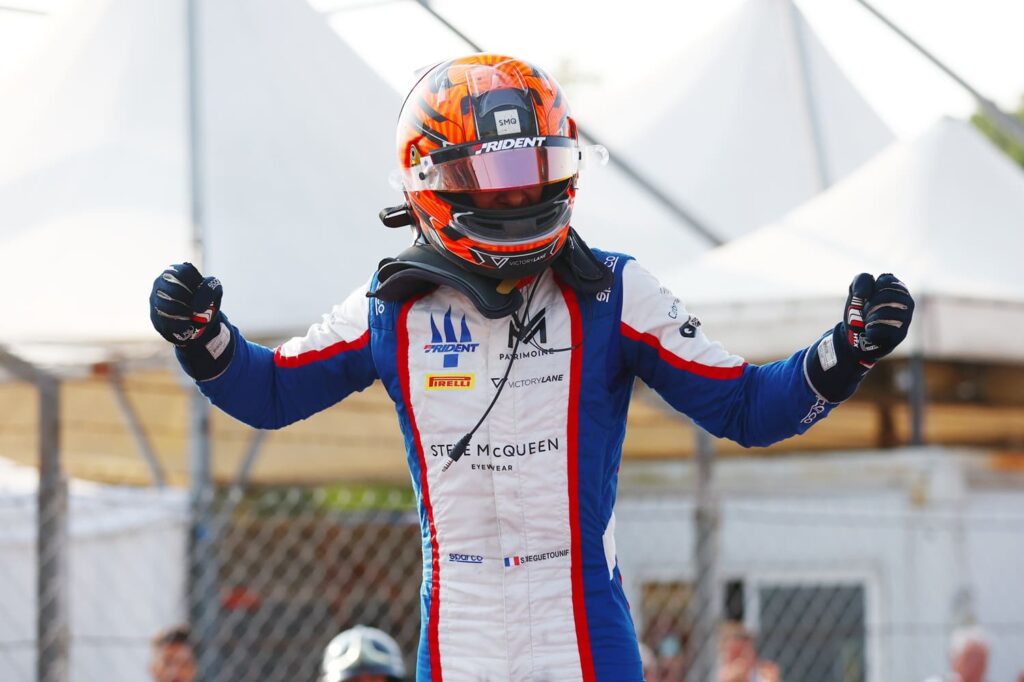
Sami Meguetounif was crowned the F3 champion in a dramatic final feature race in Monza on September 1, after he made a season-defining overtake at the final corner on the last lap.
[adrotate banner=”5″]
Get 10% off all official F1 Merch at TheRaceWorks.com using code ‘EF1‘ at checkout.
Beating Gabriel Mini to the championship win, the 2024 season had been incredibly competitive with eight different drivers taking the championship lead at different points – the most in any F3 season ever.
Asked if 2025 will be as competitive, Bruno said; “It’s a good question. It really depends on the level of the grid and it really depends on the drivers. It’s not the car that going to change the look of the championship massively I would say.
“Some years the championship is extremely fought for, some other years, you have a [championship] winner two or three races before the end of the season.
“It’s difficult to say but I don’t think introducing a new car is going to by itself make a difference in that. It really depends on the drivers and the way the teams will deal with a new car.”
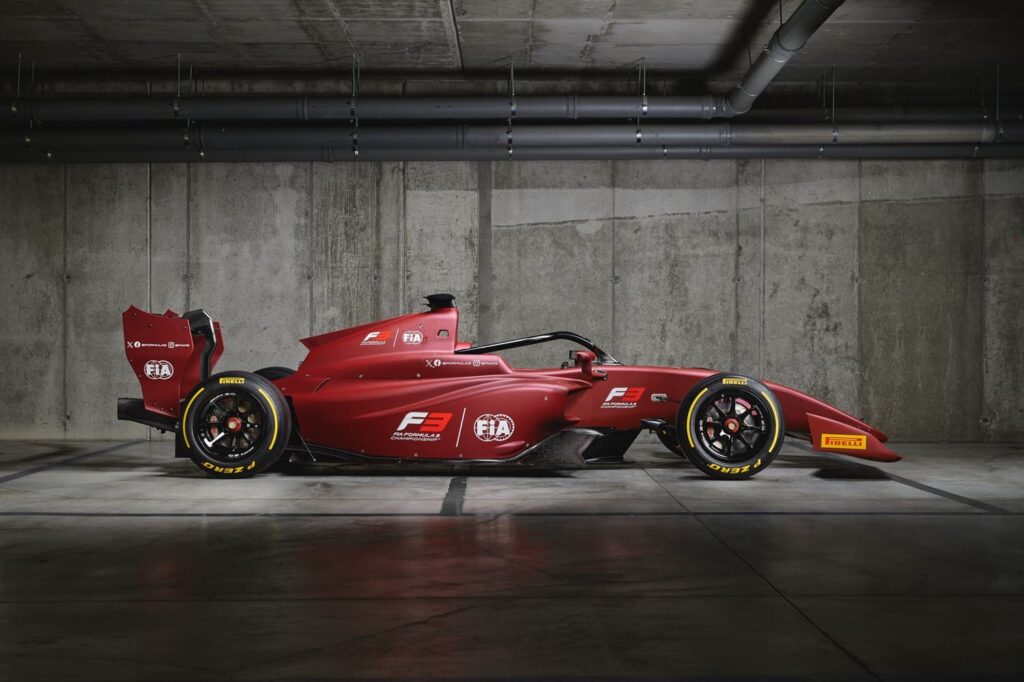
The 2025 F3 regulations, which were revealed at Monza, will put the series more in line with the current F2 and F1 cars in order to keep it relevant in the formula pyramid.
The new car will replace the Dallara F3 2019 which has been used for the last six years with improved overtaking, sustainability and accessibility all central focal points of the design.
A completely new design, it is expected that 2025 will be a transitional year as both teams and drivers warm up to the new car which hopes to keep the series relevant to help drivers climb the motorsport ladder.
Although drivers are continuing to enter the top flight of motorsport at younger ages, Bruno was clear that the car had not been built to better suit Formula 1 to allow drivers to skip F2 and clearly stated that all three stages have to play their understood roles.
He said: “I think the way we’ve built the pyramid with the FIA is very thought about. If we have all these categories, it’s because we think they are important.
“Going through F3 and then going through F2 is something that makes a driver much more prepared for F2 than trying to skip one of these two categories.
“If you look in the past, the best drivers that we had going into F1 were drivers that won F3 or GP3 as a rookie and then won F2 as a rookie.
“I’m talking about Charles Leclerc, George Russell, Oscar Piastri. They didn’t skip a year but they were so good that they could win every year that they were arriving in a new category. If we put it that way, it’s because it’s the best preparation.”
Examples of drivers who have skipped F2 in the past include Lance Stroll and Max Verstappen.
While one has been more successful than the other, Bruno continued to explain that if a driver does skip F2, it is up to them to make the decision but the experience of the series should not be dismissed.
He said: “You can have some decisions from the drivers or the driver’s management or the F1 teams that are associated with the drivers to skip one category for timing issues or because they need the drivers to be more ready for F1.
“After that, it’s up to the driver to make up but we think really that the experience and the track time that those categories are giving to the drivers are important for its evolution”
[adrotate banner=”10″]
Get 10% off all official F1 Merch at TheRaceWorks.com using code ‘EF1‘ at checkout.