
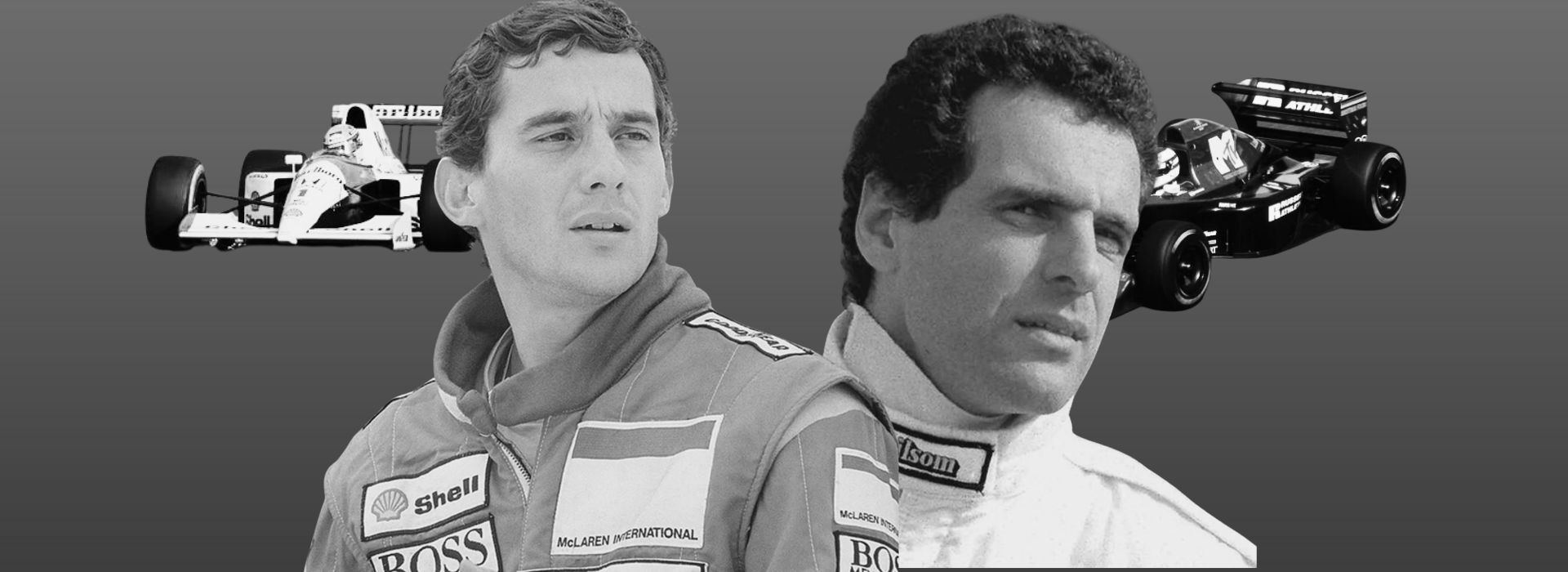

There are race weekends that define a season. There are races that define a generation.
And then there is Imola 1994 at the Autodromo Enzo e Dino Ferrari, a weekend that not only shaped a championship but also permanently changed the future of Formula 1.
It was not remembered for strategy, victories, or title fights. It became a turning point in the sport’s history, one that still defines how Formula 1 thinks about speed, risk, and safety.
A Season Already Under Pressure
The 1994 season arrived in a state of transition.
Electronic driver aids had been removed. Active suspension, traction control, and ABS were gone. What replaced them were cars that demanded more from the driver and offered far less forgiveness.
Drivers across the grid had already expressed concerns about instability and unpredictability. The margins were tighter, and mistakes carried greater consequences.
At the centre of this new era was Ayrton Senna, a three time world champion who had joined Williams with expectations of fighting for another title.
But from the very beginning of the Imola weekend, something felt different.
The first fracture in the weekend
Friday practice delivered an early warning.
Rubens Barrichello suffered a heavy accident at the Variante Bassa chicane. His car struck the kerb, became airborne, and hit the barriers at high speed.
Barrichello lost consciousness briefly and was taken to hospital. He survived, but the severity of the crash immediately unsettled the paddock.
Senna went to visit him later that day. Those who saw him afterwards described a noticeable change. He was quieter than usual, more reflective, and visibly affected by what had happened.
It was the beginning of a shift in the atmosphere that would define the rest of the weekend.
A Saturday that changed everything
Qualifying on Saturday brought a moment that changed everything.
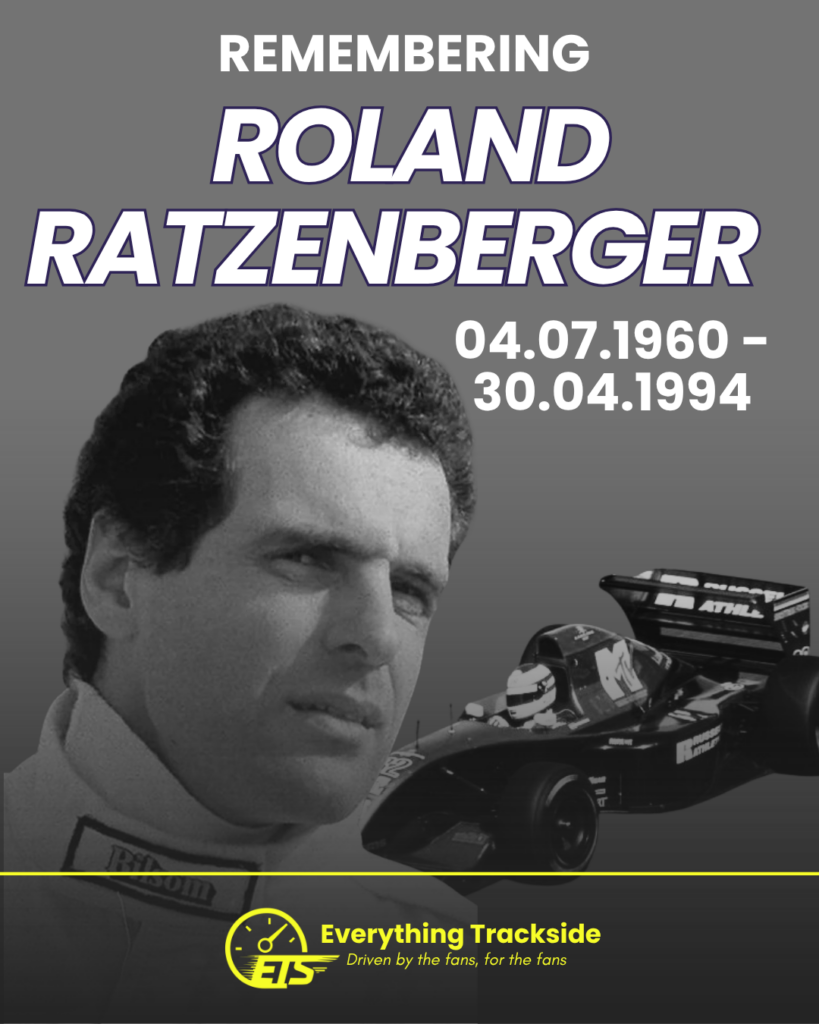
Roland Ratzenberger crashed at the Villeneuve corner during his qualifying run.
The cause was traced to front wing damage sustained earlier in the lap, which led to a catastrophic aerodynamic failure at high speed. The car failed to respond and struck the wall with extreme force.
Ratzenberger suffered fatal injuries. He was sadly pronounced dead shortly after reaching hospital.
It was the first Formula 1 fatality during a race weekend in many years, and the impact on the paddock was immediate and profound.
Senna and Sid Watkins
After Ratzenberger’s death, Sid Watkins, the FIA medical delegate, personally informed Senna.
Watkins later described the moment clearly. Senna broke down emotionally, overwhelmed by what had happened. This was not the controlled, composed champion the world was used to seeing. It was a driver confronted with the reality of what had unfolded in front of him.
Watkins suggested that Senna should stop racing altogether and walk away from the weekend.
Senna refused. He felt a responsibility to continue. Not just to the championship, but to the sport itself. That sense of duty defined his decision to race on.
Later that day, he visited the crash site at Villeneuve corner and examined the remains of Ratzenberger’s car. Witnesses described a deeply serious and subdued mood.
From that point on, the weekend carried a different weight.
Race day with a different atmosphere
Race day arrived with a silence that was unusual for Formula 1.
The paddock was subdued. Conversations were quieter. Drivers were more restrained than usual. The sense of normal race weekend energy was gone.
Senna himself appeared focused but distant. Engineers and journalists noted that he was not behaving in his usual expressive or animated way. He was composed, but internalised.
Before the race, he placed an Austrian flag in his cockpit. It was intended as a tribute to Ratzenberger in the event of victory.
It was a small gesture, but one that reflected the emotional weight he was carrying.
When the race began, it immediately descended into chaos. J.J. Lehto stalled on the grid. Pedro Lamy collided with him at speed. Debris was launched into the grandstands, injuring spectators and forcing the deployment of the safety car that was rare for this era of F1.
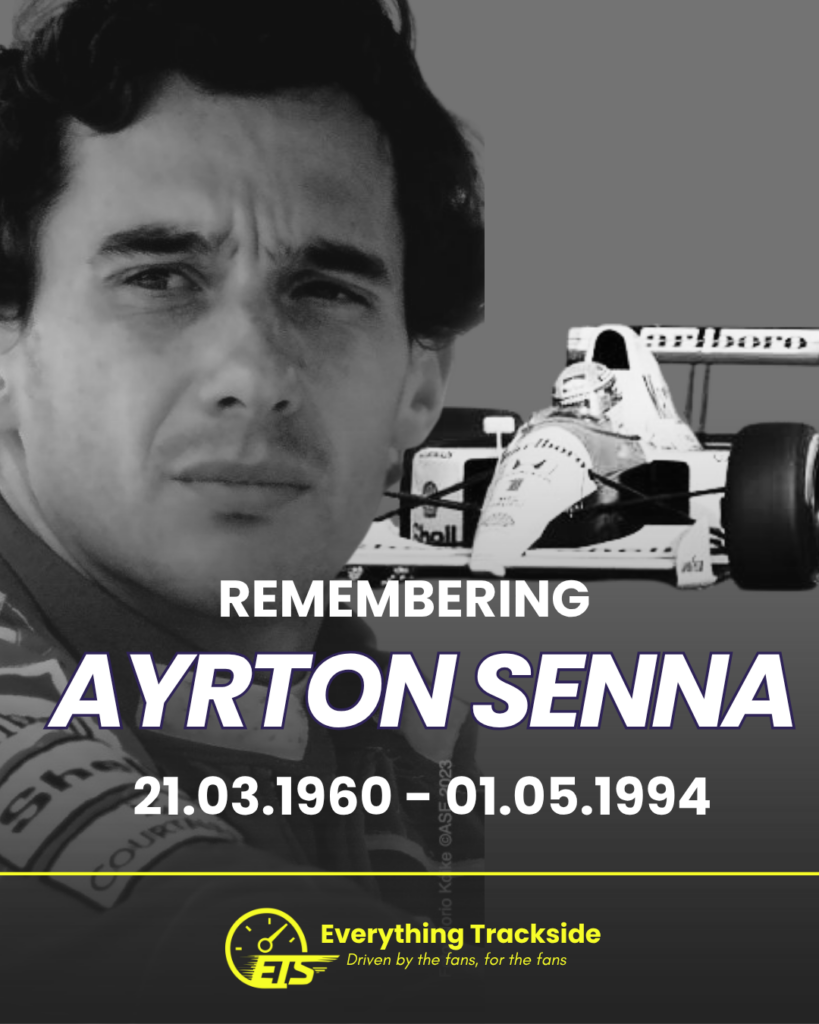
On lap 7 of the restarted race, Senna was leading.
Approaching the Tamburello corner at high speed, his car left the racing line and went straight on into the concrete barrier.
There was no visible attempt to correct the trajectory in the final moments before impact. The collision was severe and immediate.
Telemetry and later FIA analysis pointed towards a likely steering failure as the cause of the loss of control, although the exact mechanical sequence remains one of the most studied aspects of the incident.
Senna suffered fatal head injuries and was taken to the hospital, where he was later pronounced dead.
Despite the severity of the situation, the race eventually resumed after a delay. Michael Schumacher went on to win, with Nicola Larini second and Mika Häkkinen third. But the result existed in the background of something far larger.
What followed after the silence
In the days after Imola, Formula 1 entered a period of immediate reflection and urgent change.
The FIA launched safety investigations without delay. The Tamburello corner was later redesigned into a chicane to dramatically reduce speed as well as changes to the Villeneuve corner. Other parts of the circuit were modified as part of a wider reassessment of track safety.
The consequences extended beyond a single circuit. The sport began a long-term shift in philosophy.
Crash structures were improved. Barrier systems evolved. Circuit design standards were rewritten.
Over time, driver protection became a central focus of Formula 1 development rather than a secondary consideration.
Much of modern Formula 1 safety traces its direction back to this weekend.
Remembering the Imola 1994 Weekend
Imola 1994 remains one of the most significant weekends in the history of Formula 1 because it represents a point where the sport could not continue in the same way it had before.
Roland Ratzenberger and Ayrton Senna are remembered not only for how they raced, but for how their absence reshaped the sport that followed.
The changes that followed made Formula 1 safer than it had ever been. But they came from a weekend that exposed how vulnerable the sport still was.
The Imola 1994 weekend did not just change Formula 1. It forced it to grow into something different.
And that legacy remains present every time a modern Formula 1 car leaves the grid.