
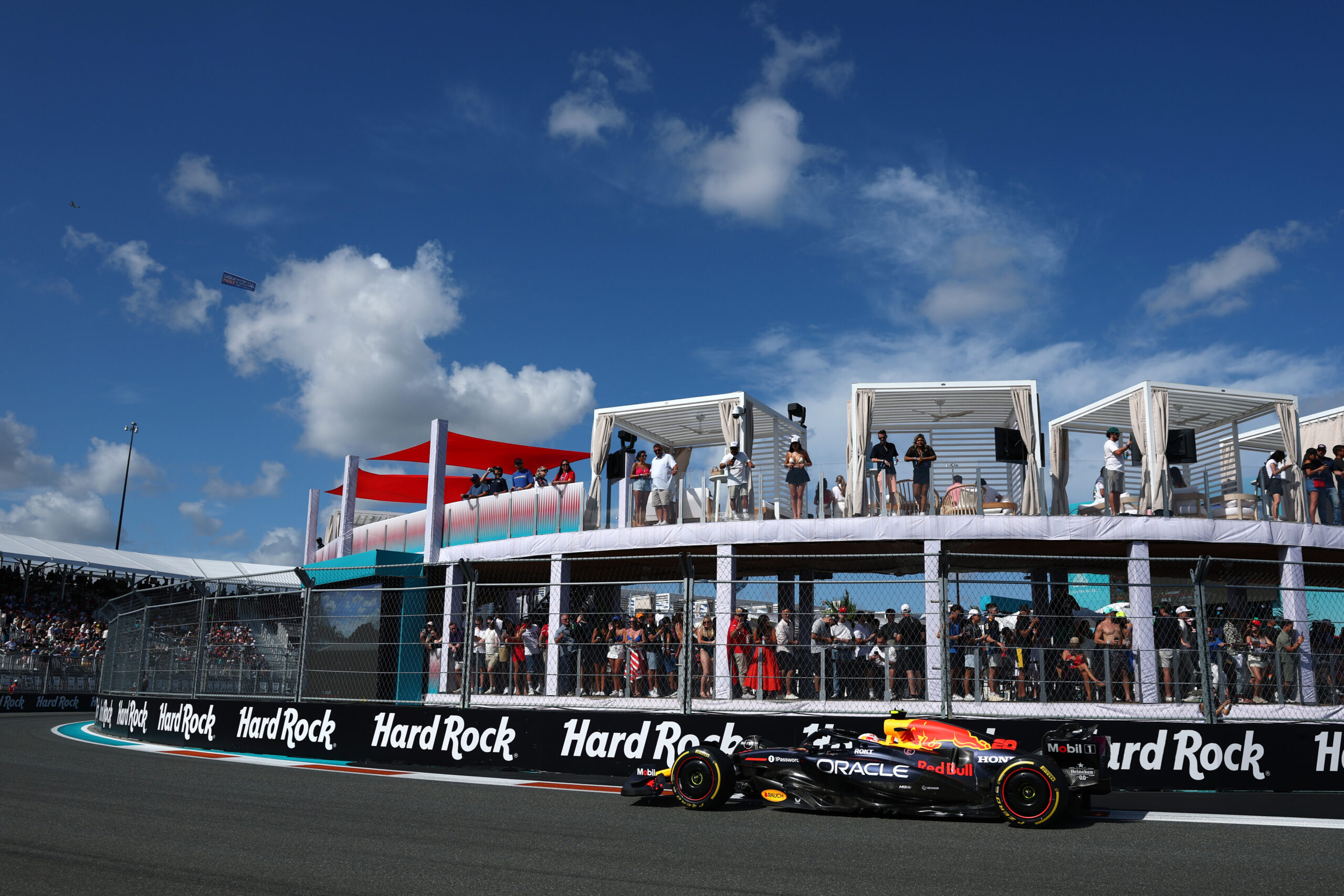

Formula 1 is back, and the wait is finally over. The paddock heads to the United States for the 2026 Miami Grand Prix, where regulation changes, unpredictable weather, and a sprint weekend promise a dramatic few days of racing.
Miami International Autodrome
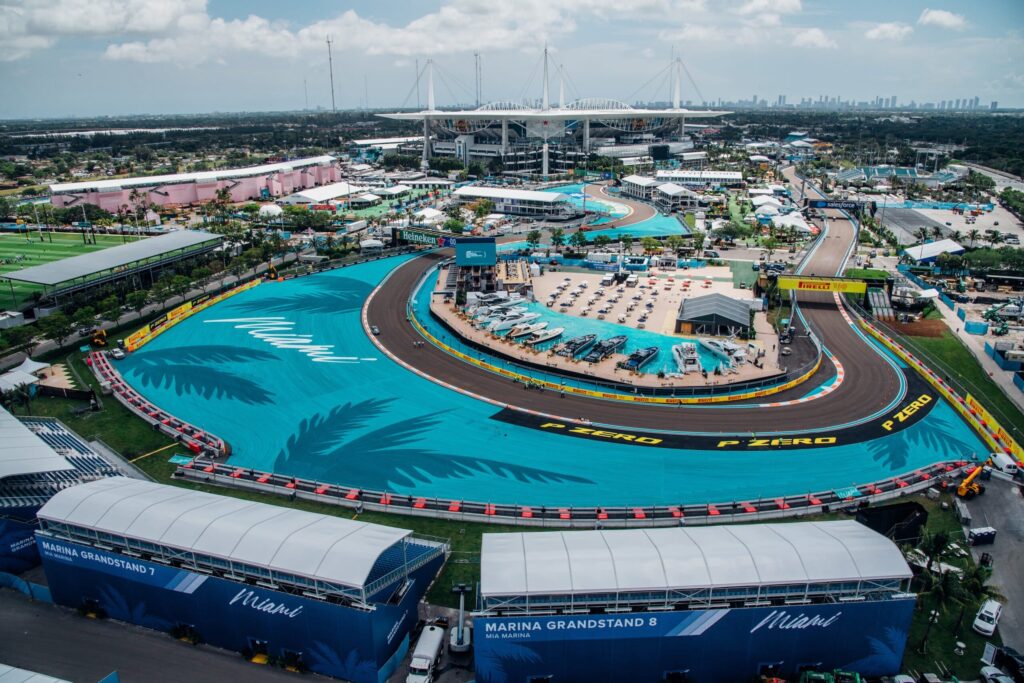
The Miami International Autodrome returns as one of the more unique challenges on the Formula 1 calendar. The 5.4km circuit blends a semi-permanent street circuit layout with purpose-built sections around the Hard Rock Stadium complex. Characterised by long straights, heavy braking zones and a slow, technical middle sector, the track demands a careful mix of straight-line speed and tyre grip.
Overtaking opportunities exist, particularly into Turn 11 and Turn 17, however, mistakes are often punished, especially through the tighter sections of the track. Making its debut in 2022, the Miami International Autodrome is where current World Champion Lando Norris picked up his first F1 victory in 2024.
Yet, as has often been the case in Miami, the circuit itself may not be the biggest challenge this weekend. Instead, attention turns to the weather. High temperatures and humidity already place strain on both drivers and tyres, but forecasts of heavy rain and potential thunderstorms on Sunday introduce a far greater level of unpredictability. With the risk of disrupted race and reduced visibility, conditions could vary dramatically across the weekend. As always in Miami, the race strategy and weather will need to be managed or the drivers could face a race more reactive and chaotic.
Regulation Changes and Championship Standings
Heading into Round 4 of the season, the championship battle is beginning to form, though it remains far from settled. Kimi Antonelli arrives in Miami as the youngest Championship Leader in F1 history. The momentum is firmly with himself and Mercedes following his victory in Japan, placing him at the forefront of the early title fight. Mercedes, in particular, have adapted strongly to the new regulatory era, establishing themselves as early contenders taking victories in all three races. George Russell sits nine points behind his teammate, with this weekend crucial with extra points on offer through the Sprint Race.
However, the wider competitive picture remains fluid. The 2026 regulations, especially the revised power units and energy deployment, continue to shape performance. Drivers have already had to contend with inconsistent power delivery and challenging energy management. While the FIA has brought minor refinements, a more radical proposal to simplify the engine concept has been rejected. All the teams have to continue developing within a framework that is still evolving. As a result, performance gaps remain large, and adaptability is proving just as important as outright pace.
What To Watch For This Weekend
The structure of the weekend itself only amplifies that uncertainty. As a sprint weekend, Miami allows for just a single practice session, which has been increased to 90 minutes. Teams have a significantly limited the opportunity to fine-tune their setups. This becomes particularly critical given both the complexity of the current regulations and the likelihood of changing weather conditions. Track evolution could play a major role on Sunday.
The sprint race provides an early chance to secure points, but also introduces additional risk. In a circuit where confidence under braking and traction out of slow corners is crucial, many drivers could see their Qualifying hampered if they aren’t careful. The main race itself will unfold over 57 laps, where qualifying and early track position will be crucial. Under normal conditions, teams are likely to favour a one-stop strategy, managing tyre degradation in the Miami heat while balancing the risk of undercuts and track evolution. However, with the threat of rain and potential safety car interruptions, the race could quickly shift to an unpredictable Sunday. Energy deployment under the 2026 regulations will also play a key role across the full race distance, particularly in wheel-to-wheel battles, where timing and efficiency may prove just as decisive as outright speed.
Beyond the competitive elements, Miami’s status as one of Formula 1’s marquee events means attention will also turn to the off-track spectacle, including numerous special liveries and high-profile appearances that have become synonymous with the weekend.
F1 begins at 5:00pm GMT on Friday for Free Practice, before the Sprint Race at the same time on Saturday. The Race will occur at 9pm GMT on Sunday night.
Feature Image Credit: Red Bull Content Pool